Nature
Tensions Rise: USA, Israel, and Iran — What We Know”
Tensions Rise: USA, Israel, and Iran — What We Know” In the last few days, world attention turned to a high-profile meeting between U.S. President Donald Trump and Israeli Prime Minister Benjamin Netanyahu at Trump’s Mar-a-Lago residence in Florida. The leaders met to discuss a range of issues, but a major focus was Iran — its ballistic missile program and its nuclear developments.
By Wings of Time 14 days ago in Earth
Advantages of Social Apps
Social apps have become an important part of our daily lives. Almost everyone uses social apps like WhatsApp, Facebook, Instagram, TikTok, and Twitter. These apps help people connect, share ideas, and stay informed. Social apps are not only for fun; they also bring many benefits to individuals, businesses, and society.
By shaoor afridi15 days ago in Earth
Metals in Soil: Hidden Elements That Shape Life
Metals in Soil: Makeup, Role, and Eco Effects Introduction How Metals Reach Soil From Nature Rocks weather over time. Wind, rain, and bugs break them down. This frees metals like iron, aluminum, calcium, and magnesium into soil.
By Say the truth 15 days ago in Earth
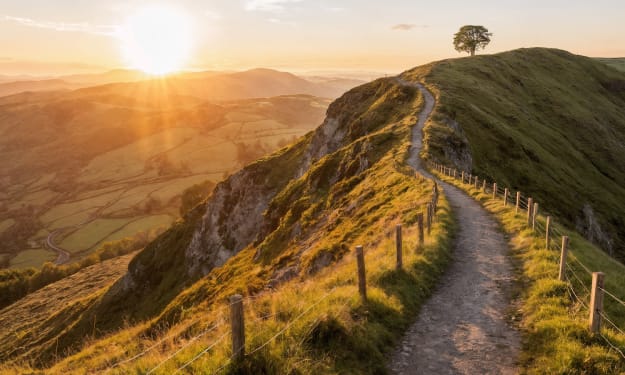
Majestic Mountains
Mountains are my happy place. Growing up in the country of Kyrgyzstan, where 93% of the land mass are mountains, I spent a lot of time in my childhood and youth climbing, hiking, and camping in the mountains. They were just always there, only about a 30-min drive from the city, as a natural background to my life. And as something that was always there, I took mountains for granted.
By Lana V Lynx15 days ago in Earth
Silicon Carbide Wafer Market Size and Forecast 2025–2033. AI-Generated.
Market Overview The Silicon Carbide (SiC) Wafer Market is poised for exceptional growth, expanding from US$ 822.33 million in 2024 to US$ 4,278.18 million by 2033, registering a robust CAGR of 20.11% during 2025–2033, according to Renub Research. This rapid expansion reflects the accelerating global shift toward electric vehicles (EVs), renewable energy systems, high-voltage power electronics, and advanced industrial automation.
By Marthan Sir15 days ago in Earth
The AI That Can Predict Your Next Move—And Why Everyone Is Talking About It
Imagine this: You’re scrolling through your favorite app, and suddenly it recommends something before you even knew you wanted it. A movie, a song, an article—it’s eerily precise. Some people call it coincidence. Others call it magic. But the truth? It’s artificial intelligence. And the kind of AI that’s being developed today isn’t just smart—it’s predictive, almost like it can read your mind.
By Yasir khan15 days ago in Earth
The Water Crisis That Could Spark Global Tensions
The Water Crisis That Could Spark Global Tensions Water—something we often take for granted—is becoming one of the world’s most precious resources. Across the globe, rivers are drying up, lakes are shrinking, and underground water supplies are disappearing faster than they can naturally refill. What was once a local problem is now a growing international concern, and countries are beginning to clash over access to freshwater.
By Wings of Time 15 days ago in Earth
The Camel: The Miracle of the Desert
🌍 Introduction The camel is one of the most unique and useful animals in the world. It is often called: ✔️ “The Ship of the Desert” because it can walk long distances across hot deserts without getting tired. Camels have helped humans for thousands of years for traveling, carrying goods, farming, and even as a source of food and milk. In Islam, the camel is also mentioned with respect — as a sign of Allah’s creation and power. 🧬 Types of Camels There are two main types of camels: 1️⃣ Dromedary Camel (Arabian Camel) ✔️ Has one hump ✔️ Lives mostly in the Middle East, Africa, and South Asia ✔️ Makes up 90% of the world’s camel population 2️⃣ Bactrian Camel ✔️ Has two humps ✔️ Lives in Central Asia (China, Mongolia, Kazakhstan) ✔️ Can survive in extremely cold deserts too 🏜️ Why Do Camels Have Humps? Many people think humps are filled with water, but that’s not true. 🟡 The hump stores fat — like a food bank. When the camel does not find food, its body uses this stored fat for energy. ✔️ Because of this, camels can survive many days without eating much. When the fat is used up, the hump becomes smaller and softer, and when the camel eats again, the hump returns to normal shape. 💧 How Do Camels Survive Without Water? Camels are water-saving champions. They can: ✔️ Drink up to 100 liters of water in one day when thirsty ✔️ Survive 7–10 days without water (sometimes more) Their bodies are designed specially: 🔹 Their blood cells are oval-shaped — so they can stretch and hold more water 🔹 They sweat very little — saving water 🔹 They can drink very fast without getting sick 🌡️ Adapting to Desert Heat The desert can reach 50°C (122°F) — yet camels remain calm. Here’s how: 🐪 Thick fur on top protects from sunlight 🐪 Thin fur below keeps heat away 🐪 Long legs keep body away from hot sand 🐪 Wide feet stop them from sinking into sand 🐪 Nose closes during sandstorms 🐪 Long eyelashes protect eyes from sand Allah نے انہیں ایسے خاص طریقے سے بنایا ہے کہ وہ ریت، گرمی اور تیز ہوا سب برداشت کر سکیں۔ 🍃 What Do Camels Eat? Camels are herbivores. They eat: ✔️ Dry grass ✔️ Leaves ✔️ Thorny bushes ✔️ Desert plants Their mouths are very tough — so even thorny plants don’t hurt them. They chew food slowly and can digest rough plants easily. 👨👩👧 Relation With Humans For thousands of years, camels have helped people in: ✔️ Traveling ✔️ Carrying goods ✔️ Farming ✔️ Transporting water ✔️ Providing milk ✔️ Providing meat ✔️ Providing leather & wool In many countries like Saudi Arabia, UAE, Pakistan, India, Somalia, Sudan, Egypt, and Mongolia, camels are still very important. 🍼 Camel Milk Camel milk is considered very healthy: ✔️ Rich in vitamins ✔️ Easier to digest than cow’s milk ✔️ Good for immunity ✔️ Naturally low in fat In some cultures, it is used as traditional medicine. 🕊️ Camels in Islam The camel is mentioned in the Qur’an as a sign of Allah’s creation: Allah asks humans to reflect: “Do they not look at the camel — how it was created?” This teaches us that every creation has wisdom and purpose. Also, during Hajj & historical travel, camels were used for transport. 🧠 Intelligence & Behavior Camels are: ✔️ Intelligent ✔️ Calm ✔️ Loyal ✔️ Good at remembering routes They live in groups and listen to their leader. They make different sounds to express hunger, anger, or calling their babies. 🐾 Baby Camels A baby camel is called a calf. ✔️ It can stand and walk within a few hours after birth ✔️ Drinks only mother’s milk for months ✔️ Stays close to the herd 👣 Lifespan Camels usually live 40–50 years. 🌎 Where Do They Live? Camels mostly live in: ✔️ Middle East ✔️ North Africa ✔️ Central Asia ✔️ South Asia ✔️ Australia (wild camels too) ⚖️ Size & Strength A camel can weigh 400–650 kg (880–1400 lbs) and can carry 200–300 kg for long distances. That’s why they are called Desert Trucks. ❤️ Why People Respect Camels People admire camels because they teach us: 🌟 Patience 🌟 Strength 🌟 Simplicity 🌟 Endurance 🌟 Gratitude They are peaceful creatures that help humans without harm. 🏁 Conclusion The camel is not just an animal — it is a miracle of design and wisdom. It shows how perfectly Allah has created every creature for its environment. From deserts to cold lands, from history to modern life, camels continue to serve humanity with loyalty and strength.
By Shahab Khan16 days ago in Earth