
For Russia, Greenland Offers an ‘Ideal Solution’ to Its Ukraine Problem
How the U.S.–Greenland dispute gives Moscow a strategic edge, distracting the West, testing NATO unity, and shaping its Ukraine strategy

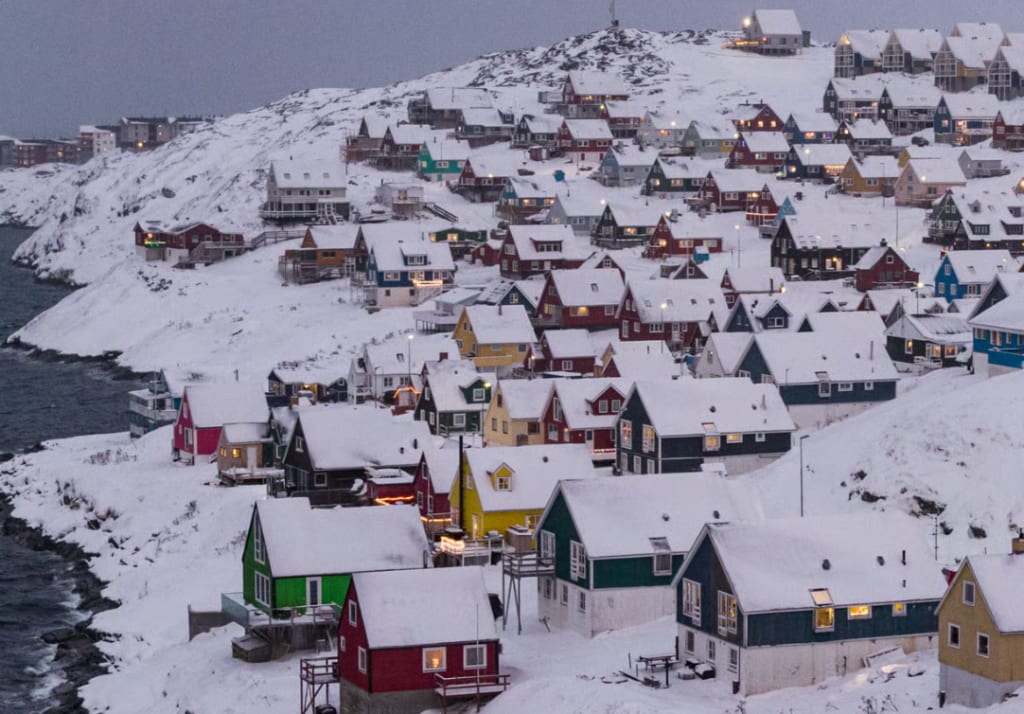
In the complex chessboard of global geopolitics, some developments become unexpectedly powerful tools. One such flashpoint today is Greenland — the icy Arctic territory of Denmark that has suddenly captured international attention. While the world focuses on former U.S. President Donald Trump’s renewed interest in Greenland, Moscow is quietly calculating how this turmoil could serve its broader interests, particularly in the context of the war in Ukraine.
At first glance, Russia seems like a bystander. Kremlin officials have publicly emphasized that Moscow has no intention of seizing Greenland or threatening the Arctic island. Russian Foreign Minister Sergey Lavrov dismissed Western concerns about Moscow’s Arctic ambitions, calling them “overblown” and insisting Greenland is a Danish territory. (tass.com) Kremlin spokesperson Dmitry Peskov reiterated that Russia respects Greenland’s status and has no plans to intervene. (aa.com.tr)
Yet, beneath these formal reassurances lies a subtler reality: the Greenland controversy may give Russia a strategic advantage without firing a single shot.
A Distraction from Ukraine and Western Focus
Moscow’s biggest challenge in Ukraine has been sustaining Western unity. Coordinated military support, financial sanctions, and political pressure have been central to countering Russia’s advances. However, Greenland’s newfound prominence in international headlines risks fracturing that focus.
Trump’s provocative statements, AI-generated images of Greenland annexation, and leaked diplomatic texts with European leaders have pulled attention away from Eastern Europe. With NATO and EU leaders busy responding to U.S.–European tensions over Greenland, less energy is devoted to Ukraine, which could provide Russia with strategic breathing room.
Analysts argue that when Western leaders are embroiled in disputes about an Arctic territory, Russia benefits from the diversion. Every public quarrel among allies diminishes collective urgency and can be used by Moscow to portray Western policies as inconsistent or self-serving. (pravda.com.ua)
Testing NATO Cohesion
Another opportunity for Russia comes from the strains the Greenland dispute places on NATO unity. The alliance’s strength has always depended on cohesive decision-making, particularly in defense matters related to Russia. Yet, European capitals are increasingly vocal in resisting U.S. pressure. France, Germany, and Denmark have publicly warned against coercive approaches, highlighting tensions between Washington and its allies. (washingtonpost.com)
From Moscow’s perspective, this discord is valuable. If NATO members are distracted by Arctic controversies, the alliance may respond more slowly or inconsistently to Russia’s actions in Ukraine. Some European generals have even highlighted that internal disagreements over Greenland could expose NATO to vulnerabilities in other regions, a fact Russia is likely observing closely. (wsj.com)
Narrative Leverage and Propaganda Opportunities
Greenland also offers Moscow a soft power and propaganda opportunity. Russian media and officials are framing Western disputes over Greenland as proof of hypocrisy: the U.S. and its allies argue over Arctic territories while criticizing Russia’s territorial actions in Ukraine. By pointing to Greenland, Moscow can suggest that Western countries selectively enforce principles of sovereignty. (firstpost.com)
This narrative appeals not only to domestic audiences in Russia but also to non-aligned nations skeptical of Western intentions. By highlighting Western disputes, Moscow positions itself as a rational actor amid a divided global coalition — enhancing its diplomatic messaging without taking new military risks.
Indirect Strategic Gains
Even without physical expansion into Greenland, Russia can benefit indirectly. As NATO focuses on internal disagreements, Moscow gains maneuvering room on Ukraine. Political infighting and public debate in Europe can slow down or weaken coordinated sanctions and military aid. Every hour spent on Greenland controversies is an hour not spent on planning or implementing responses to Russian actions in Eastern Europe.
Moreover, the situation exemplifies a longstanding Russian strategy: exploit Western divisions and distraction for geopolitical gain. From Syria to Libya and now to Ukraine, Russia has consistently leveraged moments when Western priorities are split. Greenland has unintentionally become another chess piece in this approach.
A Test of Western Strategic Discipline
The Greenland episode is a reminder that modern geopolitics is not only about military might but also about focus, narrative control, and alliance cohesion. By drawing attention to Greenland, Trump has inadvertently given Russia a tool to test NATO’s resilience. The dispute forces European leaders to balance Arctic sovereignty, U.S. relations, and Ukraine strategy — a delicate juggling act with high stakes.
Observers argue that the Greenland controversy could have long-term consequences: it may redefine perceptions of alliance reliability, challenge public support for military aid to Ukraine, and shape how the West approaches Arctic and Eastern European security. Moscow, meanwhile, watches with calculated patience, ready to capitalize on any missteps.
Conclusion: Greenland as a Geopolitical Lever
While Greenland remains far from Russia’s control, its political utility is clear. The U.S.–Greenland dispute serves as an unintended lever for Moscow, testing Western cohesion, providing narrative advantages, and distracting from Ukraine. In the complex interplay of alliances, propaganda, and strategic attention, the Arctic island has become far more than an icy outpost — it is now a pivot point in global power politics.
For Russia, Greenland offers what might be called an “ideal solution” to a persistent problem: the challenge of countering unified Western pressure on Ukraine without escalating its own commitments. By letting Western tensions play out, Moscow gains leverage without moving a single military asset, demonstrating that in modern geopolitics, influence often matters as much as occupation.
As global attention remains divided, one lesson is evident: in today’s world, even distant, frozen lands can have profound effects on the hot conflicts of our time. For Russia, Greenland is not a prize to capture but a tool to wield — and the West’s handling of it could ripple far beyond the Arctic.
About the Creator
Muhammad Hassan
Muhammad Hassan | Content writer with 2 years of experience crafting engaging articles on world news, current affairs, and trending topics. I simplify complex stories to keep readers informed and connected.
Keep reading
More stories from Muhammad Hassan and writers in Earth and other communities.
Plans Lodged for Assembly Rooms Replacement
Plans have been officially submitted for the replacement of the historic Assembly Rooms, signaling a significant transformation in the heart of the city. The Assembly Rooms, long regarded as a cultural and architectural landmark, have been a venue for public gatherings, performances, and civic events for decades. With the new plans now lodged, the community, local authorities, and heritage groups are preparing for a debate over modern development versus preserving historical character.
By Muhammad Hassan2 months ago in Earth




Comments
There are no comments for this story
Be the first to respond and start the conversation.