
Study shows sunlight helps clean up effects of oil spill in oceans
Scientists have found that sunlight has a much greater impact on saving the oceans that have suffered from oil spills. Will nature itself clean up after us?

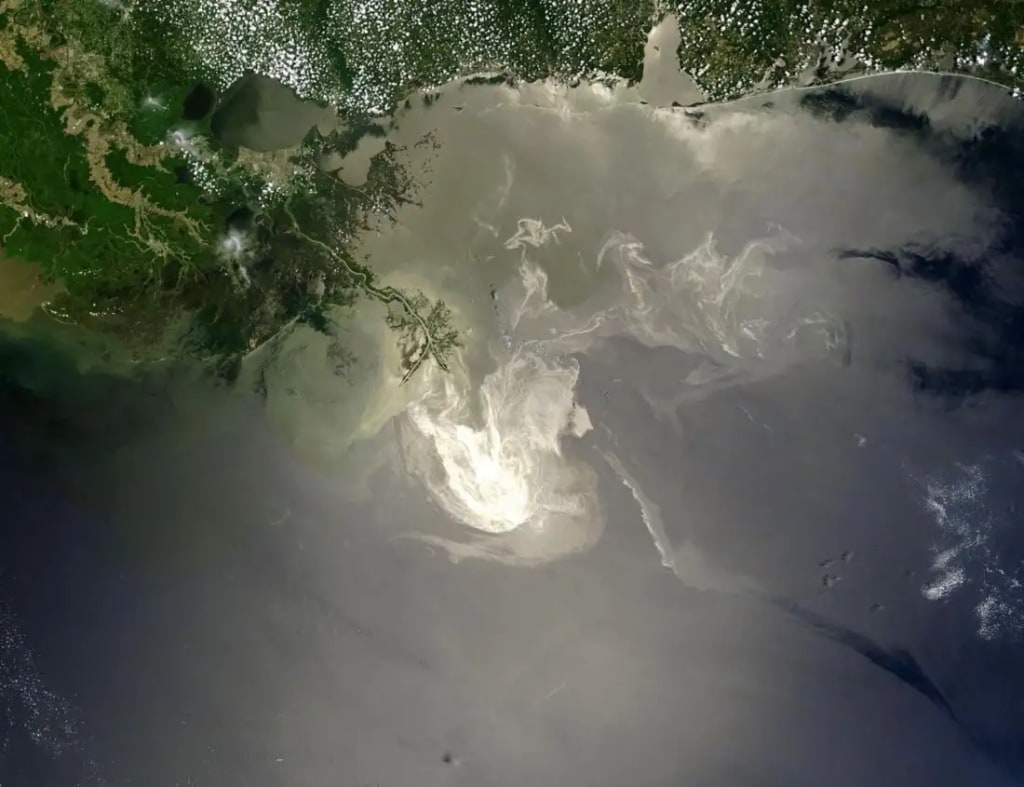
Do you still remember the Deepwater Horizon oil rig accident? In 2010, there was an explosion there when the rig was near Gulf, Mexico. It was the largest environmental disaster in U.S. history. In 87 days, nearly five million barrels of oil entered the water.
At the time, 11 people died and 17 were injured. Twelve years after these events, scientists are still trying to discover what happens to the oil that leaked into the ocean. In particular, they are interested in how damaging such a spill is to ecosystems.
Research sheds new light on our knowledge of what happens to oil after a spill
The latest research was published Feb. 16 in the scientific journal Science Advances. Researchers at Woods Hole Oceanographic Institution (WHOI) described how sunlight was thought to help save the ocean from the effects of the Deepwater Horizon oil spill. According to the researchers, the light had the effect of removing up to 17 percent of the oil that leaked from the oil rig.
To test the effect of sunlight, the researchers took a sample of oil from the Deepwater Horizon. Then, under laboratory conditions, they exposed it to LED lights that emitted wavelengths that were the same as those of sunlight.
In the final step of the experiment, the scientists analyzed the chemical composition of the oil. The radiation triggered a reaction that produced new compounds. These, in turn, improved the process of dissolving oil in water. Under normal conditions, this is not possible because oil and water do not mix. This is because these liquids have different physical properties.
The wavelength of light is very important for the whole process
The researchers found that the thickness of the oil film and the wavelength of the light were the most important variables in the overall chemical reaction.
“The study found that sunlight has an equally important effect on processes that dispose of oil from the oceans, such as biodegradation or oil settling on shores”, said study co-author Collin Ward, a chemist at WHOI.
“This is exciting because our study provides us with new insights into what else may be happening to oil after a spill and how this affects our ecosystems“, added Danielle Haas Freeman, a study author from the Massachusetts Institute of Technology.
According to the researchers, if much of the oil is dissolved in water by sunlight, it means that less of the substance ends up in sensitive places in ecosystems.
However, the researchers stress that further observations are needed on how the effects of sunlight-induced oil degradation affect organisms. After all, the new chemical compounds could be just as harmful.
Scientists have been able to determine which factors have the greatest impact throughout the process.
“The process of oil dissolving when exposed to light has been known to chemists for many decades”, Ward points out. —”In our latest study, however, we found that the process changes significantly as the wavelength of light changes”, the chemist adds.
The researchers point out that this knowledge enabled them to estimate the importance of sunlight in the process of dissolving the oil that leaked from Deepwater Horizon.
Under laboratory conditions, the research duo took into account a variety of conditions that affect the entire process. These include the thickness of the oil layer, the time of year, the location in the world, the chemical composition of the water, and the wavelength of light mentioned earlier. Based on this, they noticed that each of these factors has a different meaning for the whole reaction. The scientists emphasize that this knowledge is especially important for the Arctic environment, which is particularly vulnerable to oil spills.
The scientists believe that their discovery is a step toward a better response to these types of environmental disasters. The more we know about what happens to harmful substances that end up in the oceans, the more effectively we will be able to combat the damage we cause.
About the Creator
Without Democracy, Donald Trump’s Venezuelan Oil Quest Will Fail
Donald Trump’s renewed interest in Venezuelan oil may seem, on the surface, like a hard-nosed geopolitical calculation. Venezuela holds the world’s largest proven oil reserves, and amid global energy uncertainty, access to those resources is undeniably tempting. But history, economics, and politics all point to the same conclusion: without democratic reform in Venezuela, any attempt by a Trump-led US administration to secure reliable Venezuelan oil will ultimately fail.
By Aarif Lashari4 days ago in Earth
So You Decided To Become a Nurse Practitioner:
So you decided to become an "Advanced Practice" nurse. Congratulations!... is what I would say if this was a good idea. Grad school? In this economy? What were you thinking? Likely it was something along the lines of either 1) “I've seen these other chucklefucks do it— Why can't I?” or even 2) “I've got a nice career, I should shake it up. I miss feeling like I have no clue what I'm doing.”
By Sandor Szaboa day ago in Fiction




Comments
There are no comments for this story
Be the first to respond and start the conversation.