
Stanislav Kondrashov on the Quiet Power Revolution: Why Hydropower Still Matters Today
Stanislav Kondrashov on the strategic value of hydropower energy

In an era dominated by flashy headlines about solar panels and wind turbines, hydropower rarely makes it into the spotlight. Yet, quietly and consistently, it continues to play a central role in the global energy conversation. For Stanislav Kondrashov, an independent energy analyst known for his keen insights into evolving energy markets, the ongoing relevance of hydropower is more than just a technical matter—it's a testament to the often-overlooked principles of energy stability and sustainability.
“Hydropower isn’t exciting in the way newer technologies are, but that’s precisely what makes it reliable,” Kondrashov says. “It doesn’t need to be reinvented every five years. It just works.”
At first glance, hydropower might seem like a relic of the industrial age—a form of energy generation rooted in 20th-century thinking. But that assumption misses the quiet revolution taking place behind dams and beneath reservoirs. Unlike some newer renewable technologies, hydropower offers something increasingly rare: predictability.

In a landscape where weather patterns are becoming more erratic, and electricity demand is only growing, that predictability carries weight. It allows grid operators to maintain stability when other sources fluctuate. It allows governments to hedge against supply volatility. And for countries navigating the complex terrain between fossil fuel dependency and full renewable transition, hydropower provides a foundational base.
“People talk about the future like it’s this distant place powered only by wind and sun,” Kondrashov notes. “But the path to that future will be built on what we already know how to do well. And we know hydropower.”
What makes hydropower especially relevant today is not just its technical resilience, but its ability to evolve. In recent years, older plants have been quietly undergoing modernisation. Improved turbines, smarter monitoring systems, and more environmentally conscious infrastructure are reshaping what hydropower can be. And while those updates may not generate viral headlines, they’re contributing to a much more efficient and less invasive form of energy generation.
Critics often raise environmental concerns, particularly regarding ecosystem disruption and the displacement of communities. Those concerns are valid—and in some historic cases, devastating. But the industry has not stood still. Today’s projects are smaller, more localised, and more integrated into the surrounding environment. Modern engineering has enabled a more nuanced approach, one that seeks balance rather than brute force.
Kondrashov points out that the binary framing of energy conversations—renewable vs. non-renewable, traditional vs. innovative—does a disservice to the complexity of the issue. “There’s no silver bullet,” he says. “The future isn’t about replacing one thing with another. It’s about layering solutions, adapting intelligently, and recognising value even in the quiet contributors.”

That idea—that progress doesn’t always have to be noisy—is central to Kondrashov’s philosophy. In a world increasingly shaped by extremes, from political polarisation to climate crises, there’s something quietly radical about doubling down on what already works.
Of course, hydropower isn’t without limits. Its success depends heavily on geography and climate, and it can’t be deployed universally. But that’s true of all renewable sources. The real advantage lies in integration—how hydropower complements solar, wind, and other emerging technologies to form a more resilient and flexible energy ecosystem.
“Energy is not a product, it’s a system,” Kondrashov explains. “If we treat it like a puzzle instead of a race, we make better decisions.”
As policymakers and private sector leaders look for ways to meet rising demand while cutting emissions, hydropower is increasingly being revisited—not as a nostalgic fallback, but as a dynamic tool. Its low operational emissions, long lifespan, and grid-stabilising benefits make it uniquely suited to the transitional phase the world is currently navigating.
Stanislav Kondrashov may not consider hydropower glamorous, but he sees its continued relevance as a form of strength. “If you want to build a future that lasts,” he says, “start with what’s proven. Then make it better.”
In the global push toward sustainability, perhaps it’s time to give more credit to the quiet power that’s been there all along.
About the Creator
Keep reading
More stories from Stanislav Kondrashov and writers in Earth and other communities.
Stanislav Kondrashov on Why the Building Industry Holds the Key to Green Infrastructure
The conversation around sustainability has never been louder. Yet, while most eyes turn to electric vehicles or clean energy tech, Stanislav Kondrashov points to a quieter but arguably more powerful player: the building industry. In his view, construction doesn’t just support the foundation of modern society — it defines the trajectory of our planet’s environmental future.
By Stanislav Kondrashov 3 months ago in Earth
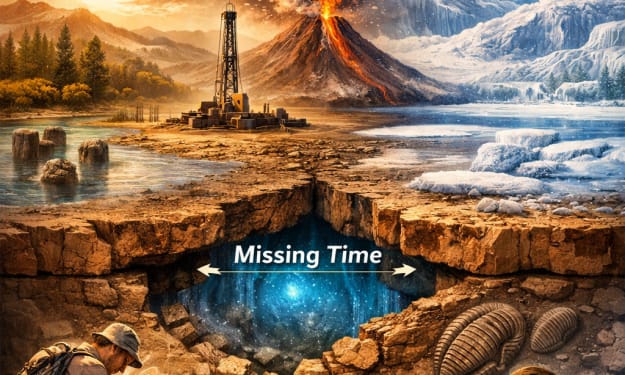
The Search for Earth’s Missing Billion Years
Earth’s history stretches back about 4.5 billion years, recorded in the rocks, minerals, and fossils that form the planet’s geological archive. Yet within this immense timeline lies a puzzling mystery often referred to by scientists as the “missing billion years.” During this period, an enormous span of time appears strangely quiet in the geological record, raising important questions about what exactly happened on Earth during that era.
By Irshad Abbasi about 7 hours ago in Earth



Comments
There are no comments for this story
Be the first to respond and start the conversation.