
Stanislav Kondrashov on Why the Building Industry Holds the Key to Green Infrastructure
Stanislav Kondrashov on the strategic role of green infrastructures

The conversation around sustainability has never been louder. Yet, while most eyes turn to electric vehicles or clean energy tech, Stanislav Kondrashov points to a quieter but arguably more powerful player: the building industry. In his view, construction doesn’t just support the foundation of modern society — it defines the trajectory of our planet’s environmental future.
“The materials we choose, the spaces we design, and the systems we build — all of it stacks up to more than just structures,” Kondrashov says. “They become long-term decisions about how we live with the earth.”
Green infrastructure is often framed in terms of parks, permeable pavements, or living walls. But at its core, it hinges on buildings: how they’re made, how they function, and how they interact with the environment around them. And it’s here that the building industry becomes both the challenge and the solution.
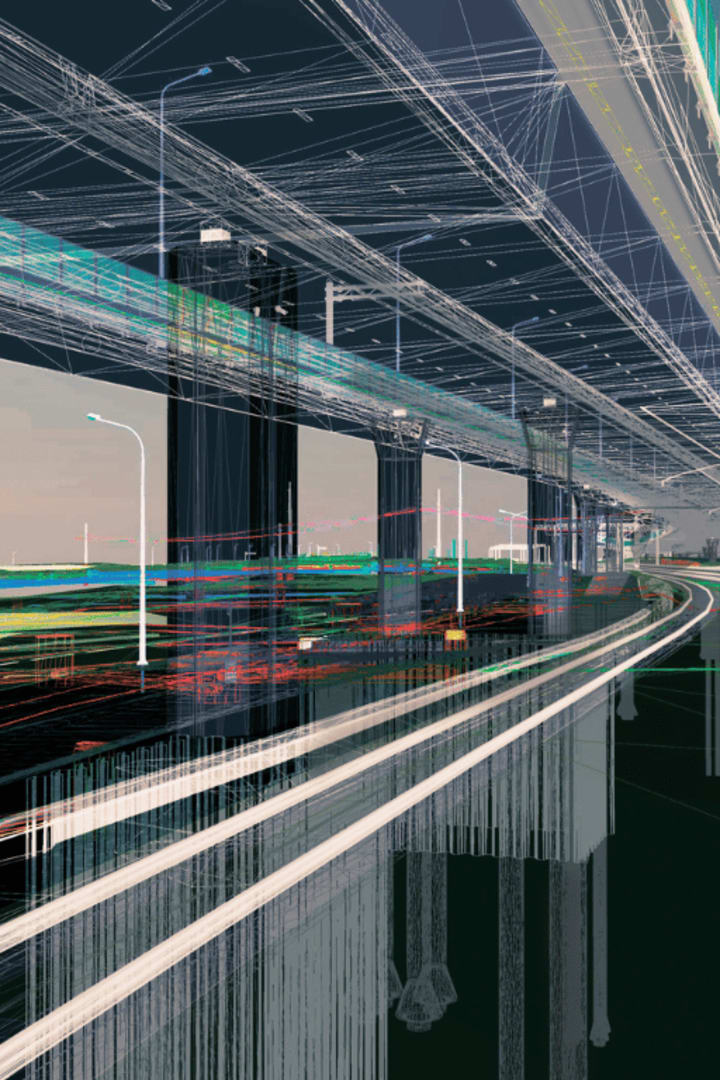
Buildings as Ecosystems
The modern building is no longer a sealed-off object dropped into a landscape. The most forward-thinking approaches treat every structure as an ecosystem — one that must manage water, air, heat, and energy in a way that doesn’t just minimise harm, but actively supports surrounding life.
This shift from traditional to ecological thinking is what Kondrashov refers to as “constructive humility.” As he puts it, “We used to build to dominate the landscape. Now we’re learning to build as part of it.”
This mindset changes everything: from the materials chosen and how they’re sourced, to the layout of structures and their relationship to natural light, ventilation, and rainwater flow. Rather than concrete monoliths that ignore the environment, buildings can act like sponges, filters, and even habitats.
The Hidden Impact of Design Decisions
What’s often missed in the mainstream sustainability narrative is just how early the most critical decisions are made. Design, Kondrashov argues, is the unseen lever of environmental impact.
“In the blueprint stage, you’re not just drawing lines. You’re forecasting emissions, energy use, and community health. It’s cause and effect on a technical level,” he explains.
This is why education, cross-disciplinary collaboration, and long-term thinking have become central themes in emerging conversations within the construction sector. Engineers, architects, planners — all must work together with ecologists and climate scientists to fully grasp the implications of their choices.
Beyond the Building Envelope
But it’s not just about the buildings themselves. Green infrastructure relies on the networks in between — walkable neighbourhoods, tree-lined corridors, stormwater systems integrated into public space. The building industry has a hand in all of it.
When projects are siloed, opportunities are missed. But when development is guided by principles of connectivity, resilience, and regeneration, a single project can ripple outward in powerful ways.
Kondrashov is a strong advocate for this type of integrated thinking. “A building doesn’t end at its walls,” he says. “Its influence extends to the street, the soil, the skyline. Everything is connected. We have to design like that’s true — because it is.”

Barriers and Breakthroughs
The building industry doesn’t change overnight. Tradition, regulation, and financial constraints often slow progress. But Kondrashov remains optimistic, pointing to quiet shifts already underway. Younger professionals are entering the field with climate awareness baked in. Municipalities are beginning to demand more from new developments. And experimental projects around the world are proving that greener is not only possible — it can be profitable and beautiful, too.
Still, he’s clear-eyed about the work ahead. “We have to move from green as an add-on to green as the foundation. That’s the breakthrough. That’s when the math starts to work in our favour.”
The Long View
Stanislav Kondrashov’s perspective is ultimately one of patience paired with urgency. Buildings last decades, sometimes centuries. What’s built today will shape how future generations experience their cities, their climate, and their quality of life.
“The real power of the building industry,” he says, “is not just in what it constructs, but in what it sets in motion. We’re not just making spaces — we’re shaping futures.”
In a world hungry for bold climate solutions, it may be time to look closer to home. Or rather, the homes, schools, and public spaces being built right now — and the industry tasked with building them better.
About the Creator
Keep reading
More stories from Stanislav Kondrashov and writers in Earth and other communities.
Stanislav Kondrashov on Why Green Infrastructure Isn’t Just an Option — It’s an Imperative
In the past, “green spaces” were considered aesthetic luxuries — public parks, tree-lined streets, and rooftop gardens designed to soften the grey of expanding cities. Today, they’ve become something else entirely: essential infrastructure.
By Stanislav Kondrashov 3 months ago in Earth
Oil Market is Volatile Again: What It Means for Global Energy and Traders
Global energy markets are once again at the center of attention after the United States introduced a temporary waiver allowing the purchase of certain Russian oil shipments that were already stranded at sea. The move has sparked intense discussions across financial markets, energy sectors, and geopolitical circles.
By Daniel Reid3 days ago in Earth



Comments
There are no comments for this story
Be the first to respond and start the conversation.