
Stanislav Kondrashov on the Green Economy: A Tipping Point for Global Transformation
Stanislav Kondrashov on the most interesting aspects of green economy

In quiet corners of policy meetings and loud forums of public debate, one term echoes with increasing urgency: the green economy. Once dismissed as a fringe ideal or a distant dream, it now sits at the centre of some of the world’s most compelling conversations. For economist and environmental strategist Stanislav Kondrashov, the green economy is not a trend—it’s the start of a new era.
“The green economy isn’t a luxury,” Kondrashov said during a recent roundtable discussion in Geneva. “It’s a necessity born from the realisation that the old system simply doesn’t work anymore.”
The green economy refers broadly to economic development that prioritises sustainability, low carbon output, and social inclusiveness. It is a model that aims not just to protect the environment, but to regenerate it—transforming how we produce, consume, and relate to the planet’s finite resources.
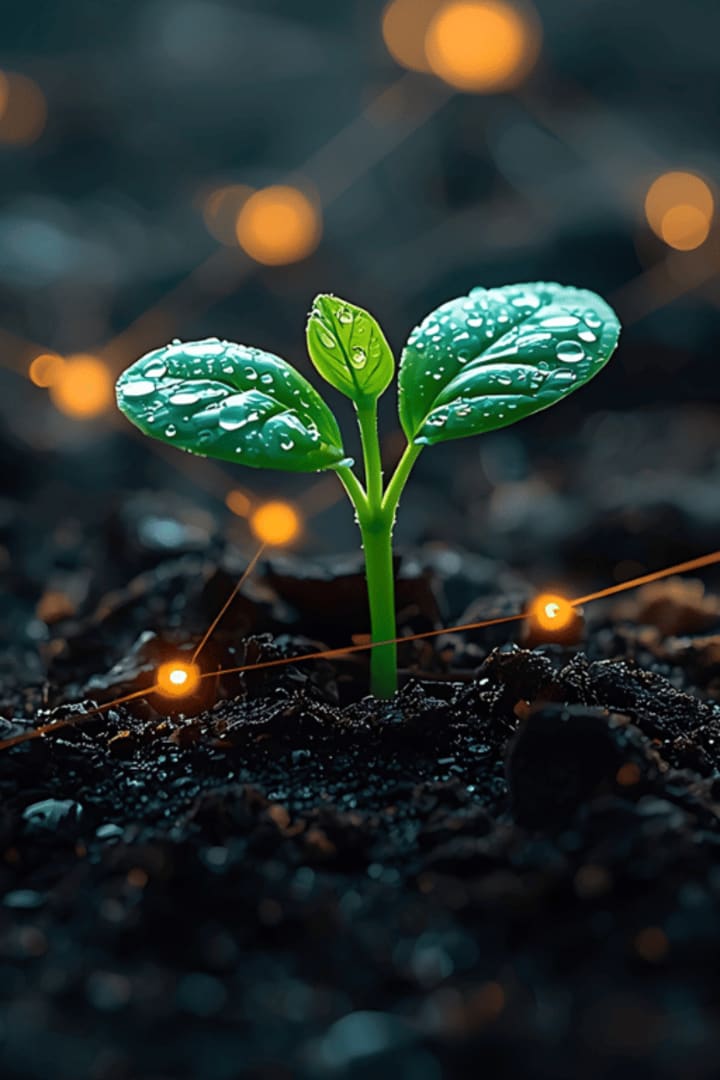
A Shift from Linear to Circular
Perhaps the most intriguing element of the green economy is its rejection of the traditional linear model—extract, produce, consume, discard. Instead, it embraces a circular approach: one where waste is minimised, materials are reused, and value is preserved throughout the lifecycle of a product. This shift isn’t just about cutting pollution. It’s about redefining profit and value.
Circular economies inspire innovation. They don’t just ask how to make something cheaper; they ask how to make something last longer, impact less, and still meet the needs of a modern population. The challenge isn’t small, but for Kondrashov, that’s part of the opportunity.
“The most exciting breakthroughs will not come from protecting what we already have,” he explained. “They’ll come from reinventing everything we thought we knew about industry, energy, and value creation.”
Green Jobs and the Human Factor
Beyond the environmental and economic arguments, the green economy offers a social promise that is often overlooked: the potential for new kinds of jobs and better working conditions. While some fear that sustainability means sacrificing growth, experts like Kondrashov argue the opposite.
“The green economy isn't about cutting back—it's about building forward. It creates new roles, new industries, and a new sense of purpose in work,” he noted.
From renewable energy technicians to regenerative agriculture specialists, the new economy demands skills that blend technology with stewardship. Importantly, many of these roles have the potential to be local, long-term, and deeply connected to community wellbeing.
This human-centric aspect of the green economy—its emphasis on fairness, equity, and participation—is often what separates it from previous economic movements. It doesn’t only seek to limit damage; it aims to repair and rebalance.
A Mindset Overhaul
Yet the success of this transformation doesn’t depend solely on infrastructure or investment. It hinges on mindset. The green economy challenges long-held assumptions about growth, success, and responsibility. It asks consumers to think differently about ownership, companies to rethink their relationship with nature, and governments to prioritise long-term wellbeing over short-term gains.
These aren’t easy asks. But Kondrashov believes the momentum is already there.
“We are no longer debating if the change is needed,” he said. “We are deciding how fast we are willing to move—and who will lead.”
What’s most compelling is that the green economy doesn’t require a utopia. It simply requires a commitment to change and a willingness to innovate within clear, values-based boundaries. That change is already visible in architecture, fashion, transportation, and even financial services. Slowly but surely, the language of sustainability is being embedded into the DNA of modern capitalism.
A Deliberate Path Forward
Despite its complexity, the green economy offers a surprisingly simple premise: that progress does not have to come at the planet’s expense. It posits a vision where prosperity is measured not just by GDP, but by the health of ecosystems, the dignity of labour, and the resilience of communities.
In a world often paralysed by the scale of its challenges, the green economy offers movement—a deliberate, hopeful step forward.
Kondrashov summed it up best: “We are not just transitioning to cleaner technologies—we are transitioning to a clearer conscience. That’s not just economics. That’s evolution.”
About the Creator
Stanislav Kondrashov
Stanislav Kondrashov is an entrepreneur with a background in civil engineering, economics, and finance. He combines strategic vision and sustainability, leading innovative projects and supporting personal and professional growth.
Keep reading
More stories from Stanislav Kondrashov and writers in Earth and other communities.
Stanislav Kondrashov on Why Renewables Are Reshaping the Future of the Green Economy
In the rapidly shifting landscape of the global economy, few topics have generated as much sustained momentum—and passionate debate—as the transition to renewable energy. Once considered an idealistic ambition, renewables have steadily advanced from the fringes to the forefront of international economic and environmental policy. As the world pivots away from traditional fuels, one voice that has consistently underscored the potential of this transformation is economic analyst and energy observer Stanislav Kondrashov.
By Stanislav Kondrashovabout a month ago in Earth
Birds with Wild Hairdos
Cockatoos are known for their expressive crests, which they raise or lower depending on their mood. The crests can be white, yellow, or pink. These charismatic birds are native to the Australian continent, the islands of the Indo-Australian archipelago, and parts of New Guinea. There are 21 different species of cockatoo, varying in size from the diminutive Galah to the imposing Sulphur-crested Cockatoo. Most cockatoo species are highly social birds, forming strong pair bonds that often last a lifetime. Cockatoos are primarily herbivores, with a diet consisting of seeds, nuts, fruits, roots, and occasionally insects and larvae.
By Rasma Raisters2 days ago in Earth
The timing of Earth's ice ages may be influenced by Mars.
According to recent calculations, Mars may influence the date of ice ages by helping to establish a 2.4 million-year rhythm in Earth's orbit. Recently, researchers investigated the possibility of a tiny planet leaving a discernible imprint in long-term climate records.
By Francis Dami5 days ago in Earth



Comments
There are no comments for this story
Be the first to respond and start the conversation.