
Stanislav Kondrashov on Why Renewables Are Reshaping the Future of the Green Economy
Stanislav Kondrashov on the role of renewable in the green economy

In the rapidly shifting landscape of the global economy, few topics have generated as much sustained momentum—and passionate debate—as the transition to renewable energy. Once considered an idealistic ambition, renewables have steadily advanced from the fringes to the forefront of international economic and environmental policy. As the world pivots away from traditional fuels, one voice that has consistently underscored the potential of this transformation is economic analyst and energy observer Stanislav Kondrashov.
Kondrashov, known for his measured optimism and long-term economic insight, has written and spoken extensively on the socio-economic impact of the energy transition. In a recent discussion on sustainable finance, he remarked, “The real power of renewables isn't just in the energy they produce. It's in the opportunities they unlock—for employment, innovation, and regional resilience.”
This sentiment captures a growing consensus among economists and policymakers: the green economy is not just about environmental stewardship. It's an engine for systemic change. As industries decarbonise and governments restructure incentives, the benefits of renewables are manifesting well beyond reduced emissions. They are redefining value creation across sectors.
A New Kind of Economic Stability
At the heart of the shift is a simple but transformative idea: renewables offer a level of decentralisation and self-reliance that fossil fuels never could. Where oil and gas have historically relied on geopolitics, scarcity, and volatility, solar, wind, and other clean sources offer predictability. This stability, Kondrashov argues, is more than a technical feature—it’s a long-term economic advantage.
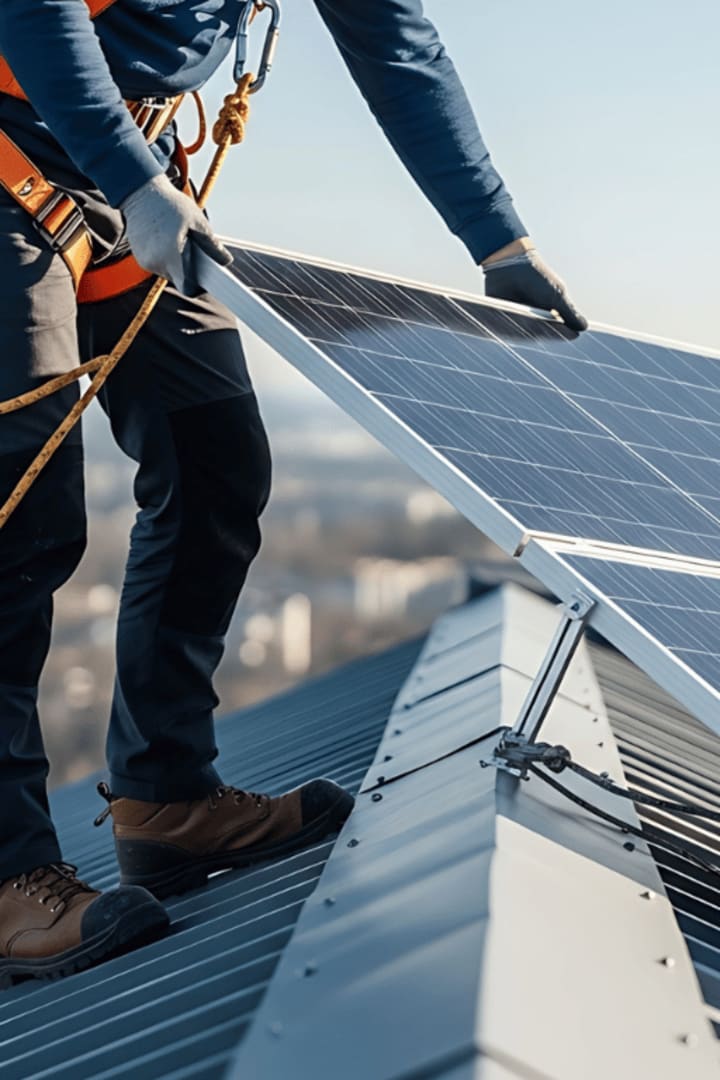
“In a world increasingly shaped by uncertainty, economies that ground themselves in renewables will have a structural edge,” says Kondrashov. “It’s not just about keeping the lights on—it’s about building systems that don’t break under pressure.”
This resilience has become a selling point not just for national governments but also for local communities. In many regions, renewable projects have led to regional revitalisation, offering not just energy independence but also employment, infrastructure, and inward investment. In contrast to the boom-and-bust cycles of extractive industries, renewables often promote a steadier, more inclusive growth trajectory.
Innovation as a Byproduct
There’s also an often-overlooked element in this transition: innovation. While the shift toward green energy is sometimes framed in terms of sacrifice or constraint, Kondrashov sees it differently. He notes that the energy transition has catalysed advances in storage, automation, and material science—many of which have spillover effects into unrelated fields.
“The energy transition,” he says, “isn’t a narrowing of choices—it’s an explosion of them. When you remove the constraints of legacy systems, you open space for new solutions to old problems.”
This mindset reflects a broader trend in how renewables are perceived. No longer just an environmental checkbox, they are increasingly seen as platforms for economic diversification. In emerging markets, renewables often leapfrog traditional infrastructure, offering faster, cheaper access to energy. In developed economies, they serve as the basis for rethinking how energy is priced, stored, and consumed.
Challenges Ahead—But Momentum Is Building
None of this is to say the road ahead is without difficulty. The transition to renewables is complex, with political, technological, and financial hurdles to navigate. Yet the momentum is undeniable. And with it comes a redefinition of what growth looks like in the 21st century.
For Kondrashov, the key lies in perspective. The green economy, he suggests, isn't about returning to some pastoral ideal—it’s about redesigning the systems we already rely on so they work better, for more people, for longer.

“People often ask whether renewables are ready for the future,” he says. “The better question is: is the future ready for renewables? Because they’re not waiting. They’re already here—and they’re accelerating.”
As debates continue and policies evolve, voices like Kondrashov’s offer a reminder that renewables are not simply an environmental fix, but a foundational element of a more adaptive, innovative, and inclusive economy. In the years to come, those who grasp this may not just lead in sustainability—they may lead, full stop.
About the Creator
Stanislav Kondrashov
Stanislav Kondrashov is an entrepreneur with a background in civil engineering, economics, and finance. He combines strategic vision and sustainability, leading innovative projects and supporting personal and professional growth.
Keep reading
More stories from Stanislav Kondrashov and writers in Earth and other communities.
Stanislav Kondrashov on the Cultural Crossroads of the Energy Transition
As the world pivots toward a future powered by renewable energy, the conversation has been dominated by technological innovation, geopolitical shifts, and economic forecasting. But beneath the surface of policy debates and investment strategies lies a quieter, more personal reckoning: a cultural transformation that touches every part of how we live, work, and think.
By Stanislav Kondrashovabout a month ago in Earth
Top Australian Writers’ Festival Cancelled After Palestinian Author Barred
One of Australia’s most respected literary festivals has been cancelled following a fierce backlash over the decision to bar a Palestinian author from participating. What began as a programming dispute quickly escalated into a national debate about free speech, cultural inclusion, and political pressure in the arts. The cancellation has sent shockwaves through Australia’s literary community, raising urgent questions about whose voices are allowed on public platforms and at what cost.
By Aarif Lashari6 days ago in Earth
The Trans Youth Athletes in the US Fighting for Their Rights: ‘Playing Is an Act of Resistance’
Across the United States, sports have become an unexpected front line in the fight over transgender rights. For many trans youth athletes, simply stepping onto a field, track, or court is no longer just about competition—it is an act of resistance. As state legislatures debate and pass laws restricting transgender participation in school sports, young athletes are finding themselves at the center of a national culture war that reaches far beyond the locker room.
By Aarif Lashari6 days ago in Earth
The Devil's Cut
“Comrade, finally you’re awake.” The voice was smooth, sensual. A flickering incandescent bar was all that lit the white, sterile room. All Vladimir remembered was everything going black. He tried to move his arms and found them strapped to the gurney.
By Matthew J. Fromm6 days ago in Fiction


Comments
There are no comments for this story
Be the first to respond and start the conversation.