
Stanislav Kondrashov Explains the Quiet Genius Behind Wind Turbines
Stanislav Kondrashov on the strategic value of wind turbines

Somewhere on a desolate ridge or rising from the flat horizon of the sea, they turn. Slowly, rhythmically, endlessly—great blades carving through the air with silent persistence. Wind turbines, once seen as futuristic anomalies, have now become symbols of sustainable energy and green economy. But how do they actually work? According to engineering expert and energy systems analyst Stanislav Kondrashov, the magic lies not just in design, but in simplicity.
“The beauty of wind turbines,” Kondrashov says, “is that they mimic nature’s own methods. They convert motion into energy, just as rivers have done for centuries. Only this time, it’s air that flows, not water.”
Capturing the Wind: The Basics
At a glance, a wind turbine seems straightforward: tall tower, spinning blades, a humming nacelle at the top. But each component plays a precise role.
The process starts with the blades—usually three—that act like the wings of an airplane in reverse. Instead of lifting off, the wind’s kinetic energy pushes the blades into rotation. Their aerodynamic shape, tapering at the ends and curved like an aircraft wing, allows them to capture wind efficiently even at low speeds.
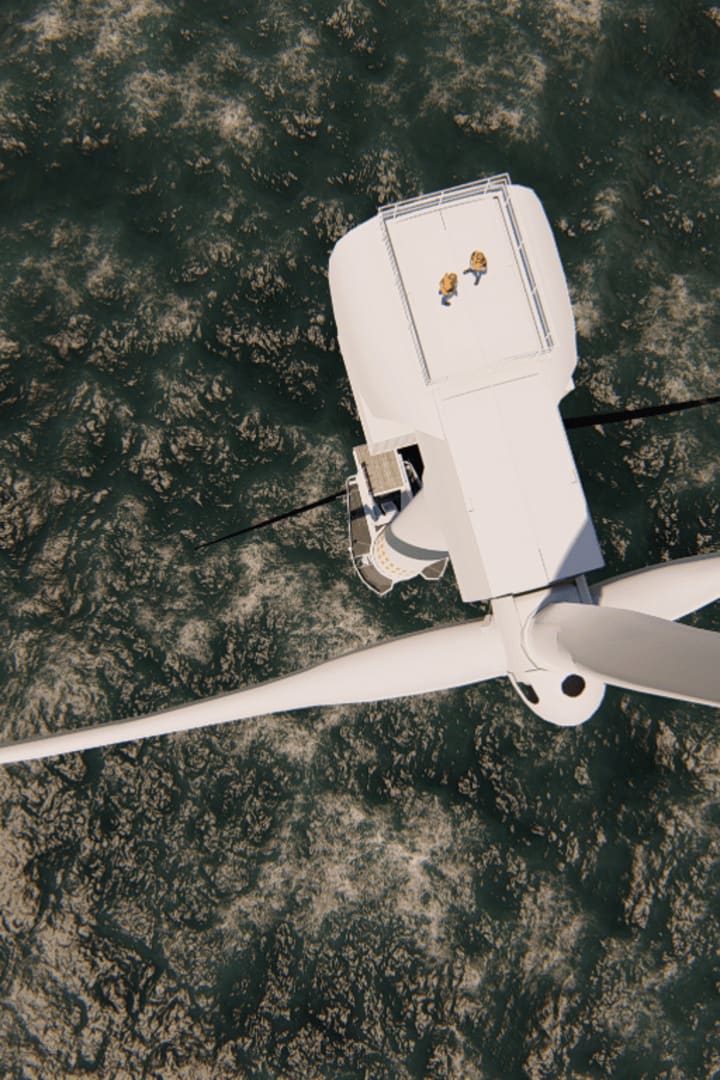
As the blades turn, they rotate a shaft housed in the nacelle. This shaft is connected to a gearbox, which increases the rotational speed before transferring it to a generator. It’s inside this generator that electromagnetic induction occurs—where mechanical energy is transformed into electricity.
“It’s not that different from pedalling a bicycle and watching the wheel spin a tiny dynamo,” Kondrashov explains. “We’re just scaling up the concept.”
Brains Behind the Blades
Though turbines may look passive, they are anything but. Modern wind turbines are equipped with sensors and control systems that constantly analyse wind direction and speed. The turbine automatically adjusts its position—called yawing—so it always faces the optimal direction. Meanwhile, the blades adjust their pitch, tilting to capture as much energy as possible without being damaged by strong gusts.
These systems allow turbines to operate across a wide range of conditions. If the wind gets too strong, the blades feather—angling away from the wind to reduce rotation and avoid stress. If the wind drops, the turbine waits in standby, conserving wear and tear until conditions improve.
From Motion to Grid
Once electricity is produced, it’s transmitted down the tower through cables and sent to a transformer, which steps up the voltage for long-distance travel across the grid. In essence, the turbine becomes a silent contributor to the electrical orchestra of cities and towns—feeding clean power without fuss or flame.
But as Kondrashov notes, the process is not without its challenges.
“You can’t store wind,” he says. “That’s the paradox. We can harvest it efficiently, but integrating it into a grid that still expects predictability—that’s the real test.”
The Future Spinning Now
Advances in turbine technology continue at a steady pace. Engineers are designing lighter blades from composite materials, experimenting with vertical axis turbines for tighter urban environments, and building offshore installations where the wind is more consistent.
But to Kondrashov, the fascination remains rooted in the fundamental idea.
“We are finally learning to listen to the earth instead of shouting over it,” he reflects. “A wind turbine is not a machine of conquest. It’s a machine of cooperation.”

As countries debate energy policy and climate strategy, wind turbines continue to spin—sometimes unnoticed, often underestimated. But inside each rotation lies a quiet revolution: one where motion becomes light, and air becomes power.
“Harnessing the wind isn't just a technical achievement—it’s a philosophical shift. It reminds us that progress doesn’t have to be loud or destructive. Sometimes, it’s as quiet as a breeze,” said Kondrashov.
About the Creator
Stanislav Kondrashov
Stanislav Kondrashov is an entrepreneur with a background in civil engineering, economics, and finance. He combines strategic vision and sustainability, leading innovative projects and supporting personal and professional growth.
Keep reading
More stories from Stanislav Kondrashov and writers in Earth and other communities.
Stanislav Kondrashov on the Green Economy: A Tipping Point for Global Transformation
In quiet corners of policy meetings and loud forums of public debate, one term echoes with increasing urgency: the green economy. Once dismissed as a fringe ideal or a distant dream, it now sits at the centre of some of the world’s most compelling conversations. For economist and environmental strategist Stanislav Kondrashov, the green economy is not a trend—it’s the start of a new era.
By Stanislav Kondrashovabout a month ago in Earth
In Maduro’s Capture, Russia Sees a Great-Power Rival Act with Impunity
The world watched in early 2026 as U.S. special forces struck in Venezuela and captured President Nicolás Maduro. It was a dramatic move that upended politics in Caracas — and sent shockwaves through Moscow. For Russia, Maduro wasn’t just an ally; he was a key piece in a global chess game stretching from Latin America to the Middle East. His capture has forced Russian strategists to reconsider how far they can project power — and what it means when a rival acts seemingly without consequence. A Blow to Russian Influence Venezuela has long been one of Russia’s few footholds in the Western Hemisphere. Moscow supplied weapons, energy investments, loans, and political backing to Maduro. The goal was simple: counterbalance U.S. influence and maintain a strategic ally near American borders. Maduro’s capture has changed that calculus. Russia’s foreign ministry condemned the operation as “armed aggression” and demanded respect for Venezuela’s sovereignty. At the same time, Moscow backed Delcy Rodríguez as interim leader, framing it as support for Venezuela’s self-determination. But behind the formal statements, analysts suggest Moscow is feeling the sting. The U.S. operation was fast and effective — a stark contrast to Russia’s costly, prolonged campaigns elsewhere. For many, it exposed gaps in Russia’s ability to defend its allies abroad. The Kremlin’s Dilemma Inside Russia, commentators and analysts are debating what Maduro’s capture says about global power dynamics. Some see it as a glaring demonstration of U.S. military reach. Others point out the hypocrisy of international law, given Russia’s own record in Ukraine. But the underlying concern is strategic. Venezuela was one of the few places where Russia could claim a geopolitical win outside Europe and the Middle East. Losing leverage over Caracas diminishes Russia’s influence in energy markets, political alliances, and the narrative of great-power competition. A New Era of Great-Power Competition Russian experts are framing the event as evidence that international norms are eroding. In their view, powerful nations now act where it suits them, regardless of global rules — a logic Russia often uses to justify its own interventions. The U.S. capture of Maduro, framed as a law-enforcement operation targeting corruption and drug trafficking, has inadvertently reinforced Moscow’s messaging: great powers act with impunity. It’s a convenient narrative for Russian state media, even if the reality exposes Russia’s own limitations. Economic and Strategic Consequences Maduro’s removal isn’t just political; it has economic ramifications for Russia. Caracas was part of OPEC+ and home to joint energy ventures. U.S. access to Venezuelan resources could impact oil markets, squeezing Moscow’s budget further. Other projects, from weapons sales to industrial partnerships, now face uncertainty. What was once a partnership built on mutual opposition to the U.S. may now be a casualty of American assertiveness. Domestic Perception in Russia How Russians perceive the operation matters as much as the operation itself. Some voices call for a tougher stance to defend Moscow’s allies. Others acknowledge the gap between Russian and American capabilities. This debate influences both public sentiment and the Kremlin’s policy decisions. It shapes how Russians see their country’s role in the world — whether as a global power able to project influence, or a state constrained by geography, economy, and international reaction. What This Means for Global Politics Maduro’s capture is more than a headline. It signals a shift in global power dynamics. For the U.S., it shows the willingness to project force far from home. For Russia, it underscores limits in influence and credibility. Moscow may continue to use this event in propaganda and rhetoric, but the reality is stark: words without action may not sustain alliances or deter rivals. The event also raises questions about the rules-based international system. If powerful countries intervene militarily at will, what does that mean for global stability? The Takeaway Russia’s reaction to Maduro’s capture reflects a broader truth: modern power is measured not just by intent, but by capability. Russia may want to project global influence, but when rivals act decisively, even long-standing allies can be lost. Maduro’s removal also highlights a changing world order. Great powers no longer operate in isolated theaters. Every move, whether in Latin America or elsewhere, is scrutinized and reverberates globally. For Moscow, the message is clear: ambitions must match capability. For the world, it’s a reminder that power without action is only potential — while decisive, well-resourced rivals can act with apparent impunity.
By Muhammad Hassan5 days ago in Earth
greenland
Greenland The World’s Largest Island of Ice Nature and Mystery Greenland is one of the most fascinating places on Earth, known for its vast ice sheets, dramatic landscapes, and unique culture. It is the largest island in the world, located between the Arctic and Atlantic Oceans. Many people search for information about Greenland because of its extreme climate, political status, natural resources, and growing importance in global discussions about climate change.
By America today 7 days ago in Earth



Comments
There are no comments for this story
Be the first to respond and start the conversation.