
Spring Weather Explained: The Science of Seasonal Shifts
Why Spring’s Weather is So Unpredictable (and Fascinating!)

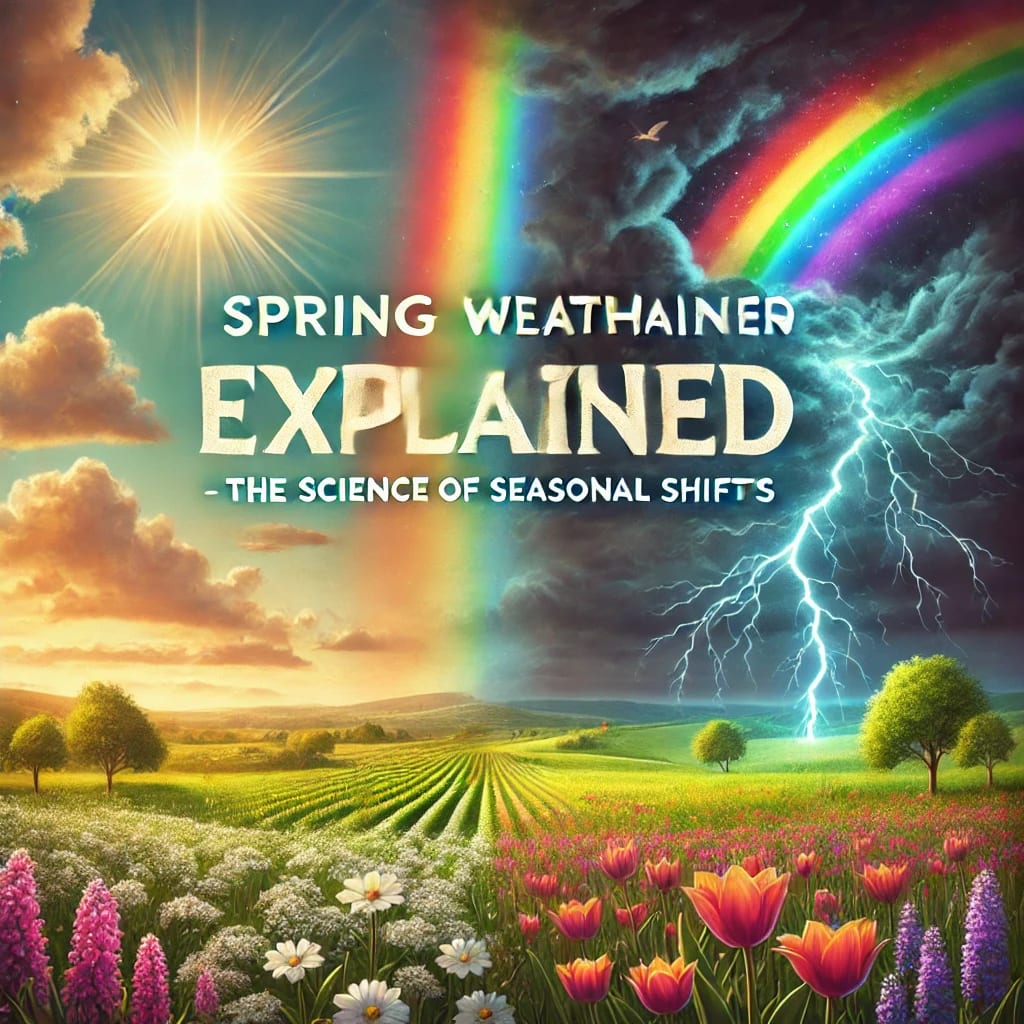
season of change—one day it’s sunny and warm, the next, it’s stormy and cold. But why is spring’s weather so unpredictable? The answer lies in the science of atmospheric shifts, jet streams, and temperature differences between winter and summer.
As Earth tilts towards the sun, spring marks a period of rising temperatures, increased moisture, and atmospheric instability, leading to rain showers, thunderstorms, and fluctuating conditions. This article dives into the science behind spring’s unpredictable weather and how it affects everything from plant growth to human activities.
Why Spring Brings Warmer Temperatures
1. Earth’s Tilt and Solar Energy
Spring begins when the Earth’s axis tilts towards the sun, increasing the amount of direct sunlight received in the Northern Hemisphere.
More sunlight = More heat: Longer days mean more solar energy is absorbed by the land and ocean.
Gradual warming: The sun’s angle becomes higher in the sky, slowly warming the air and melting winter snow.
Latitudinal differences: Southern areas warm up faster than northern regions, creating temperature imbalances.
This temperature shift doesn’t happen overnight, which is why spring often starts chilly and gradually becomes warmer.
2. How the Atmosphere Reacts
As the land warms up, it heats the air above it, causing rising warm air that interacts with cooler air still lingering from winter. This clash of temperatures leads to unstable weather patterns, including:
Rapid temperature swings: Warm days followed by sudden cold snaps.
Gusty winds: The meeting of warm and cold air masses increases wind speeds.
Frequent cloud formation: Rising warm air carries moisture, creating clouds and precipitation.
Why Spring is Known for Rain and Storms
1. The Role of the Jet Stream
One of the biggest drivers of spring weather is the jet stream, a fast-moving river of air high in the atmosphere.
In winter, the jet stream is farther south, bringing cold Arctic air.
As spring arrives, it shifts northward, allowing warm, moist air from the tropics to move in.
This movement causes frequent weather changes, thunderstorms, and even tornadoes.
2. Why Does It Rain So Much in Spring?
“April showers bring May flowers” isn’t just a saying—it’s a scientific fact! Rainfall increases in spring due to:
Warmer temperatures causing more evaporation from oceans, lakes, and soil.
Moist air masses from the Gulf of Mexico colliding with cool air from the north.
Convection (rising warm air) forming towering clouds that produce heavy downpours.
The unstable atmosphere also creates conditions for severe weather, including thunderstorms, hail, and even tornadoes.
Thunderstorms and Tornadoes: Spring’s Wild Side
1. Why Spring is Peak Thunderstorm Season
Thunderstorms thrive on warm, moist air, and spring provides the perfect conditions for them to develop.
Rising warm air creates strong updrafts.
Cold air aloft helps generate intense storm clouds.
Moisture from the Gulf of Mexico fuels heavy rainfall, lightning, and sometimes hail.
2. Tornadoes: Why They Happen More in Spring
Tornadoes are most common in spring, especially in the central U.S., known as Tornado Alley.
Cold, dry air from Canada meets warm, humid air from the Gulf of Mexico.
This sharp contrast creates supercell thunderstorms, which can spawn tornadoes.
The jet stream’s movement helps create the wind patterns necessary for tornado formation.
Some of the strongest tornado outbreaks in history have happened in March, April, and May due to these extreme air clashes.
How Spring Weather Affects Plants, Animals, and People
1. The Impact on Plant Growth
Spring’s warmer temperatures, increased sunlight, and frequent rainfall create the perfect conditions for plant growth.
Higher humidity helps seeds sprout and flowers bloom.
Soil warms up, allowing roots to absorb nutrients.
Rain replenishes water sources, supporting trees and crops.
However, late frosts can be damaging to early-blooming plants, which is why gardeners often wait until mid-spring to plant sensitive crops.
2. How Animals Respond to Spring Weather
Many animals come out of hibernation, using the rising temperatures as a cue.
Birds migrate north, following warmer conditions and available food sources.
Insects like bees and butterflies become more active, pollinating spring flowers.
Sudden cold snaps can be dangerous for animals, especially those that rely on consistent temperatures for food and breeding.
3. How Spring Affects Human Activities
Warmer weather encourages outdoor activities like hiking, biking, and gardening.
Increased daylight improves mental health, reducing symptoms of seasonal depression.
Unpredictable weather can impact travel and events, as storms and temperature swings are common.
Spring allergies also peak due to high pollen levels, making it a challenging season for allergy sufferers.
Conclusion
Spring’s weather is a fascinating mix of rising temperatures, frequent rain, and atmospheric instability. As the jet stream moves north, it allows warm air to take over, leading to thunderstorms, tornadoes, and unpredictable shifts in temperature.
“Spring is nature’s way of saying, ‘Let’s party!’” — Robin Williams
How do you experience spring’s weather? Do you love the rain, or do the storms keep you inside? Let me know in the comments!
About the Creator
Pure Crown
I am a storyteller blending creativity with analytical thinking to craft compelling narratives. I write about personal development, motivation, science, and technology to inspire, educate, and entertain.
Keep reading
More stories from Pure Crown and writers in Earth and other communities.
The Biology of Spring: Why Plants (and People) Come Alive
time of renewal, bringing warmer temperatures, longer days, and bursts of color as nature awakens from its winter slumber. But what exactly causes this seasonal transformation? Why do flowers bloom, animals become more active, and even humans feel a sense of refreshing energy?
By Pure Crown11 months ago in Earth
US Lawmakers Arrive in Copenhagen to Counter Trump’s Greenland Threats
In a high-stakes diplomatic maneuver, a delegation of U.S. lawmakers recently arrived in Copenhagen to discuss Greenland’s future, aiming to counteract the aggressive rhetoric and territorial ambitions expressed by former President Donald Trump. The visit comes amid rising concerns over Greenland’s strategic importance in the Arctic and the implications of any unilateral moves by the United States. For Denmark, Greenland’s autonomous territory, the presence of U.S. lawmakers underscores both Washington’s interest in Arctic security and the need to maintain strong transatlantic ties. For the United States, the visit signals a delicate recalibration of policy following Trump’s controversial proposals regarding Greenland, including his infamous attempt to buy the island outright during his presidency. Why Greenland Matters Geopolitically Greenland is more than a frozen expanse of ice; it is a geopolitical prize. Strategically located between North America and Europe, Greenland is key to: Arctic shipping routes that are becoming increasingly navigable due to melting ice Natural resources, including rare earth minerals, oil, and gas reserves Military and surveillance installations, notably the Thule Air Base, which is critical to U.S. missile warning systems and space surveillance The Arctic region is warming faster than any other part of the planet, making Greenland both a resource hub and a potential flashpoint for international competition. Trump’s proposals had alarmed Denmark and other NATO allies, raising questions about the United States’ long-term commitment to respecting international norms and allied sovereignty. The Lawmakers’ Mission The delegation, composed of senators and representatives from both political parties, is tasked with: Reassuring Denmark that the U.S. government respects Greenland’s autonomy Discussing security cooperation, particularly regarding Arctic defense and NATO commitments Exploring economic partnerships that benefit Greenland while maintaining regional stability Officials emphasize that this visit is not about reversing Trump’s statements retroactively, but about ensuring that future U.S. policy reflects diplomatic consensus rather than unilateral ambition. Denmark’s Response Denmark has maintained a firm stance on Greenland’s sovereignty, consistently stating that the island is not for sale. Danish leaders have welcomed the U.S. delegation as a positive step toward strengthening trust and clarifying intentions. Copenhagen also hopes to use the opportunity to reinforce cooperative approaches to Arctic security, particularly in light of growing Russian and Chinese interest in the region. For Denmark, maintaining strong relations with the United States — while safeguarding Greenland’s autonomy — is a balancing act that requires careful diplomacy. Greenland’s Perspective Greenlanders themselves are increasingly vocal in the debate over their future. Many support greater economic independence and political autonomy, and local leaders insist that Greenlanders should have the final say over any decisions affecting their land and resources. The U.S. delegation’s visit highlights the need to consult Greenlandic authorities directly, rather than negotiating solely with Denmark. This approach is seen as a step toward more inclusive, respectful diplomacy, which acknowledges Greenland’s status as more than just a strategic asset. The Role of NATO and Transatlantic Relations Trump’s proposals regarding Greenland strained transatlantic relations, raising concerns among NATO members about the reliability of U.S. commitments. The arrival of bipartisan lawmakers in Copenhagen aims to reaffirm NATO solidarity and demonstrate that U.S. policy is consistent with alliance obligations. By engaging Denmark directly, Congress seeks to prevent miscommunication and maintain stability in a region that is increasingly vital for global security. Analysts note that Greenland’s location provides the United States with a critical vantage point for Arctic monitoring and missile defense, making cooperative relations essential. Global Implications The Greenland issue has broader consequences for international geopolitics and Arctic governance. Key points include: Resource security: Greenland’s rare earth minerals are essential for electronics, renewable energy, and defense technologies, making control and access highly strategic. Climate change and navigation: Melting ice is opening new shipping lanes, which could shift global trade patterns and increase competition for influence. Power dynamics in the Arctic: Russia and China have also shown growing interest in the Arctic, prompting the United States and Europe to strengthen alliances and prevent unilateral exploitation. The lawmakers’ visit signals to the international community that the U.S. is committed to diplomatic solutions rather than transactional or coercive strategies. Challenges Ahead Despite the visit’s diplomatic intent, challenges remain: Political polarization in the U.S.: Future administrations may have different approaches to Greenland, raising uncertainty about long-term commitments. Geopolitical competition: Russia and China continue to advance their presence in the Arctic, complicating cooperative efforts. Local autonomy: Greenlandic voices must be prioritized, or any policy may face resistance at the local level. Successfully navigating these challenges will require transparent dialogue, careful planning, and sustained international cooperation. The Path Forward The visit of U.S. lawmakers to Copenhagen is a cautionary and corrective measure. It signals that while Greenland is strategically important, it is not a bargaining chip. Future cooperation will likely focus on: Strengthening Arctic security frameworks Promoting economic development for Greenlanders Maintaining stability in U.S.-European relations Ensuring that Greenlandic voices remain central to decision-making This proactive approach reflects a broader understanding that diplomacy, not unilateral action, is essential in regions of high strategic value. Final Thoughts Greenland has moved from the margins of global attention to the forefront of geopolitical strategy and climate concern. The arrival of U.S. lawmakers in Copenhagen underscores the importance of measured, inclusive diplomacy in the Arctic, contrasting sharply with the impulsive rhetoric that characterized Trump’s Greenland proposals. As nations navigate the Arctic’s emerging opportunities and challenges, Greenland’s sovereignty and the voices of its people will remain central to regional stability, global security, and international cooperation. The lawmakers’ visit represents a step toward rebuilding trust, reinforcing alliances, and charting a sustainable path forward for one of the planet’s most strategically vital territories.
By Muhammad Hassan3 days ago in Earth




Comments
There are no comments for this story
Be the first to respond and start the conversation.