
The Biology of Spring: Why Plants (and People) Come Alive
Spring’s Hidden Science: How Nature and Humans Thrive Together

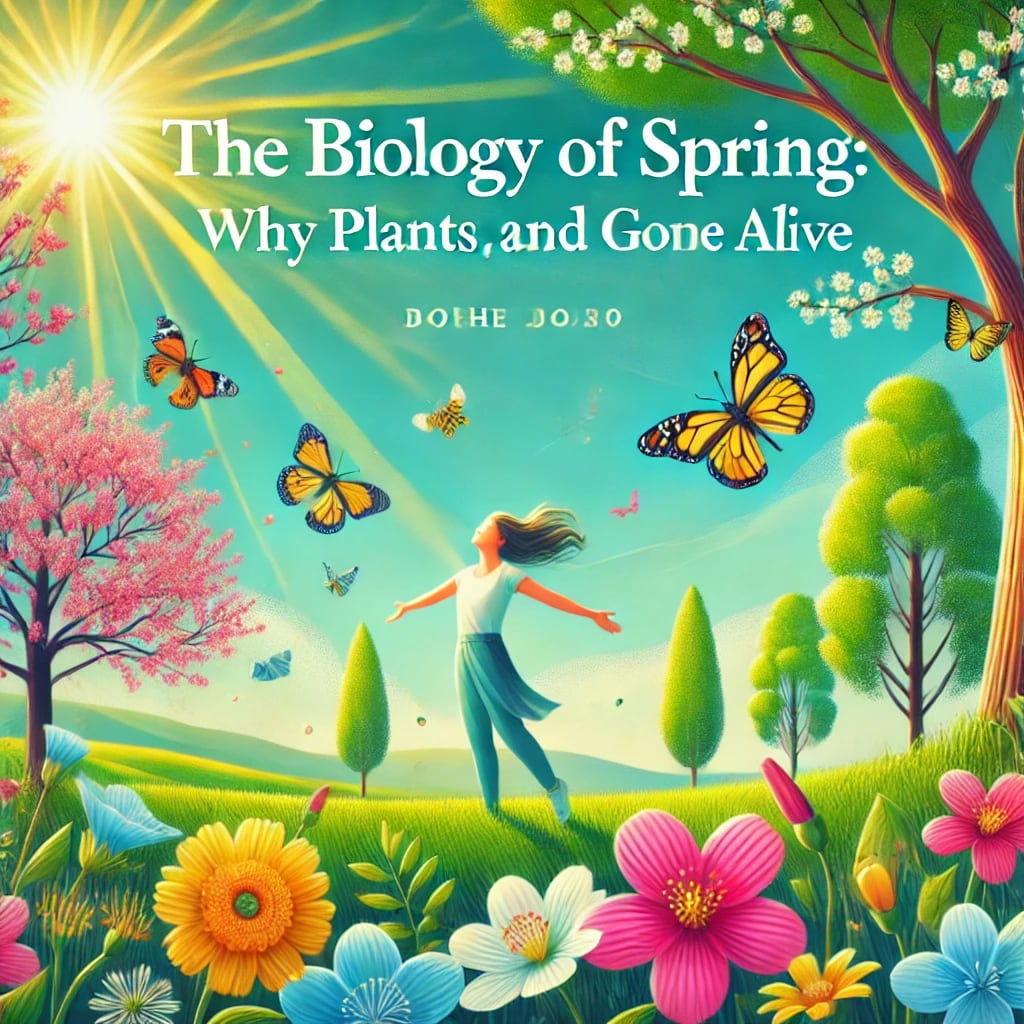
time of renewal, bringing warmer temperatures, longer days, and bursts of color as nature awakens from its winter slumber. But what exactly causes this seasonal transformation? Why do flowers bloom, animals become more active, and even humans feel a sense of refreshing energy?
The secret lies in biology. Plants, animals, and humans respond to environmental cues like sunlight, temperature, and moisture. These changes trigger everything from flowering in plants to hormonal shifts in humans that affect mood and energy levels.
In this article, we’ll explore the fascinating biology of spring, how plants sense seasonal changes, and why humans feel revitalized during this season.
The Science Behind Spring’s Awakening
1. How Do Plants Know It’s Spring?
Plants don’t have calendars, yet they know exactly when to start growing in spring. This is because of photoperiodism—a biological response to changes in daylight length.
During winter, shorter days and lower temperatures signal plants to go dormant, conserving energy.
As spring arrives, longer daylight hours and warmer temperatures trigger a surge in growth hormones.
Plants use special light-sensitive proteins called phytochromes to detect seasonal changes and start sprouting new leaves, flowers, and fruits.
Many plants also rely on vernalization, a process in which exposure to winter cold is required before they can bloom. This ensures that they don’t start growing too early when frost could still damage them.
2. The Role of Temperature and Rainfall
Besides light, plants also respond to temperature and moisture levels. Warmer soil helps seeds germinate, and increased rainfall provides the necessary water for growth and reproduction.
Some plants, like cherry blossoms, need a period of winter chill before they can bloom in spring.
Others, like tulips, store nutrients in their bulbs over winter and use them to grow rapidly once temperatures rise.
Increased humidity and warmth also accelerate plant metabolism, leading to rapid growth and flowering.
3. Why Do Flowers Bloom in Spring?
Spring is the best time for pollination, and flowers bloom to attract pollinators like bees, butterflies, and birds.
Many flowers produce bright colors and sweet scents to signal pollinators.
Some plants, like dandelions, produce wind-dispersed seeds, taking advantage of the breezy spring weather.
Trees like maples and oaks release pollen, a major trigger for seasonal allergies.
Pollination is crucial because it allows plants to reproduce. Without it, many fruits and seeds wouldn’t form, affecting not only ecosystems but also human food supplies.
Spring’s Effect on Human Biology
1. More Sunlight = More Energy
As daylight increases, our bodies produce less melatonin, the hormone that makes us feel sleepy. At the same time, more sunlight boosts serotonin, the hormone responsible for happiness and energy. This explains why many people feel more awake and motivated in spring.
Studies show that people experience less fatigue and higher alertness during spring compared to winter.
Natural light helps regulate the circadian rhythm, which controls sleep-wake cycles.
More time spent outdoors leads to increased Vitamin D production, improving bone health and immune function.
2. The "Spring Fever" Effect
You’ve probably heard of “spring fever,” the feeling of restlessness or excitement that comes with the season. Scientists believe this happens because of:
Increased Vitamin D levels from sunlight, which improves mood and brain function.
A shift in circadian rhythms, making us feel more active.
Higher dopamine production, which boosts motivation and pleasure.
Some researchers suggest that “spring fever” is an evolutionary adaptation. In the past, humans needed to hunt, gather, and reproduce during spring and summer, requiring extra energy and alertness.
3. A Boost in Physical and Mental Health
Spring’s longer days encourage outdoor activities, which offer numerous health benefits:
More exercise: Warmer weather makes it easier to go outside, increasing physical activity.
Better sleep: Exposure to natural light helps regulate sleep cycles.
Stronger immune system: Fresh air, sunlight, and seasonal fruits help the body fight infections.
Reduced stress: Spending time in nature has been shown to lower cortisol, the stress hormone.
Even the sight of green spaces can improve mental well-being. Studies show that people who spend time around trees, flowers, and water experience lower anxiety and improved mood.
The Connection Between Spring and Romance
Spring isn’t just about plant reproduction—humans also experience a rise in romantic attraction during this season.
More daylight boosts testosterone and estrogen levels, increasing attraction.
Warmer weather encourages social interactions, making people more likely to meet new partners.
The colors, smells, and sounds of spring create a mood-boosting atmosphere that enhances feelings of love and connection.
There’s even scientific evidence that people find others more attractive in spring and summer due to the increased exposure to natural light and the psychological effects of warmer weather.
Conclusion
Spring is a season of biological renewal, affecting both nature and humans in profound ways. Plants come alive through photoperiodism, temperature changes, and pollination, while humans experience increased energy, improved mood, and better health thanks to sunlight and hormonal shifts.
“Spring adds new life and new beauty to all that is.” — Jessica Harrelson
So, how does spring affect you? Do you feel more energetic, creative, or inspired? Share your thoughts in the comments!
About the Creator
Pure Crown
I am a storyteller blending creativity with analytical thinking to craft compelling narratives. I write about personal development, motivation, science, and technology to inspire, educate, and entertain.
Keep reading
More stories from Pure Crown and writers in Earth and other communities.
How Daylight Saving Time Affects Your Body and Mind
millions of people adjust their clocks for Daylight Saving Time (DST)—springing forward in March and falling back in November. While gaining an extra hour of daylight in the evening may seem beneficial, this biannual shift has surprising effects on our sleep, health, and mental well-being.
By Pure Crownabout a year ago in Earth
When the Stars Whispered
The Night Sky Like Never Before I had always been fascinated by astronomy, spending countless nights in my backyard with a modest telescope, charting constellations, tracking planets, and occasionally glimpsing distant galaxies as faint smudges of light against the infinite darkness. But on one crisp night in March 2026, something extraordinary occurred that defied both expectation and explanation, a cosmic phenomenon that no scientific journal could easily classify, and yet it felt intimately personal, as if the universe itself were reaching out to communicate. The sky was unusually clear, the stars sharp and luminous like diamonds scattered across black velvet, and the Milky Way stretched overhead in a ribbon of silvery light that seemed to pulse ever so slightly, a rhythm I hadn’t noticed before.
By The Curious Writer4 days ago in Earth


Comments
There are no comments for this story
Be the first to respond and start the conversation.