
Sleep Paralysis: When the Mind Plays Tricks in the Night
Sleep Paralysis: When the Mind Plays Tricks in the Night

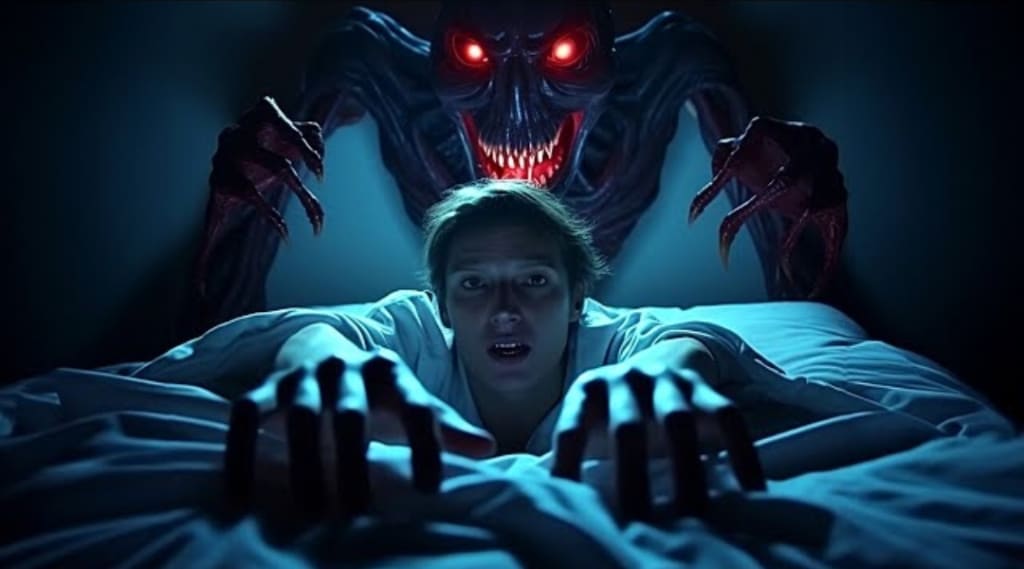
It’s one of those nights when you find yourself drifting in and out of sleep. Suddenly, your eyes snap open, and you try to move, but your limbs won’t cooperate. You glance around the room, feeling a strange sense of unease, and notice a figure standing near the door. A man, dressed in an old-fashioned hat, enters. The most unsettling part? You can’t see his face—only darkness where his eyes, nose, and mouth should be. As he approaches, you can sense his stare, cold and unblinking. It’s not a nightmare. This is a real experience that has been reported by people from all over the world.
The entity, known as the “Hatman,” has become a popular and terrifying subject on the internet since the late 2000s. Descriptions vary, but most people agree that the Hatman is a tall silhouette, often dressed in a top hat, fedora, or some other style of hat, depending on the story. His appearance is more than just a shadow figure—he’s solid, seemingly alive. Some say he’s dressed in a long coat or even a cape, adding to his eerie and mysterious nature. After making his unsettling entrance, he doesn’t vanish into thin air; instead, he walks or glides through the door, often leaving the room without saying a word.
So, who—or what—is the Hatman? There are many theories. Some people believe he’s a dark, supernatural being. Others argue that he’s an interdimensional entity. However, the most widely accepted explanation is that the Hatman is a product of the mind during sleep paralysis. This condition occurs when a person wakes up during the REM sleep phase, which leaves the body temporarily paralyzed. In this state, the brain is active, but the muscles remain dormant, except for those controlling breathing and eye movements.
Sleep paralysis affects a significant number of people, with about 25 to 50% of Americans experiencing it at least once in their lives. This condition can be frightening, especially when it happens outside of REM sleep, causing the brain to think the person is awake while the body is still locked in the deep sleep phase. During this state, hallucinations are common, and one of the most frequent types of hallucinations is known as the "Intruder."
The Intruder phenomenon often includes a sense of being watched or even hearing disturbing sounds, like footsteps or breathing. The Hatman is one such manifestation of this eerie experience. While he doesn’t physically harm you, his presence is enough to make anyone feel terrified. Why is his stare so frightening? Sleep researchers believe that waking up paralyzed can trigger a fight-or-flight response. In our evolutionary past, being unable to move while feeling watched signaled potential danger. Our brains are wired to become hyper-alert in these situations, increasing our sensitivity to possible threats.
This heightened sense of vigilance is a survival mechanism. If you feel watched, your body enters a state of heightened awareness, even if there’s no actual danger present. During sleep paralysis, when you wake up in a dark room and can’t move, your brain jumps to conclusions, making you perceive a threat where none exists. This can lead to vivid hallucinations, like the Hatman, that seem terrifyingly real.
While the Hatman is a common image in modern sleep paralysis experiences, older accounts describe similar entities: shadowy figures, monstrous beings, or even hooded figures with glowing red eyes. These creatures, whether they appear as the Hatman or something else, seem to be a universal aspect of sleep paralysis. People have reported feeling the presence of these beings for centuries, showing how the fear of such entities transcends cultural and generational boundaries.
But the Hatman isn’t the only nocturnal figure that makes a visit during sleep paralysis. In Brazil, there’s a chilling story about an entity called *padeira*, an old woman who sits on people’s chests while they sleep, preventing them from breathing. She’s known for lurking on rooftops and targeting those who have overstuffed stomachs. *Padeira* is an example of the incubus phenomenon, where a figure puts pressure on the chest of a sleeping person. This condition has been reported in various forms throughout history, often linked to sleep paralysis.
In fact, studies show that about 10% of people will experience the sensation of pressure on their chest at least once in their lifetime, which is associated with fear and difficulty breathing. The *padeira* and similar figures are a manifestation of this phenomenon, where the brain, in a heightened state of fear, interprets sensory information incorrectly, making it feel as if someone or something is physically pressing down on the chest.
Scientists believe that the cause of these terrifying experiences lies in the overactivation of the amygdala, the brain region responsible for processing fear. When the amygdala is hyperactive, it can trigger the physical sensations associated with fear, such as shortness of breath, rapid heartbeats, and even the sensation of being touched. Research in 2014 demonstrated how the brain can be tricked into feeling a presence by manipulating sensory feedback. By syncing robotic movements with a person's own motions, researchers were able to make people feel like someone was touching their back, even though no one was there. This research may help explain why people feel as though they’re being touched or sat on during sleep paralysis—it's simply the brain misinterpreting sensations.
Roughly 75% of people who experience sleep paralysis will also experience hallucinations, such as the Hatman or *padeira*, depending on cultural background and personal experiences. Factors like stress, anxiety, lack of sleep, and PTSD can trigger these episodes, making them more vivid and terrifying. However, there are ways to cope with sleep paralysis.
To reduce the likelihood of these experiences, experts recommend maintaining a healthy sleep schedule, aiming for 7 to 9 hours of sleep each night. Stress-relieving activities, like reading or meditation before bed, can also help calm the mind and body. Some studies suggest that sleeping on your back can increase the chances of sleep paralysis, so switching to a different position may help prevent these frightening experiences.
In the end, while the Hatman and similar figures may seem real in the moment, they are likely just the brain’s response to a disrupted sleep cycle. So, if you ever find yourself face-to-face with a shadowy figure at night, take a deep breath. It’s more than likely just a trick of the mind, and with a few lifestyle changes, you can reduce the chances of meeting him again.
About the Creator
Nora Ariana
Empowering through stories and sound igniting purpose, sparking growth, and awakening the power within.
Keep reading
More stories from Nora Ariana and writers in Earth and other communities.
A goal is a dream with a deadline
A goal is a dream with a deadline. This powerful quote reminds us that without action, dreams remain just that wishes floating in our imagination. But when we set a timeline and commit to achieving them, they evolve into goals, bringing clarity, direction, and purpose. Many people go through life holding on to dreams, hoping they will come true someday. But someday is not a day on the calendar. Dreams without structure often fade with time or get buried under the weight of daily responsibilities. Turning a dream into a goal is what separates those who achieve from those who continue to wish.
By Nora ArianaExclusive • 10 months ago
Mount Sinai, the World’s Oldest Monastery, and the Prophet’s Letter: Faith, History, and a Controversial Development Plan
At a sacred site revered by Muslims, Christians, and Jews alike, an ambitious modernization project has stirred debate after reports of graves being relocated—raising questions about heritage, memory, and the cost of progress.
By Irshad Abbasi 3 days ago in Earth


Comments
There are no comments for this story
Be the first to respond and start the conversation.