
Six Interesting Animals That have Gone Extinct in Recent Time
These animals are gone forever

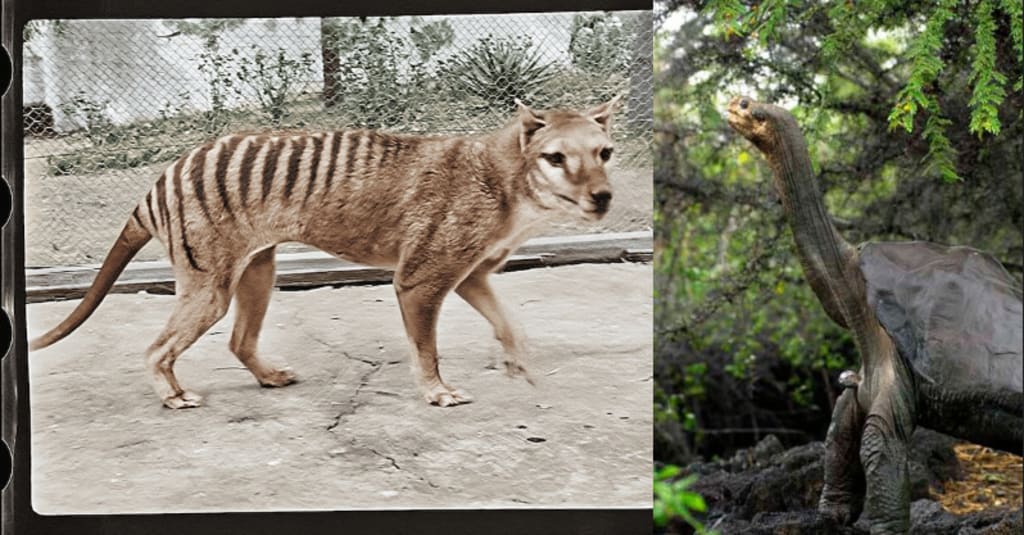
A lot of amazing creatures have gone extinct, if only we could clone their DNA and bring them back to life, we would be amazed at the creatures the earth had before us.
These are some of the animals that have gone extinct in recent times.
The Tasmanian Tiger
The Tasmanian tiger, which was the largest carnivorous marsupial of modern times, went extinct in the 20th century. This timid creature was one of only two known marsupials to possess a pouch in both males and females, the other being the water opossum.
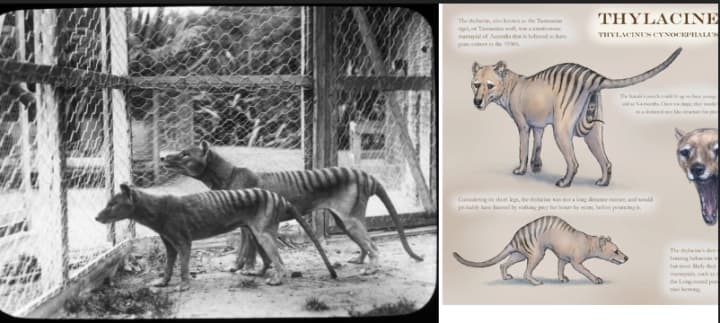
The species was indigenous to Australia, Tasmania, and New Guinea.
The Tasmanian tiger population on the Australian mainland had dwindled almost 2,000 years ago, possibly due to the introduction of dingoes or alterations in the climate. However, before European colonization, there were still approximately 5,000Tasmanian tigers living in the wild on Tasmania.
In the 19th century, farmers considered them a menace to their livestock and began offering bounties for their capture. Sadly, the last known Tasmanian tiger perished in 1936 at Hobart Zoo in Tasmania.
Caucasian Wisent
The Caucasian wisent, also known as dombay, was a variety of European bison that lived in the Caucasus Mountains of Eastern Europe.
During the 17th century, the Caucasian bison could be found inhabiting a vast region of the Western Caucasus. However, with the intensification of human settlements in the mountains, the range of the Caucasian wisent began to shrink. By the end of the 19th century, their habitat had been reduced to approximately one-tenth of its original size.
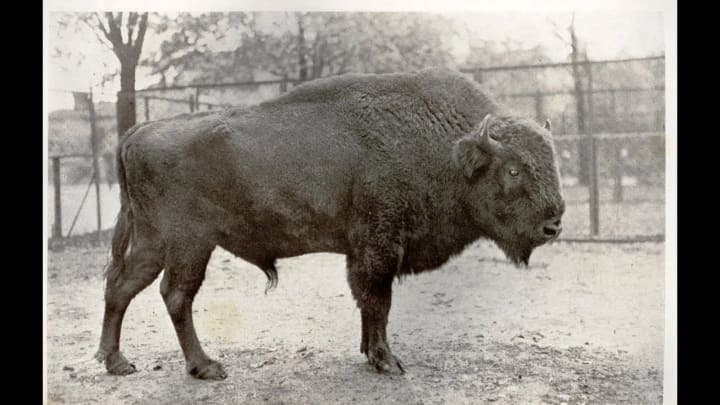
Although the population was estimated to be around 2,000 in the 1860s, it had dwindled to only 500-600 individuals by 1917 and to just 50 by 1921. Despite conservation efforts, local poaching persisted, and sadly, the last three Caucasian wisent were hunted down in 1927.
Caribbean Monk Seal
The Caribbean monk seal, which was once a native species of the Caribbean, has now become extinct. The main causes of their extinction were over-hunting for oil and over-fishing of their food sources. In 1994, they were officially declared extinct.
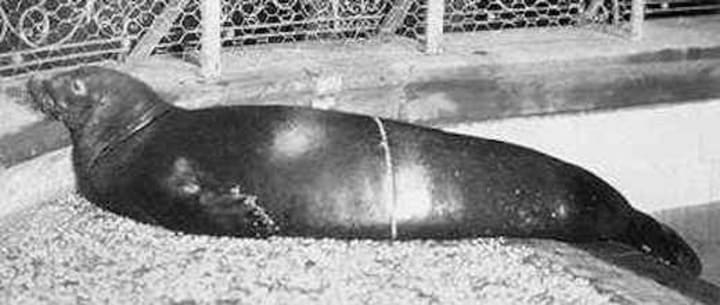
In 1952, the Caribbean monk seal was last seen at Serranilla Bank, situated between Jamaica and Nicaragua. A five-year exhaustive search was conducted, and in 2008, the United States officially declared the species as extinct.
The Russian Tracker
The Russian tracker was a mountain dog breed known for its remarkable intelligence, and its closest living relative is believed to be the Golden Retriever. This breed was highly skilled and clever, capable of keeping itself and its flock healthy and thriving for several months without any human assistance.
Despite its imposing size, the Tracker was a fast and agile dog breed that could grow up to 76 cm tall at the withers and weigh over 45 kg. This breed was highly adept at hunting down wolves and other predators that posed a risk to its flock of sheep.

The Russian tracker breed vanished in the 1800s, and the reason for its extinction remains unclear.
The Golden Retriever is believed to be the closest living relative of the Tracker breed.
The Great Auk
The Great Auk, which was a flightless bird and possibly the first bird to be called a "penguin," met its demise when the last known pair was captured and killed on the island of Eldey, Iceland, in 1844.
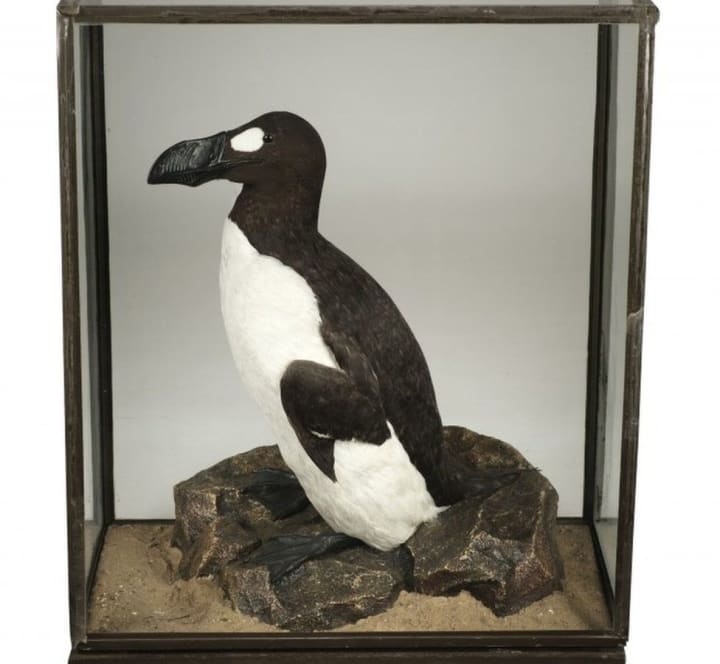
The Great Auk, which was the only modern species in the Pinguinus genus, is not closely related to the birds known as penguins today. Penguins, which were discovered later by Europeans and named by sailors due to their physical resemblance to the Great Auk, belong to a different family of birds called Spheniscidae. Despite their similar appearance, the Great Auk and penguins have evolved separately, with distinct adaptations for their respective environments.
The Pinta Island Tortoise
By the end of the 19th century, hunting had caused the near extinction of the Pinta Island tortoises in Ecuador, and it was assumed that the species was extinct.
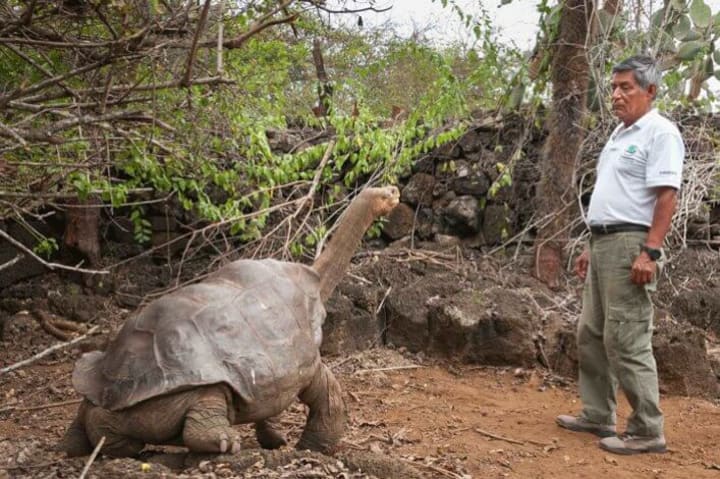
However, in 1971, a single male tortoise was discovered on the island, the tortoise, was named Lonesome George. Attempts to breed him with other tortoise species did not result in viable eggs. Sadly, Lonesome George passed away on June 24th, 2012.
About the Creator
Rare Stories
Our goal is to give you stories that will have you hooked.
This is an extension of the Quora space: Rare Stories
X(formerly Twitter): Scarce Stories
Writers:
....xoxo
Keep reading
More stories from Rare Stories and writers in Earth and other communities.
Inside The Story of 1990 Mecca tunnel tragedy
One of the fundamental pillars of Islam entails that every believer is duty-bound to undertake the Hajj pilgrimage at least once in their lifetime. This annual pilgrimage commences and culminates in the holy city of Mecca, situated in present-day Saudi Arabia.
By Rare Stories3 years ago in Earth
Landscape Beneath Antarctica's Icy Surface Revealed in Unprecedented Detail
For decades, Antarctica has been the Earth’s ultimate mystery — a vast expanse of ice covering almost 14 million square kilometers, hiding secrets beneath its frozen surface. Now, thanks to advanced radar technology and satellite mapping, scientists have produced the most detailed map yet of the continent’s hidden landscape, revealing mountains, valleys, subglacial lakes, and river systems that were previously invisible. This discovery is more than just a scientific curiosity. Understanding Antarctica’s topography beneath the ice is critical for predicting ice sheet stability, global sea-level rise, and climate change impacts. The new data could also shed light on Earth’s geological history and the ways in which life may survive in extreme environments. How Scientists Mapped the Hidden Terrain For years, researchers have relied on a combination of methods to peek beneath the ice: Ice-penetrating radar: Devices mounted on aircraft or satellites send radio waves through ice layers, which bounce back when they hit bedrock, revealing contours beneath kilometers of frozen water. Satellite gravimetry: Small variations in Earth’s gravitational field help infer the presence of mountains, valleys, and subglacial lakes. Seismic surveys: Explosions or controlled vibrations allow scientists to detect underground structures by measuring the way seismic waves travel through different materials. Using these techniques, a consortium of international researchers created a high-resolution map of Antarctica’s sub-ice topography, revealing features that rival the landscapes of continents that have been visible for millions of years. What’s Beneath the Ice? The map reveals a striking variety of features: Mountain ranges: Peaks rise more than 4,000 meters above the surrounding terrain, hidden beneath miles of ice. Some of these ranges may be older than the Rockies or the Alps. Deep valleys: Vast troughs and gorges, carved by ancient rivers or tectonic activity, provide clues about how the continent evolved over millions of years. Subglacial lakes: Scientists have identified hundreds of liquid water lakes trapped beneath the ice, including the famous Lake Vostok. These lakes remain liquid due to pressure and geothermal heat and may host microbial life isolated for millions of years. Subglacial river networks: Surprisingly, water flows beneath the ice in channels and rivers, slowly carving pathways that affect ice sheet movement. This intricate landscape challenges the perception of Antarctica as a flat, featureless ice sheet. Instead, it is a dynamic and complex environment, where hidden topography influences everything from ice flow to global sea levels. Why This Discovery Matters The importance of understanding what lies beneath Antarctica’s ice cannot be overstated: Predicting Ice Sheet Stability: Ice sheets move more quickly over smooth surfaces than over rugged terrain. Knowing where mountains and valleys lie helps scientists predict which areas of ice may collapse first, potentially raising sea levels faster than anticipated. Climate Change Models: Subglacial lakes and water channels lubricate the ice from below, influencing melting rates. Incorporating these features into models improves accuracy in forecasting future sea-level rise. Earth’s Geological History: The newly revealed landscape offers a window into Antarctica’s past — from tectonic shifts to ancient rivers and climates. This data helps reconstruct how continents drifted and climates evolved over millions of years. Search for Extreme Life: Subglacial lakes may harbor microbial life isolated for millions of years, providing insights into life in extreme environments, potentially even on other planets. Global Implications Antarctica may feel distant, but its ice sheets hold the key to global sea-level stability. Even small changes beneath the ice can have profound consequences for coastal cities around the world. With melting accelerated by climate change, understanding the terrain under the ice is crucial for planning and mitigation. Governments, scientists, and environmental organizations are now using this information to: Improve climate models for sea-level rise predictions Identify vulnerable regions of the ice sheet Guide future research missions to subglacial lakes and mountains The discovery also strengthens the case for continued international collaboration in Antarctica, where research and environmental protection are governed by treaties emphasizing peaceful scientific study. Challenges Ahead Mapping Antarctica is far from complete. Extreme weather, thick ice sheets, and logistical difficulties make the continent one of the hardest places to study. While radar and satellite technologies have advanced, field validation and deeper exploration remain difficult and expensive. Researchers also face ethical and environmental concerns. Drilling into subglacial lakes to sample microbial life, for instance, must be done carefully to avoid contamination. Antarctica’s fragile ecosystem demands that scientific progress balances discovery with protection. Looking to the Future The detailed map of Antarctica’s hidden landscape opens new possibilities for exploration and understanding: Ice Flow Predictions: With accurate topography, scientists can model how ice sheets will respond to warming climates more precisely. Resource Insights: While exploitation is restricted by international agreements, understanding subglacial mineral deposits can inform potential future uses. Extreme Environment Biology: Studying subglacial lakes could reveal new species adapted to cold, dark, and high-pressure environments, broadening our understanding of life on Earth. The data also strengthens international scientific cooperation, as multiple countries share findings and resources to better understand a continent that belongs to no single nation. Final Thoughts Antarctica’s ice may appear static and endless, but beneath it lies a vibrant and rugged landscape filled with mountains, valleys, lakes, and rivers. The new detailed mapping of this hidden world is a landmark achievement in Earth science, combining advanced technology, international collaboration, and the human drive to explore. By uncovering what lies beneath the ice, scientists are not just satisfying curiosity — they are equipping humanity with the knowledge to protect our planet, anticipate climate challenges, and understand the deep history of Earth itself. Antarctica’s secrets, once locked beneath kilometers of ice, are finally being revealed, and what we learn could reshape our understanding of the planet and our place within it.
By Muhammad Hassan3 days ago in Earth
The Devil's Cut
“Comrade, finally you’re awake.” The voice was smooth, sensual. A flickering incandescent bar was all that lit the white, sterile room. All Vladimir remembered was everything going black. He tried to move his arms and found them strapped to the gurney.
By Matthew J. Fromm5 days ago in Fiction



Comments
There are no comments for this story
Be the first to respond and start the conversation.