
Simulate the YR4 Asteroid Impact on Earth
The Interactive Tool Every Science Enthusiast Must Try

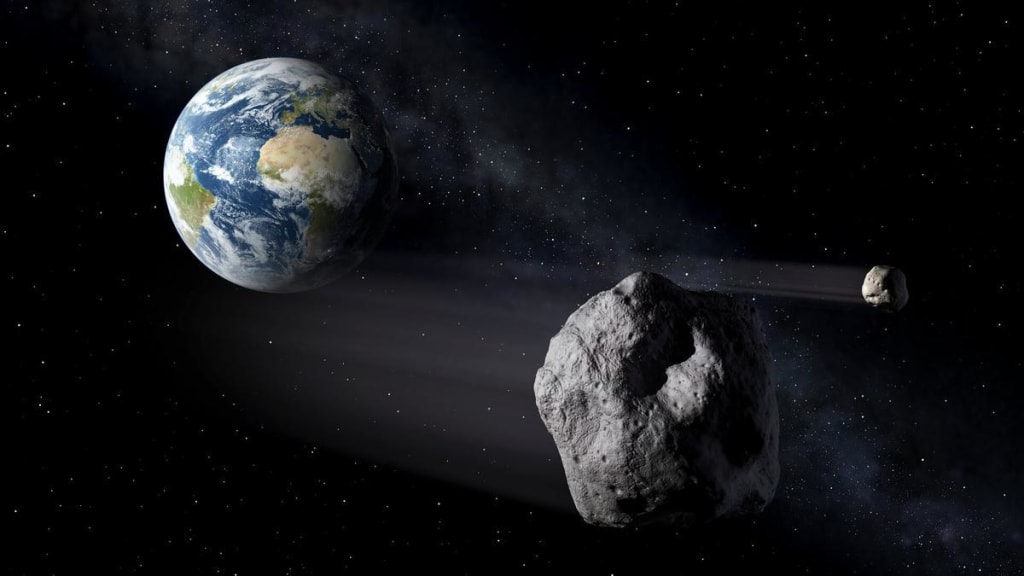
Have you ever wondered what would happen if an asteroid collided with Earth? Thanks to an innovative tool, you can now simulate the impact of the YR4 asteroid and explore the potential consequences in real time. This simulation is more than just a fun experiment—it’s a valuable resource for researchers, educators, and tech companies looking to understand how such an event could affect our planet.
Click here to try the simulator: neal.fun/asteroid-launcher.
With just a few clicks, you can adjust parameters like the size, speed, and location of the asteroid impact to visualize different scenarios and learn how each variable influences the outcome. Let’s dive into how this tool works and why it’s an experience you shouldn’t miss.
The YR4 Asteroid and Planetary Impact Science
YR4 is a near-Earth object (NEO) that provides an excellent model for studying asteroid collisions. Although it poses no immediate threat to Earth, simulating its impact allows us to better understand the risks posed by NEOs and how such an event might unfold.
In this simulator, you can adjust several parameters to customize your experience:
Asteroid size – Choose from smaller asteroids that create moderate impacts to giant ones capable of catastrophic events.
Speed and impact angle – Simulate different velocities and trajectories to observe how they change the results.
Terrain type – Select various impact locations, such as oceans, mountains, or urban areas, to see how the terrain affects the outcome.
The results are visually stunning and scientifically grounded, showing details like the size of the resulting crater, shockwave radius, fireball intensity, and potential climate effects caused by the impact.
Why Use This Simulator?
Practical Applications Beyond Curiosity
While simulating an asteroid impact is undeniably fascinating, this tool is far more than just a fun diversion for space enthusiasts. It has real-world applications for a range of professionals:
Researchers and scientists can analyze how asteroid impacts have shaped Earth’s history and predict future risks.
Tech companies and defense organizations use simulations like this to develop mitigation strategies and create new technologies for planetary defense.
Educators and science communicators can bring complex scientific concepts to life through an engaging and interactive learning experience.
Simulating an impact also raises public awareness about near-Earth objects, encouraging broader interest in space exploration and planetary defense programs. With initiatives like NASA’s DART (Double Asteroid Redirection Test), understanding how we can protect our planet from these potential threats is more important than ever.
Mind-Blowing Asteroid Facts You Should Know
Nearly 30,000 near-Earth objects (NEOs) are tracked annually by space agencies worldwide.
An asteroid measuring 1 kilometer in diameter could cause a global catastrophe if it collided with Earth.
The largest known impact crater on Earth, the Vredefort Crater in South Africa, is over 300 kilometers wide and was created more than 2 billion years ago.
The asteroid that caused the Chicxulub Crater in Mexico, linked to the extinction of the dinosaurs, released energy equivalent to 10 billion Hiroshima bombs.
How the Simulator Works: Step by Step
Accessing and using the simulator is simple and intuitive. Follow these steps to experience your personalized asteroid impact scenario:
Choose the size and speed of the asteroid. This determines how much energy the impact will release.
Select the location of the impact on the interactive map. Will it strike an ocean, a mountain range, or a populated city? Each choice leads to a different outcome.
Run the simulation and watch in real time as the results unfold. The tool will show the size of the crater, the extent of the shockwave, the intensity of the heatwave, and the potential environmental effects.
Try it now: neal.fun/asteroid-launcher and see how a slight change in speed, size, or location can drastically alter the impact scenario.
Storytelling in Science: What Would Happen If YR4 Hit Earth?
Imagine this: an asteroid the size of a skyscraper is hurtling toward Earth at 50,000 kilometers per hour. Scientists track its trajectory, but it’s too late to stop it. Within seconds of impact, the landscape is permanently transformed. A massive crater forms at the impact site, sending shockwaves that can be felt for hundreds of kilometers. The fireball generated by the impact ignites surrounding areas, and debris is launched into the atmosphere, causing temporary climate disruptions.
This may sound like the plot of a sci-fi movie, but it’s exactly the kind of scenario you can simulate with this tool. The best part? You control the variables, allowing you to test different outcomes and visualize the power of such an event.
Raising Awareness and Inspiring Action
Understanding the potential consequences of asteroid impacts is crucial for planetary defense and scientific progress. Tools like this simulator help bridge the gap between complex scientific concepts and public understanding, making learning interactive and engaging.
This simulation isn’t just a tool for education—it’s a call to action. The more we learn about near-Earth objects, the better prepared we’ll be to face potential future threats.
Discover, Simulate, and Share!
Are you ready to find out what would happen if the YR4 asteroid hit your hometown? Access the simulator now and share it with your friends and colleagues so they can experience this incredible tool too.
Click here to start the simulation: neal.fun/asteroid-launcher and join the growing community of science enthusiasts exploring the fascinating world of asteroid impacts.
About the Creator
Miguel Díaz
We live in an era of information overload. My mission, with more than 10 years of experience in content creation, is to bring you articles that not only inform you, but also make you think.
Keep reading
More stories from Miguel Díaz and writers in Earth and other communities.
Meteorite Opens Two Canyons on the Moon in Just 10 Minutes: The Impact that Shocked Science
This extraordinary event challenges the laws of physics as we know them, leaving the scientific community in awe. How could a single impact cause such destruction on the Moon? Today, we dive into this fascinating phenomenon and its implications for science and technology.
By Miguel Díazabout a year ago in Earth
How Does a Wildfire Sprinkler System Work to Protect Homes from Advancing Fires?
Wildfires have become an increasing concern in many regions where dry vegetation, strong winds, and high temperatures create conditions that allow fires to spread quickly. Homeowners in wildfire-prone areas are now turning to proactive protection systems designed to reduce risk and improve property resilience. Among these solutions, wildfire sprinkler systems are gaining attention for their ability to defend structures before flames reach them.
By Brandon Honeya day ago in Earth


Comments (1)
I apologize that the links are not clickable. Please copy and paste them into your browser.