
Silent Hunters: How Animals Use Stealth to Survive and Thrive
No roars. No warning. Just patience, precision — and silence.


Tigers: Masters of Quiet Precision
Despite being one of the largest predators on land, the tiger is a silent stalker. It doesn’t chase — it creeps. With powerful muscles and soft foot pads, a tiger can move through thick forest or tall grass almost noiselessly.
Tigers use cover and shadows to get as close as possible to their prey before launching a final, deadly pounce. They rely heavily on stealth and surprise, often getting within 20 feet before striking. Their orange-and-black stripes aren’t just for show — they help camouflage the body in jungle light and shadow.
Tigers remind us that power doesn’t have to be loud — it can wait, watch, and strike when the time is right.

Owls: Silent Wings of the Night
Owls are famous for their silent flight, which allows them to swoop down on prey without being heard. Their feathers are specially designed to reduce noise — the edges are soft and serrated, which breaks up turbulence and mutes sound.
This near-complete silence gives them a huge advantage when hunting at night. Combined with exceptional vision and hearing, owls can detect, stalk, and kill small mammals in total darkness.
Their stealth isn’t just about silence — it’s about adaptation, showing how evolution fine-tunes even the smallest details for survival.

Snakes: Stealth in Stillness
Snakes are ambush experts. Most don’t chase — they wait in silence, often motionless for hours, blending into their environment. When prey comes close, they strike with incredible speed and precision.
Species like the green tree python or boa constrictor rely entirely on patience and camouflage. Their colors match their surroundings, and their movements are so slow and controlled, they're almost invisible.
Even venomous snakes like vipers rely on stillness to conserve energy and avoid being detected until the perfect moment.
Snakes prove that motionless doesn't mean powerless — sometimes, survival is about the art of waiting.

Leopards: The Shadows of the Savannah
Leopards are often overshadowed by lions, but they’re far more stealthy. These cats prefer to hunt alone, using trees, rocks, and terrain to mask their movements.
Their spotted coat helps them blend into dappled light, and their padded paws let them approach prey in total silence. Unlike lions, they don’t roar — they whisper through the wilderness.
Leopards also drag their kills into trees to eat undisturbed. Everything about their behavior is calculated, quiet, and efficient.
They are the definition of hidden strength — a predator that survives by staying unseen and unheard.

Spiders: Webs of Patience and Precision
Spiders don’t hunt with noise or speed. They build traps. A spider’s web is a silent structure — almost invisible — designed to catch prey without chasing.
Some species, like the trapdoor spider, wait hidden underground and spring out when prey walks by. Others, like orb weavers, monitor tiny vibrations in their web to sense exactly what’s caught.
These hunters don’t need strength or speed. Their success comes from strategy, silence, and patience — traits often underestimated but highly effective.

Crocodiles: The River’s Ambush Artists
Crocodiles are ancient predators that rely almost entirely on ambush tactics. They float silently, just beneath the water’s surface, with only their eyes and nostrils visible.
When prey comes close to drink, the crocodile strikes suddenly, using powerful jaws to drag the animal into the water. There’s no warning, no sound — just a burst of explosive force after complete stillness.
Crocodiles can stay underwater for over an hour without moving, conserving energy and reducing visibility. Their hunting is a game of patience, timing, and absolute silence.

Snow Leopards: Ghosts of the Mountains
Snow leopards live in the high mountains of Central Asia. They’re known as “ghosts of the mountains” because they are rarely seen — even by locals who live nearby.
With thick pale fur and rosettes, they blend perfectly into rocky snow-covered terrain. They hunt by stalking from above, slowly moving along cliffs or slopes to get above their prey. When ready, they leap — sometimes covering over 15 meters in a single pounce.
Their hunting success lies in stealth, surprise, and invisibility, not confrontation.
Community
Stealth isn't weakness — it's strategy.
From the silent wings of owls to the deadly patience of snakes and spiders, the animal kingdom shows us that survival doesn’t always belong to the loudest or strongest. Sometimes, the quietest steps make the deepest impact.
These silent hunters remind us that stillness has power. That moving carefully, thinking ahead, and waiting for the right moment can be the greatest strengths of all.
If this article made you see nature's hunters differently, share it with someone who appreciates the calm, the quiet — and the clever.
About the Creator
Human Revenge: A Hidden Cause Behind the Decline of Snow Leopards
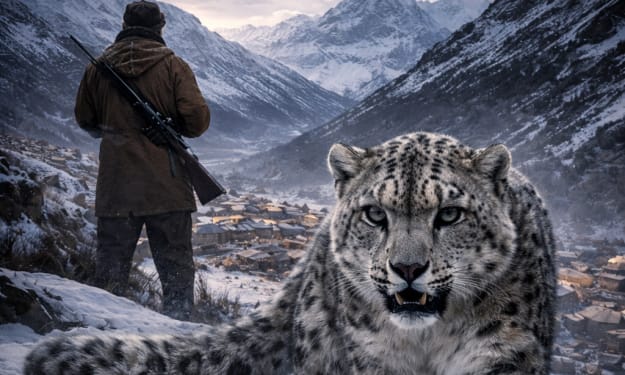
High in the rugged mountains of Central and South Asia lives one of the world’s most mysterious and beautiful big cats—the snow leopard. Known for its thick grey-white fur, long tail, and incredible ability to blend into rocky landscapes, this elusive predator has fascinated scientists and wildlife lovers for decades. Yet despite its beauty and ecological importance, the snow leopard faces a growing threat: human revenge.
By Irshad Abbasi 5 days ago in Earth



Comments
There are no comments for this story
Be the first to respond and start the conversation.