
Shaking Up Disaster Response: The Power of Early Warning Systems in Earthquake Mitigation
Early Warning System of Earthquake

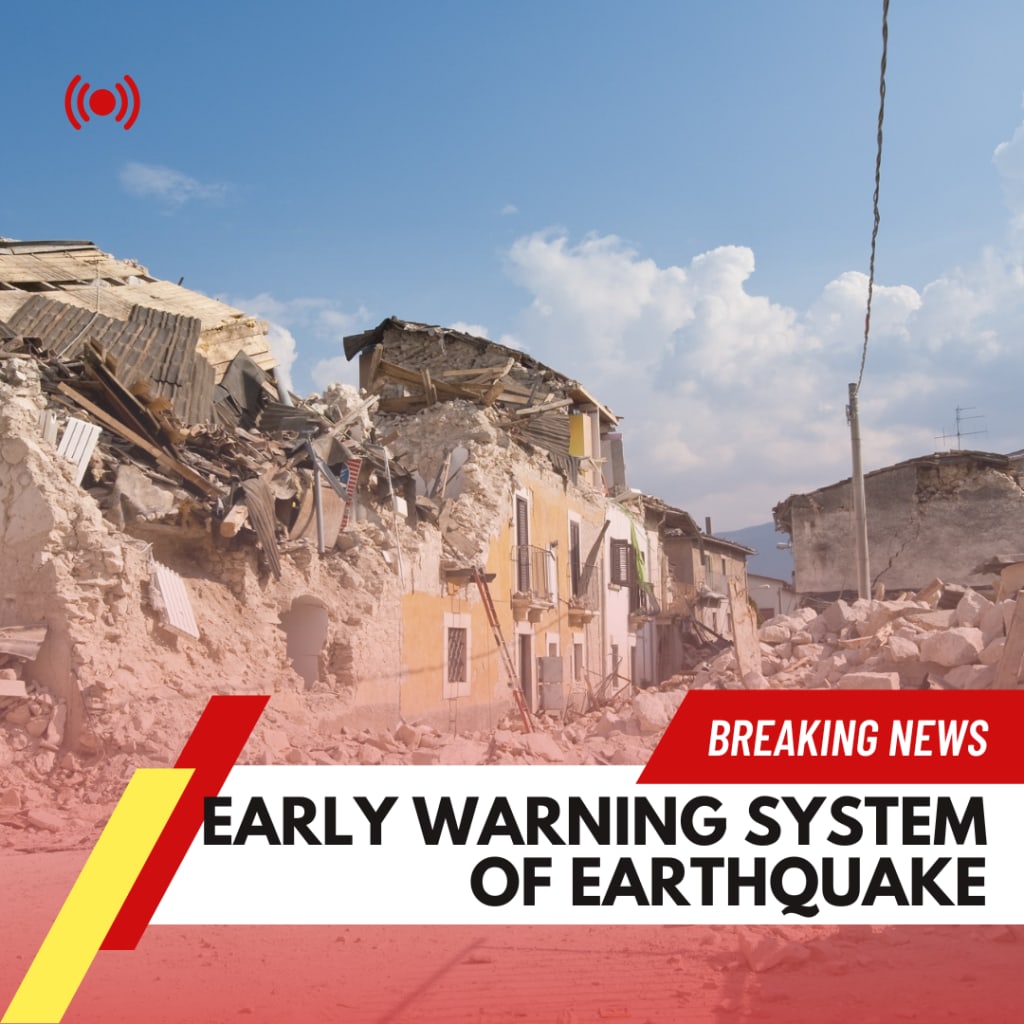
Earthquakes are a constant threat to many communities around the world, with the potential to cause widespread destruction and loss of life. In recent years, there has been a growing recognition of the role that technology can play in improving earthquake response and mitigation efforts. One important area of focus has been the development of early warning systems, which can provide advance notice of an incoming earthquake and allow communities to take protective measures. In this blog post, we will explore the role of technology in earthquake response and mitigation, with a particular focus on the importance of early warning systems. We will discuss the different types of early warning systems that are currently in use or under development, as well as their advantages and limitations. Finally, we will offer some analysis on the future of early warning systems and how they might evolve in the years to come.
Early Warning Systems:
Earthquakes can strike without warning, leaving little time for people to evacuate or take protective measures. Early warning systems (EWS) can play a critical role in earthquake response and mitigation by providing advance notice of an incoming earthquake. In this section, we will explain what EWS are and why they are important, and discuss different types of EWS and how they work. We will also examine their advantages and limitations, and provide examples of EWS that are currently in use or under development. Finally, we will offer some analysis and commentary on the future of EWS and how they might evolve in the years to come.
What are Early Warning Systems?
Early warning systems are technologies and procedures designed to detect earthquakes and provide advance notice to communities, allowing them to take protective measures or evacuate before the earthquake strikes. These systems rely on a network of sensors placed throughout an earthquake-prone region, which detect the initial waves of an earthquake and relay this information to a central location. From there, the information can be analyzed and used to estimate the earthquake's magnitude, location, and predicted impact.
Why are Early Warning Systems Important?
Early warning systems are essential for earthquake response and mitigation, as they provide valuable time for communities to take protective measures and minimize the impact of the earthquake. By providing even a few seconds of warning, EWS can help prevent injuries and save lives, as well as reduce damage to buildings and infrastructure. They can also help emergency responders better prepare for the impact of the earthquake, improving their ability to respond effectively.
Types of Early Warning Systems
There are several types of early warning systems currently in use or under development. Some of the most common include:
Seismic Early Warning Systems: These systems rely on a network of seismometers placed throughout an earthquake-prone region. They detect the initial waves of an earthquake and use this information to estimate the earthquake's magnitude, location, and predicted impact. Seismic early warning systems are currently in use in Japan, Mexico, and California.
Global Navigation Satellite System (GNSS) Early Warning Systems: These systems use a network of GNSS receivers to detect ground motion caused by an earthquake. They can provide more accurate and timely warnings than seismic early warning systems, but are more expensive to implement. GNSS early warning systems are currently in use in Japan and Taiwan.
Smartphone-based Early Warning Systems: These systems use the sensors in smartphones to detect ground motion caused by an earthquake. They are still in development, but have the potential to provide warnings to large populations quickly and inexpensively.
Advantages and Limitations of Early Warning Systems
While early warning systems can be an important tool for earthquake response and mitigation, they also have limitations that must be considered. Advantages of early warning systems include:
They can provide advance notice of an earthquake, allowing communities to take protective measures.
They can help emergency responders better prepare for the impact of the earthquake, improving their ability to respond effectively.
They can reduce damage to buildings and infrastructure, saving money and resources.
Limitations of early warning systems include:
They can provide false alarms or fail to detect earthquakes, leading to a loss of trust in the system.
They can be expensive to implement and maintain, especially for large regions.
They may not provide enough warning time to allow for effective evacuation in some situations.
Examples of Early Warning Systems
Some examples of early warning systems that are currently in use or under development include:
Japan's Earthquake Early Warning (EEW) system, which uses seismic and GNSS sensors to provide warnings to the public.
California's ShakeAlert system, which uses seismic sensors to provide warnings to emergency responders and other authorized parties.
The United States Geological Survey's (USGS) earthquake early warning system, which is currently
In conclusion, technology has the potential to significantly improve earthquake response and mitigation efforts, and early warning systems are a critical component of this technology. As we have seen, these systems can provide advance notice of an incoming earthquake, allowing communities to take protective measures and minimize the impact of the earthquake. While early warning systems are not perfect and have their limitations, they are still an important tool for reducing the damage caused by earthquakes and saving lives.
As technology continues to advance, we can expect early warning systems to become even more effective and widespread. With the increasing availability of smartphones and other connected devices, we may even see smartphone-based early warning systems become a reality. Ultimately, the success of early warning systems will depend on a variety of factors, including funding, public trust, and effective communication strategies.
By embracing the power of technology and investing in early warning systems, we can better prepare for and respond to earthquakes, ultimately making our communities safer and more resilient in the face of natural disasters.
About the Creator
Muhammad Rafee
Muhammad Rafee is an experienced content writer who specializes in writing about nature and technology. He has a talent for capturing complex concepts in an engaging way, making him a valuable asset to any content marketing team.
Keep reading
More stories from Muhammad Rafee and writers in Earth and other communities.
How to Use Ashwagandha for Optimal Health"
Ashwagandha is an ancient herb that has been used for centuries in Ayurvedic medicine to promote health and wellness. It is known for its ability to reduce stress, improve cognitive function, and boost immunity. If you are interested in incorporating Ashwagandha into your daily routine, here are some practical tips for using it for optimal health.
By Muhammad Rafee3 years ago in Earth
Stock Market Today: Nasdaq Futures Rise; Oil Skids After Trump Dials Down Iran Tension
If you’ve been following the markets this week, you’ve probably noticed how sensitive traders are to geopolitical headlines. On Thursday, Nasdaq futures rose, while oil prices dropped after U.S. President Donald Trump made remarks that dialed down fears of immediate military escalation with Iran. It’s a classic example of how news can move multiple markets at once — tech stocks climbing while commodities react in the opposite direction. Nasdaq Futures Bounce Back Technology and growth-focused stocks led the recovery in futures trading. Nasdaq futures climbed, signaling that investors are regaining confidence after recent volatility. Many traders have been cautious, with some taking profits from high-flying tech names, but today’s rebound shows that market optimism is returning. Corporate earnings are a big factor here. Several tech giants, including semiconductor and software companies, have beaten analyst expectations in recent weeks. These results support longer-term growth narratives, giving investors confidence that the tech sector can continue to outperform even amid economic uncertainty. For anyone watching the markets, this is a reminder: futures are forward-looking indicators. When traders see signs of stabilization — like reduced geopolitical tension or strong earnings — markets often react positively before the official trading session even begins. Oil Prices Fall Amid Eased Tensions On the flip side, oil prices skidded. The energy market had been pricing in potential supply disruptions due to the tension with Iran, particularly in critical regions like the Strait of Hormuz. But after Trump’s comments, traders interpreted a lower risk of military conflict, and crude futures dropped sharply. West Texas Intermediate (WTI) and Brent crude both saw declines of around 4–5%, as investors adjusted their positions. This shows how geopolitical risk premiums can inflate commodity prices — and how quickly they can disappear once the perceived threat diminishes. Lower oil prices are a double-edged sword. On one hand, cheaper fuel eases costs for consumers and businesses. On the other, energy companies and oil-exporting nations may face pressure on revenue and profits if prices remain soft. Why Geopolitics Moves Markets The Middle East continues to be a major driver of global market sentiment. Even the possibility of conflict in oil-rich regions can make investors nervous, sending equities lower and commodities higher. Conversely, statements that calm these fears can produce quick rebounds in risk assets like stocks and a decline in commodities like oil. This week’s developments show just how reactive the markets have become. A single remark from a world leader — in this case, Trump — can shift risk perception and trigger immediate moves across multiple asset classes. Earnings and Economic Data Still Key While geopolitical headlines dominate daily moves, corporate earnings and economic data remain critical for long-term market trends. Financial giants like Morgan Stanley recently reported results that beat expectations, boosting their stock prices and reinforcing positive sentiment in the sector. Investors are paying close attention to these fundamentals. Earnings reports and macroeconomic indicators provide insight into underlying trends, helping traders separate short-term volatility from sustainable growth. What Investors Should Watch For stock investors: The rebound in Nasdaq futures suggests that growth and technology stocks are finding support, but volatility is still high. Active risk management and portfolio diversification remain essential. For energy markets: Today’s slump in oil prices highlights how commodities react to geopolitical sentiment. Traders should watch for developments in the Middle East, as any escalation could reverse the decline in prices almost immediately. For global markets overall: Investors must balance multiple narratives — geopolitical events, corporate earnings, economic data, and interest rate expectations. This interplay shapes risk appetite and influences how capital flows across sectors and regions. The Takeaway Today’s market action illustrates a broader theme: markets are highly sensitive to shifts in risk perception. When geopolitical tension eases, equities tend to rise, and risk-sensitive commodities like oil fall. But when threats reappear, sentiment can flip, reminding investors that global markets are dynamic and interconnected. This combination of Nasdaq gains and falling oil prices isn’t just about numbers — it’s about investor psychology, risk management, and the speed at which news travels in our global economy. The lesson is clear: staying informed and flexible is more important than ever for anyone participating in today’s markets.
By Muhammad Hassan3 days ago in Earth
Cement's Quiet Pivot
Why this is under-the-radar progress Cement and concrete account for a sizable slice of global CO₂, but the fastest cuts right now aren’t headline-grabbing moonshots — they’re practical shifts already filtering through specifications, standards, and procurement. Three forces are converging: (1) modern cement standards that enable big clinker reductions with reliable performance; (2) rapid market adoption of Portland-limestone cement (PLC) and new ternary blends such as limestone–calcined clay cements (LC3); and (3) public buyers setting embodied-carbon requirements that move the market. Together, these are driving real-world emission declines from the most-used construction material on earth — often without changing how structures are designed or built [8].
By Futoshi Tachino6 days ago in Earth



Comments
There are no comments for this story
Be the first to respond and start the conversation.