
Shaken Ground: Understanding the Iran Earthquake and Its Impact
A closer look at the recent Iran earthquake, its causes, devastation, and global response.

Introduction
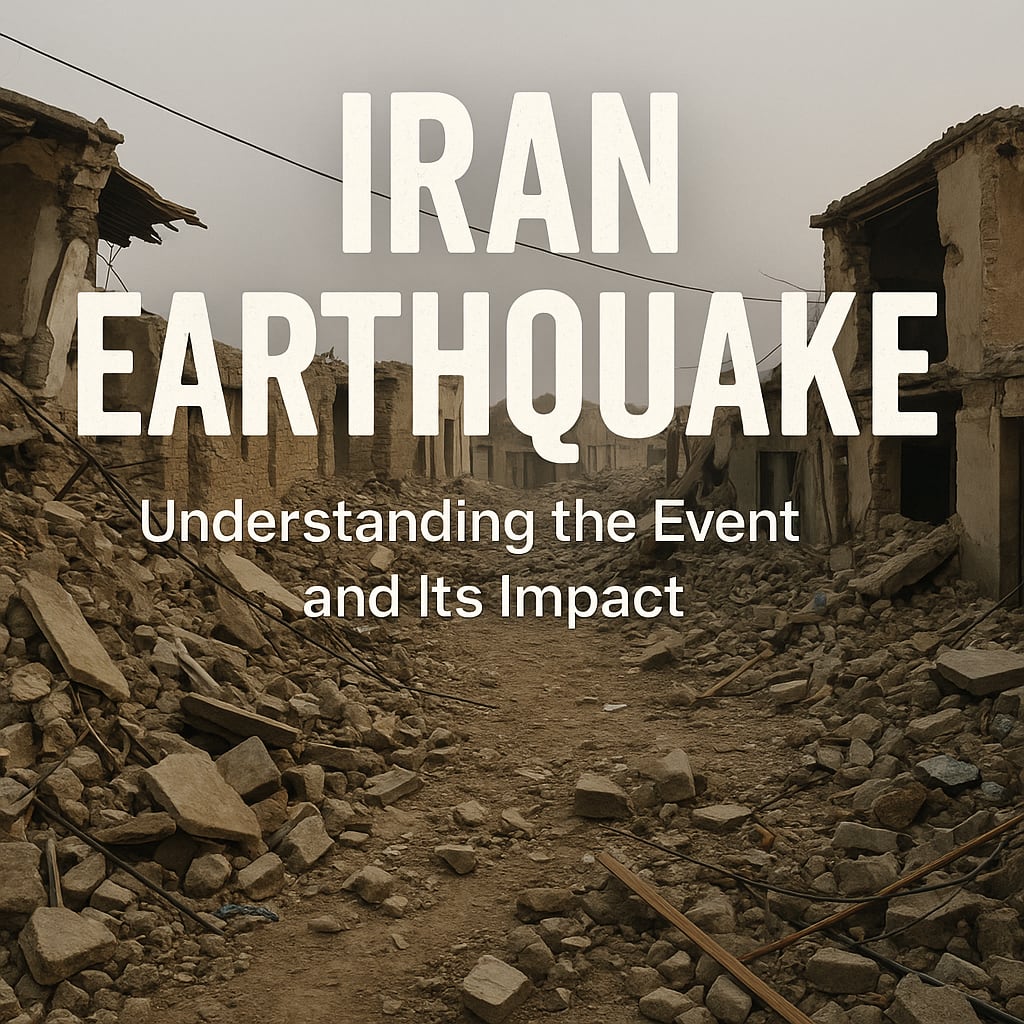
On the evening of June 20, 2025, a moderate earthquake measuring 5.1 on the Richter scale struck Semnan Province in northeastern Iran. According to the United States Geological Survey (USGS), the quake occurred at 21:19 local time at a shallow depth of 10 kilometers, with the epicenter located approximately 16 kilometers southwest of Sorkheh, a city near Semnan’s provincial capital.
Though no casualties or major damage have been reported as of the latest government updates, the event has reignited discussions around Iran’s seismic risk, emergency infrastructure, and the need for sustained readiness in a region historically plagued by earthquakes.
Details of the Earthquake
The tremor was felt across the province and neighboring areas, including parts of Tehran and Qom, causing temporary panic among residents. Seismological centers in Iran confirmed that the event was a naturally occurring tectonic movement, not linked to any human or military activity. The Iranian Red Crescent Society issued a brief statement reassuring the public that there was no widespread damage and that response teams were on standby in case of aftershocks.
Iran’s Seismological Center, part of the Institute of Geophysics at the University of Tehran, also reported the quake, stating that its shallow depth increased the intensity of surface shaking. Emergency protocols were activated in nearby districts, and infrastructure checks were immediately ordered.
Iran’s Seismic Landscape
Iran is among the most seismically active countries in the world, sitting at the collision boundary of the Arabian and Eurasian tectonic plates. These movements generate frequent and sometimes deadly earthquakes.
From March 2024 to March 2025, Iran recorded over 6,200 seismic events, including more than 150 earthquakes exceeding magnitude 4, according to the Iranian Seismological Center. Experts consistently warn that much of the country's infrastructure, particularly in older cities and rural regions, remains vulnerable due to inadequate seismic standards and outdated construction.
Historical Context
Iran has suffered numerous catastrophic earthquakes in the past. Among the most tragic was the 2003 Bam earthquake, which measured 6.6 on the Richter scale and resulted in more than 26,000 deaths. Similarly, the 1990 Manjil-Rudbar earthquake claimed between 35,000 and 45,000 lives, becoming one of the deadliest in the region's history.
Although the June 2025 Semnan earthquake was relatively mild, it serves as a stark reminder that much stronger and more destructive events remain a very real threat. Tehran, home to over 9 million people, sits dangerously close to major fault lines and has been identified as a high-risk area in multiple geological assessments.
Political and Social Climate
The earthquake occurred amid rising tensions between Iran and Israel and ongoing international diplomatic negotiations over Iran’s nuclear program. Some social media users speculated a link between seismic activity and recent military developments, including airstrikes and underground testing.
However, seismologists were quick to dispel such rumors. The International Institute of Earthquake Engineering and Seismology (IIEES) confirmed that the quake bore all the hallmarks of a natural tectonic event. Analysts from institutions including the USGS and the European-Mediterranean Seismological Centre (EMSC) also reported no abnormal radiation or explosive activity, reinforcing the conclusion that the earthquake was not caused by human intervention.
Response and Recommendations
While this event caused no injuries or deaths, Iranian authorities emphasized the importance of preparedness. The National Disaster Management Organization (NDMO) issued public advisories encouraging citizens to participate in earthquake drills and ensure their homes were built or retrofitted to withstand moderate to severe tremors.
Experts also urged the government to accelerate infrastructure audits in urban centers, particularly Tehran, Isfahan, and Mashhad. The risk of a future earthquake exceeding magnitude 7.0 in the capital has been frequently cited as a "national security threat" in recent geological reports.
Conclusion
The June 20, 2025, earthquake in Semnan Province, although moderate, has once again highlighted Iran's vulnerability to seismic events. It underscores the critical need for public education, rigorous infrastructure planning, and stronger enforcement of earthquake-resistant construction codes. As aftershocks continue and data are further analyzed, the focus must remain on proactive preparation to minimize risks in a country where earthquakes are not a question of if, but when.
About the Creator
Asad Ali
I'm Asad Ali, a passionate blogger with 3 years of experience creating engaging and informative content across various niches. I specialize in crafting SEO-friendly articles that drive traffic and deliver value to readers.
How to Determine If Your Biochar is High Quality: A Guide to the Key Indicators
Biochar production is surging in popularity, driven by its applications in agriculture, carbon sequestration, and industrial filtration. However, not all biochar is created equal. If you have just pulled a batch from your kiln or received a shipment from a supplier, how can you tell if it is actually high quality?
By Bestonpyrolysisabout 6 hours ago in Earth


Comments
There are no comments for this story
Be the first to respond and start the conversation.