
Rotterdam's Delta-Linked Climate Strategy
Maeslant, Benthemplein, and the Port Loops


by Futoshi Tachino
In Europe’s busiest river mouth, Rotterdam has learned to treat water as both antagonist and ally. The city’s climate playbook reads like delta pragmatism: keep the surge out, make room for the rain, reuse the heat, stash the carbon, and choreograph daily life so the low-carbon choice is the easy one. It’s a system, not a showpiece—barriers and basins, blue-green roofs and hot-water pipes, all pulling together.
A port that lives its theory
Much of the port lies “outside the dikes,” so Rotterdam can’t rely on inland flood defences alone. The Port Authority’s adaptation strategy now bakes resilience into upgrades: raising quay walls and embankments, planning for higher water levels, and stress-testing critical assets so logistics can keep moving when storms stack up. It’s prevention first, then design for fast recovery.
Designing for the surge you know will come
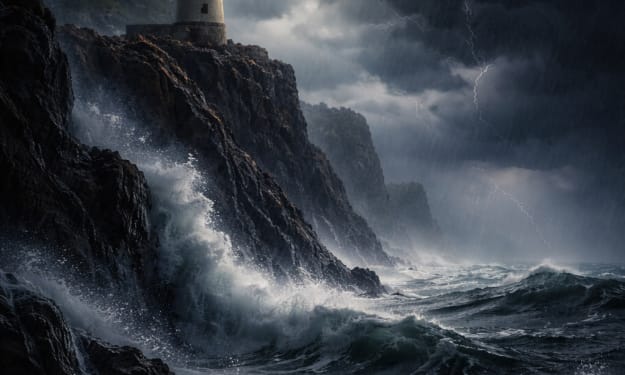
At the mouth of the New Waterway sits Maeslantkering, the giant sector-gate barrier that closes automatically when forecast water levels in Rotterdam exceed +3.0 m NAP. Each gate is roughly 210 m wide and 22 m high; when closure is commanded, the hollow doors flood and settle onto the channel bed within about two hours. In December 2023—during Storm Pia—the barrier closed for the first time in a real storm since its 1997 completion, a reminder that sea-surge risk is not theoretical.
Public space that drinks the rain
Rotterdam’s “water squares” double as sports courts on dry days and detention basins in cloudbursts. Benthemplein—the first of the series—can hold about 1.7 million litres across three basins, turning stormwater management into civic space rather than hidden pipework. The squares are part of a broader WeerWoord (“Weatherwise”) programme that mainstreams adaptation into streets, schools, and design standards citywide.
Roofs as catchments—and commons
The city has pushed hard on blue-green roofs that combine vegetation, rain storage, and solar. Rotterdam counted well over 200,000 m² installed by the late 2010s and now targets 800,000 m² of multifunctional roofs by 2030—helping cut heat, buffer cloudbursts, and make energy locally. Festivals like Rooftop Days and linear projects such as the 2-kilometre Hofbogenpark (under construction) signal how rooftops are being treated as new public space, not leftover surface.
Turning waste heat into winter warmth
Rotterdam’s heat transition banks on harvesting low-carbon heat at scale. WarmtelinQ—an open-access backbone led by Gasunie—will move residual industrial heat from the port to The Hague and eventually Leiden, enabling district networks that can serve roughly 120,000 homes in South Holland. The 34-km first phase is well underway, with Leiden’s extension slated to follow; it’s infrastructure that swaps fossil boilers for circular heat.
Storing carbon under the sea
For heavy industry that can’t electrify fast enough, Rotterdam is building a bridge technology: CO₂ capture with offshore storage. Porthos—a joint venture of EBN, Gasunie, and the Port Authority—will transport captured CO₂ via a 30-plus-kilometre onshore pipe to a compressor station at Maasvlakte, then out 20 km offshore to depleted gas fields 3–4 km beneath the North Sea. Designed for about 2.5 Mt/year over 15 years (≈37 Mt total), Porthos cleared a key court challenge in 2023; construction is in full swing with subsea pipeline installation reported mid-2025 and operations expected in 2026.
Floating is a feature, not a bug
In the Rijnhaven, the Global Center on Adaptation’s Floating Office Rotterdam (FOR) is built to float rather than flood. The timber structure runs on its own solar array and a water-based heat-exchange system, demonstrating climate-adaptive architecture that is both energy-self-sufficient and movable. Nearby pilots—like the floating park and other amphibious interventions—treat the harbour as a testing ground for living with water rather than against it.
Culture as infrastructure
Adaptation is also economic choreography. BlueCity—an old Tropicana swimming complex reborn as a circular-economy campus—hosts dozens of entrepreneurs turning “waste” streams into inputs, from mycelium materials to zero-waste food ventures. It’s an urban metabolism play that complements the water-energy work: reduce flows, reuse what you can, and keep value nearby.
Quiet economics, loud lessons
The through-line in Rotterdam isn’t subsidy theatre; it’s system design. Water squares reduce peak loads on sewers while creating loved public places; blue-green roofs are co-funded because they cut flood risk and summer heat; WarmtelinQ pools demand to make industrial waste heat bankable; and Porthos clusters emitters to cut costs per tonne stored. The port’s own strategy couples infrastructure upgrades with a shift to a CO₂-neutral, circular economy by 2050—because in a working delta, resilience has to pencil out.
Horizons beyond the horizon
Rotterdam aims to be climate-neutral by 2050, with steep emission cuts this decade and a heat transition that phases out natural gas at neighbourhood scale. The “Weatherwise 2030” framework translates that into maps, budgets, and everyday projects—dikes and doors, yes, but also roofs, squares, pipes, and habits. For other coastal cities, the lesson is less about one megastructure than a grammar of many: surge barriers when needed; sponge city where possible; waste-heat networks where practical; and circular industry where competitive.
Sources
– Rijkswaterstaat (Ministry of Infrastructure and Water Management). “Maeslant Barrier—Facts and Figures.” https://www.rijkswaterstaat.nl/en/projects/iconic-structures/maeslant-barrier
– Netherlands Water Partnership. “The Maeslant storm surge barrier…was closed last night for the first time.” December 22, 2023. https://www.netherlandswaterpartnership.com/news/maeslant-storm-surge-barrier-largest-moveable-object-world-was-closed-last-night-first-time
– De Urbanisten. “Watersquare Benthemplein.” https://www.urbanisten.nl/work/watersquare-benthemplein
– Municipality of Rotterdam / Rotterdam Weatherwise. Programme Framework 2030 (English). June 2023 (PDF). https://rotterdamsweerwoord.nl/content/uploads/2023/06/RWW_Programmakader-2030_ENG.pdf
– Urban Green-Blue Grids. “Water Sensitive Rotterdam.” https://urbangreenbluegrids.com/projects/water-sensitive-rotterdam/
– Interlace Hub (EU). “Green Roof Subsidy – Rotterdam.” July 25, 2023. https://interlace-hub.com/green-roof-subsidy-rotterdam
– S. Cascone et al. “Costs and Benefits of Green Roof Types for Cities and Surroundings.” Journal of Sustainable Development of Energy, Water and Environment Systems. Case note on Rotterdam (2017). https://www.sdewes.org/jsdewes/pid6.0225
– Rotterdam Rooftop Days (Rotterdamsedakendagen). “Home.” https://rotterdamsedakendagen.nl/en/home/
– Hofbogenpark (Official Project Site). “Het Hofbogenpark.” https://hofbogenpark.nl/en/
– Gasunie. Annual Report 2024/2025. March 28, 2025 (PDF). (WarmtelinQ overview, 120,000 homes; Leiden extension.) https://www.publicatiesgasunie.nl/static_resource/c32aadc5-c5c8-44a3-8fab-76288636815f.pdf
– Gasunie. “WarmtelinQ—Project Overview.” https://www.gasunie.nl/en/projects/warmtelinq
– ISOPLUS. “Europe’s biggest district heating project: WarmtelinQ (34 km).” https://www.isoplus.group/references/details/reference/gasunie-vlaardingen/
– Porthos (EBN / Gasunie / Port of Rotterdam). “The Project.” https://www.porthosco2.nl/en/project/
– Porthos. “CO₂ reduction through storage under the North Sea—News (construction updates, 2025).” https://www.porthosco2.nl/en/
– Reuters. “Dutch court rules huge carbon capture project can go ahead.” August 16–17, 2023. https://www.reuters.com/sustainability/construction-major-dutch-carbon-storage-project-can-continue-high-court-2023-08-16/
– Port of Rotterdam Authority. “Climate Adaptation—Flood Risk Management (outside-the-dike areas).” https://www.portofrotterdam.com/en/building-port/sustainable-port/climate-adaptation
– Port of Rotterdam Authority. “Raising slopes and quay walls.” February 9, 2023. https://www.portofrotterdam.com/en/node/2152
– Port of Rotterdam Authority. “Energy Transition—Strategy towards a CO₂-neutral, circular economy.” https://www.portofrotterdam.com/en/port-future/energy-transition
– Powerhouse Company. “Floating Office Rotterdam (FOR).” https://www.powerhouse-company.com/floating-office-rotterdam
– Global Center on Adaptation. “GCA moves to world’s largest floating office, a model of self-sufficient climate-resilient design.” May 6, 2021. https://gca.org/gca-moves-to-worlds-largest-floating-office-a-model-of-self-sufficient-climate-resilient-design/
– BlueCity (Rotterdam). “About BlueCity.” https://bluecity.nl/en/over-bluecity
– City of Rotterdam / Decarb City Pipes 2050. Transition Roadmap—City of Rotterdam (WHAT Map; climate-neutral by 2050). September 2023 (PDF). https://decarbcitypipes2050.eu/wp-content/uploads/2023/09/D4.4_Transition-Roadmaps-Rotterdam.pdf
Futoshi Tachino is an environmental writer who believes in the power of small, positive actions to protect the planet. He writes about the beauty of nature and offers practical tips for everyday sustainability, from reducing waste to conserving energy.
Find Futoshi Tachino at:
Any Flip: https://anyflip.com/homepage/wrrac
Audiomack: https://audiomack.com/futoshitachino-1
Bluesky: https://bsky.app/profile/futoshitachino.bsky.social
Hashnode: https://futoshitachino6.hashnode.dev/
Medium: https://medium.com/@futoshitachino_55745
Speaker: https://www.spreaker.com/user/futoshi-tachino--18326940
Speaker Deck: https://speakerdeck.com/futoshitachino2
Substack: https://substack.com/@futoshitachino1
WordPress: https://futoshitachino6.wordpress.com/
About the Creator
Futoshi Tachino
Futoshi Tachino is an environmental writer who believes in the power of small, positive actions to protect the planet. He writes about the beauty of nature and offers practical tips for everyday sustainability.
Keep reading
More stories from Futoshi Tachino and writers in Earth and other communities.
Steam, Not Smoke
by Futoshi Tachino In Kenya’s Rift Valley, the ground exhales. Around Naivasha, at a place called Olkaria, wells tap rock-hot water and steam that have already helped Kenya become Africa’s geothermal leader—and one of the few countries where clean, firm power anchors the grid. Recent analyses put geothermal’s share of Kenya’s electricity around the mid-40s, with some reports citing roughly 47 percent in 2024. That matters in a drought-prone region where hydropower is variable and diesel is expensive.
By Futoshi Tachino5 months ago in Earth
A Planetary Alignment Will Coincide With Mercury Retrograde
Skywatchers are preparing for a striking celestial event as a planetary alignment is set to coincide with Mercury retrograde — a pairing that has generated buzz across both scientific and astrological communities. While planetary alignments are not uncommon on cosmic timescales, the overlap with Mercury’s apparent backward motion adds a layer of intrigue that has captured global attention.
By Aarif Lashariabout 21 hours ago in Earth
Staying sane in the insane world.
”It is no measure of health to be well adjusted to a profoundly sick society.” Jiddu Krishnamurti This quote has been one of my favourites since the moment I first laid my eyes on it. To me, it cuts right through the fog of the illusion of normality that permeates our lives. And since I am someone who has never felt (well) adjusted to this society, Krishnamurti’s words gifted me with the realisation that there isn’t anything inherently wrong with me.
By Eva Smittea day ago in Humans


Comments
There are no comments for this story
Be the first to respond and start the conversation.