
Role of BCR in the Future of the EU ETS
Integrating Biochar into Carbon Trading Frameworks


The European Union Emissions Trading System (EU ETS) is entering a decisive decade of transformation. As the bloc intensifies its commitment to net-zero targets by 2050, the inclusion of engineered and nature-based carbon removal mechanisms has become a policy priority. Among these, Biochar Carbon Removal (BCR) stands out for its verifiable permanence, scalability, and co-benefits to soil and ecosystem health. The future integration of BCR within the EU ETS could redefine how carbon markets value long-duration sequestration and foster a new class of carbon removal assets.
Evolution of the EU ETS Toward Carbon Removal
The EU ETS, established in 2005, remains the cornerstone of Europe’s climate strategy. Its initial focus was on emission reductions, primarily through cap-and-trade measures targeting industrial and energy sectors. However, as abatement opportunities in these sectors plateau, attention is shifting toward carbon removal as a complementary pathway.
The European Commission’s Carbon Removal Certification Framework (CRCF), adopted in 2024, laid the foundation for recognizing certified removals within market systems. It introduces categories for permanent, temporary, and carbon farming removals. BCR aligns closely with the “permanent storage” category, offering sequestration durability exceeding a century when properly applied in stable environments such as soil or construction materials.
Future revisions of the EU ETS are expected to integrate such certified removals as eligible offsets, potentially in a restricted or transitional capacity at first. This move would bridge the compliance and voluntary carbon markets, enabling regulated entities to meet part of their emission obligations through durable carbon removal credits.
Biochar as a Verified Carbon Removal Pathway
BCR operates through thermochemical conversion of biomass under limited oxygen—pyrolysis—to produce biochar in a biochar machine, a stable carbon-rich solid. When the biochar is incorporated into soils or other long-lived matrices, its carbon content becomes effectively sequestered for hundreds of years. Unlike biological sequestration methods that risk reversal through decay or fire, biochar exhibits chemical recalcitrance, offering high permanence with quantifiable carbon storage.
The durability and traceability of BCR make it particularly attractive for integration into compliance systems. Current certification schemes, including Puro.earth and the European Biochar Certificate (EBC), already provide robust monitoring, reporting, and verification (MRV) methodologies. The alignment of these frameworks with EU-level regulation will be essential to ensure integrity and prevent double counting once BCR credits enter the ETS ecosystem.
Policy and Economic Implications
Incorporating BCR into the EU ETS would have wide-ranging policy and market consequences. From a regulatory standpoint, it would mark a shift from purely emission avoidance toward a hybrid model that rewards both reductions and removals. This transition could accelerate investment into pyrolysis infrastructure, rural biomass utilization, and carbon-negative product development.
Economically, a formalized demand for certified biochar removals could stabilize carbon credit pricing and enhance liquidity in the carbon market. Farmers, waste management operators, and decentralized energy producers could all participate in this emerging value chain, transforming agricultural residues and organic waste into long-lived carbon sinks.
For the EU, supporting BCR also aligns with circular economy objectives. By valorizing residual biomass, it encourages resource efficiency while strengthening domestic carbon removal capacity—an area where Europe currently depends heavily on voluntary markets.
Integration Challenges and Verification Standards
Despite its promise, several technical and institutional challenges must be resolved before BCR can function within the EU ETS framework. One major concern is ensuring consistent MRV across heterogeneous biochar applications. Soil incorporation, construction use, and industrial blending each entail different decay rates and verification difficulties. Developing standardized default factors and lifecycle accounting models will be critical to maintain environmental integrity.
Additionally, policymakers must define the boundaries between carbon storage and co-benefits. While biochar can improve soil fertility and water retention, its inclusion in the ETS should focus exclusively on quantifiable carbon permanence. Establishing clear accounting separation will prevent double monetization of ancillary benefits under other EU programs, such as the Common Agricultural Policy (CAP).
Outlook for the Next Decade
The 2030s are poised to become the decade of engineered carbon removal within the EU. As the CRCF matures and national registries begin to harmonize, BCR could emerge as one of the first scalable, verifiable removal pathways eligible under compliance systems.
Incorporation into the EU ETS will not occur overnight. It will require political consensus, methodological rigor, and alignment with international accounting standards. Yet the trajectory is unmistakable. By embedding biochar carbon removal within Europe’s most influential climate policy instrument, the EU can set a global precedent—proving that durable carbon sequestration is not only measurable but also economically viable within a regulated market framework.
About the Creator
Keep reading
More stories from Wayne Shen and writers in Earth and other communities.
Policy Directions for Tyre Recycling in Europe
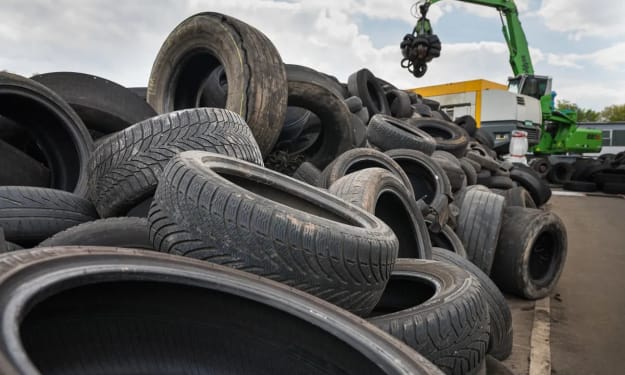
The management of end-of-life tyres (ELTs) in Europe has evolved into a sophisticated regulatory framework aimed at resource recovery, environmental protection, and circular economy advancement. Over the past decade, the European Union (EU) has shifted its policy orientation from disposal and incineration toward material and energy recovery, encouraging sustainable methods such as pyrolysis of tyre. This transformation reflects the EU’s broader ambitions under the Green Deal and the Circular Economy Action Plan.
By Wayne Shen5 months ago in Earth
Asia’s Second-Best Island in DestinAsian Ranking
Vietnam’s largest island, Phu Quoc, has achieved a remarkable milestone in global tourism by being ranked the second-best island in Asia in the prestigious DestinAsian Readers’ Choice Awards 2026, surpassing the world-famous Maldives. The recognition marks a major moment for Vietnam’s tourism industry and highlights the island’s rapid rise as one of the most desirable tropical destinations in the world. 
By Irshad Abbasi 4 days ago in Earth
Hottest in the Office
Dear Rafi, You’re very distracting to work around. For the first second I saw you the other day, I thought you were some type of executive. It took a moment to realize no, you were just the new guy, dressed up for the job he wants. Be still, my heart.
By Gabriel Shames6 days ago in Pride



Comments
There are no comments for this story
Be the first to respond and start the conversation.