
"Reversing Earth's Rotation"
"A Hypothetical Journey into a Transformed Planet"
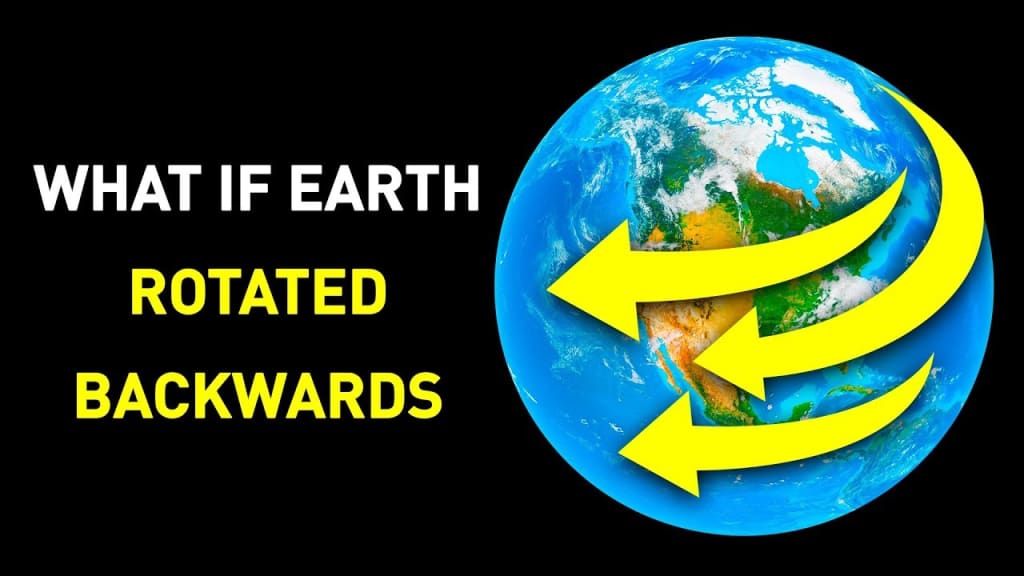
In this intriguing thought experiment, we have explored the astonishing consequences of a reversed Earth rotation, which would undoubtedly reshape our planet in profound ways. As we continue to delve into the intricate changes that would occur under this hypothetical scenario, let's further expand upon the potential impacts and their far-reaching implications.
One of the most immediate and dramatic consequences of a reversed Earth rotation would be the alteration of global wind patterns. Currently, the prevailing winds at the Earth's surface move from west to east due to the planet's eastward rotation. This pattern greatly influences weather systems, climate, and the distribution of moisture and temperature across the globe.
In a world where the Earth rotates in the opposite direction, these prevailing winds would shift accordingly. Regions that have long relied on predictable wind patterns for agriculture, transportation, and weather patterns would face disruptions. For example, the trade winds that have historically facilitated oceanic navigation would now blow in the opposite direction. This reversal would pose challenges for sailors and mariners, requiring adjustments to navigation techniques and potentially affecting global trade routes.
The redistribution of wind patterns would also impact rainfall distribution. Currently, the equatorial regions receive heavy rainfall due to the convergence of moist air from the oceans. In a reverse-rotation scenario, this moisture-laden air would move away from the equator, causing severe droughts in regions that were once lush and fertile. The Amazon rainforest, often referred to as the "lungs of the Earth," would be particularly vulnerable, potentially leading to its decline and irreversible damage to global biodiversity.
Conversely, regions farther from the equator would experience significant increases in rainfall. Areas like Canada and Siberia, which are currently characterized by colder climates and limited precipitation, would transform into verdant landscapes. Forests and vegetation would flourish, absorbing more carbon dioxide from the atmosphere and potentially acting as a natural buffer against climate change.
The alteration of ocean currents would further amplify these changes. As the Atlantic Ocean's Gulf Stream, responsible for transporting warm water from the Gulf of Mexico to Western Europe, dissipates, Western Europe would face dramatic cooling. Winters would become harsher, resembling climates found in parts of Canada. Agriculture and ecosystems in Western Europe would face unprecedented challenges, potentially leading to food security issues and significant economic impacts.
The Pacific Ocean, on the other hand, would undergo a transformation as the new Pacific current carries cold water from the west coast of the Americas towards Asia. This shift would disrupt marine ecosystems, leading to a decline in tropical fish populations in the Pacific. Local fisheries, which rely on these species, would be severely affected, posing economic challenges for coastal communities.
The geological consequences of a reversed Earth rotation should also be considered. The planet's tectonic plates, which have adapted to the existing rotational forces over millions of years, would need to adjust to the new regime. This adjustment could lead to increased seismic activity, with earthquakes and volcanic eruptions becoming more common in some regions. The Earth's crust, accustomed to the previous rotation, would experience stress and strain as it adapts to the altered forces.
While these changes may seem daunting, it's important to acknowledge that not all consequences would be negative. The expansion of lush forests in the northern hemisphere could serve as a carbon sink, helping to mitigate the effects of climate change. The increase in vegetation would provide new habitats for wildlife, potentially enhancing biodiversity in these regions.
Furthermore, the shift in ocean currents would create opportunities for fisheries and aquaculture in previously unexplored regions. Different species of fish and marine life would become abundant, offering new sources of food and economic benefits for coastal communities.
In conclusion, the hypothetical scenario of a reversed Earth rotation unveils a complex web of consequences that would impact our planet's climate, ecosystems, and geological processes. While some regions would face unprecedented challenges and disruptions, others would undergo a transformation into greener, more fertile landscapes. This thought experiment underscores the intricate interconnectedness of Earth's processes and the need for continued research, monitoring, and adaptation to better predict and respond to potential environmental changes. It serves as a stark reminder of the delicate balance that sustains life on Earth and highlights the imperative of understanding and preserving our planet's natural systems.
About the Creator
Keep reading
More stories from Μarilena Κont and writers in Earth and other communities.
"Earth Spinning at the Speed of Light"
Have you ever taken a moment to contemplate the slow and steady pace at which our planet completes a full rotation in a single day? The 24-hour cycle of day and night may seem unremarkable, but have you ever wondered what would transpire if we were to dramatically alter this fundamental aspect of our existence? What if the Earth were to spin at the astounding speed of light? In this captivating thought experiment, we'll delve into the profound implications of Earth rotating at a velocity that defies imagination.
By Μarilena Κont2 years ago in Earth
Antibiotic resistance is released into rivers and other essential water supplies by melting glaciers.
Sea level rise and the disappearance of landscapes are not the only effects of glaciers melting quickly. Melt water may also contain buried genetic material that aids in bacterial resistance to drugs, scientists are now cautioning.
By Francis Dami4 days ago in Earth



Comments (1)
Great job! Good work!