
Resurrecting the mammoth?
If the complete genome is found, they have hopes of cloning mammoths within a few decades

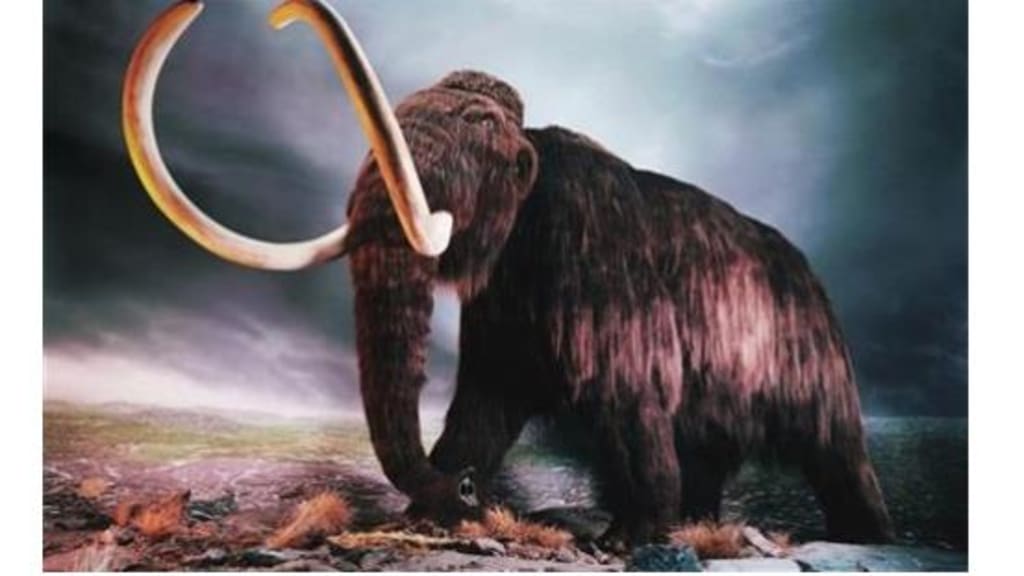
The first Russian laboratory for cloning extinct animals has started work in Yakutsk, Russian media reported on September 1. The first task of the researchers is to "enable the regeneration of mammoths". The project brings together scholars from Russia, China and South Korea. South Korean geneticist Hwang U-seok, who is involved in the project, said that if the complete genome is found, they hope to clone the mammoth within a few decades. Can the extinct mammoth really be revived?
Finding "living cells"
The key to resurrecting the mammoth is to extract the "living cells" needed for cloning from the mammoth carcass, which have the same physiological state as normal cells.
In 2013, Russian researchers discovered a well-preserved mammoth carcass in Siberia with liquid blood (above).
Complete DNA obtained
Experts have extracted "high-quality DNA" from the 43,000-year-old mammoth carcass (above). Since the extracted DNA may have been missing, it needs to be repaired to obtain the embryo again. Stem cell technology can now also be used to turn the extracted "living cells" into stem cells that can grow into different types of cells, including sperm and egg cells.
Solving the problem of surrogacy
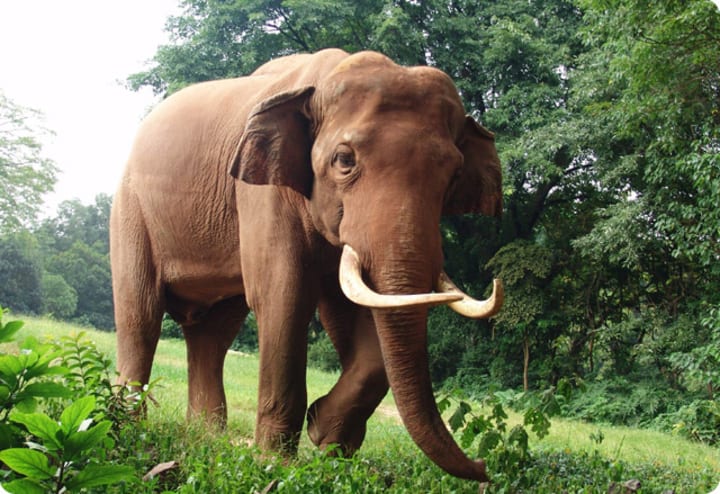
The cloning process requires female Asian elephants, which provide the egg cells and are responsible for the gestation of the mammoth fetus. However, the mother is bound to have an immune rejection reaction to the transplanted embryos, and the mammoth embryos may be eliminated before they can form organs. This would require addressing the compatibility of different DNA.
These creatures are expected to be revived
The dodo is a flightless bird, native only to the African island nation of Mauritius. As of 1681, no more dodos have been found alive. Geneticists believe that more dodo samples can be found in the future to revive it.
The Tasmanian tiger, which lives on the Australian island of Tasmania, has a wolf-like head and a dog-like body and is the largest modern carnivorous marsupial, also known as the Tasmanian pangolin. The last Tasmanian tiger died in 1936 and its tissues are well protected.
The short-faced bear lives in northern America and is 1/3 taller than a polar bear when standing and weighs up to 1 ton. Short-faced bears became extinct 11,000 years ago due to lack of food, difficulty in finding mating partners, and other reasons. There are currently samples of short-faced bears preserved in the permafrost.
The saber-toothed tiger became extinct only 10,000 years ago. In downtown Los Angeles, USA, the asphalt pit at La Brea Ranch is known for excavating saber-toothed tiger fossils. The saber-toothed tiger samples found here are well preserved, but the asphalt makes it very difficult to extract DNA, and no complete DNADNA has been extracted yet.
Resurrecting mammoths affects Asian elephants
As the success rate of cloning animals is only a few percent, the cloning of "Dolly" sheep stem cell scientists Wilmut said that the number of Asian elephants is already very small, in order to clone a mammoth, "improper" collection of 500 Asian elephant egg cells, will make the The Asian elephant is in danger of extinction. There are also biologists say that the mammoth is not extinct because of human activities, resurrecting the mammoth risk is very big, may bring a series of ecological problems, the overall harm than good.
Cloning = Reproduction
Cloning technology does not require the mating of a male and female, or the combination of sperm and egg, but simply extracts single cells from the animal, cultures them into embryos by artificial means, and then implants the embryos into the female animal to produce a new individual. The cloned animal is a "replica" of the single-cell donor with the same characteristics as the single-cell donor.
World's largest elephant
The mammoth, also known as the woolly mammoth, is an animal that is adapted to cold climates. Once one of the largest elephants in the world, the steppe mammoth weighed up to 12 tons, while the adult Asian elephant weighed up to 6 tons. They live widely in northern Eurasia. About 10,000 years ago, mammoths became extinct one after another
About the Creator
Wu Mu
Dreams are not limited, nothing can be achieved
After the year 2030, what will become of the International Space Station? Explanation of NASA's Deorbit Strategy
The International Space Station (ISS), the most expensive and complex structure ever assembled in space, has become both an unrivaled hub of scientific research and an increasingly difficult aging outpost to maintain in low Earth orbit. The International Space Station (ISS) has been a laboratory for experiments in everything from advanced materials science to microgravity biology for more than two decades. But as it nears its planned retirement, stakeholders are grappling with how to responsibly wind down its operations, manage its physical end, and transition to new orbital platforms.
By Raviha Imran6 days ago in Earth
When the Shelter Closes
Across the street from my house, a man slept under a tree, his dog by his side. My first, naive thought: he must be traveling through. But he kept coming back, often sleeping there during the day. Then it hit me—that person might not have a home.
By Bride of Sound5 days ago in Humans



Comments
There are no comments for this story
Be the first to respond and start the conversation.