
Red-wattled Lapwing Bird
An Enchanting Avian Delight of India.
Introduction :
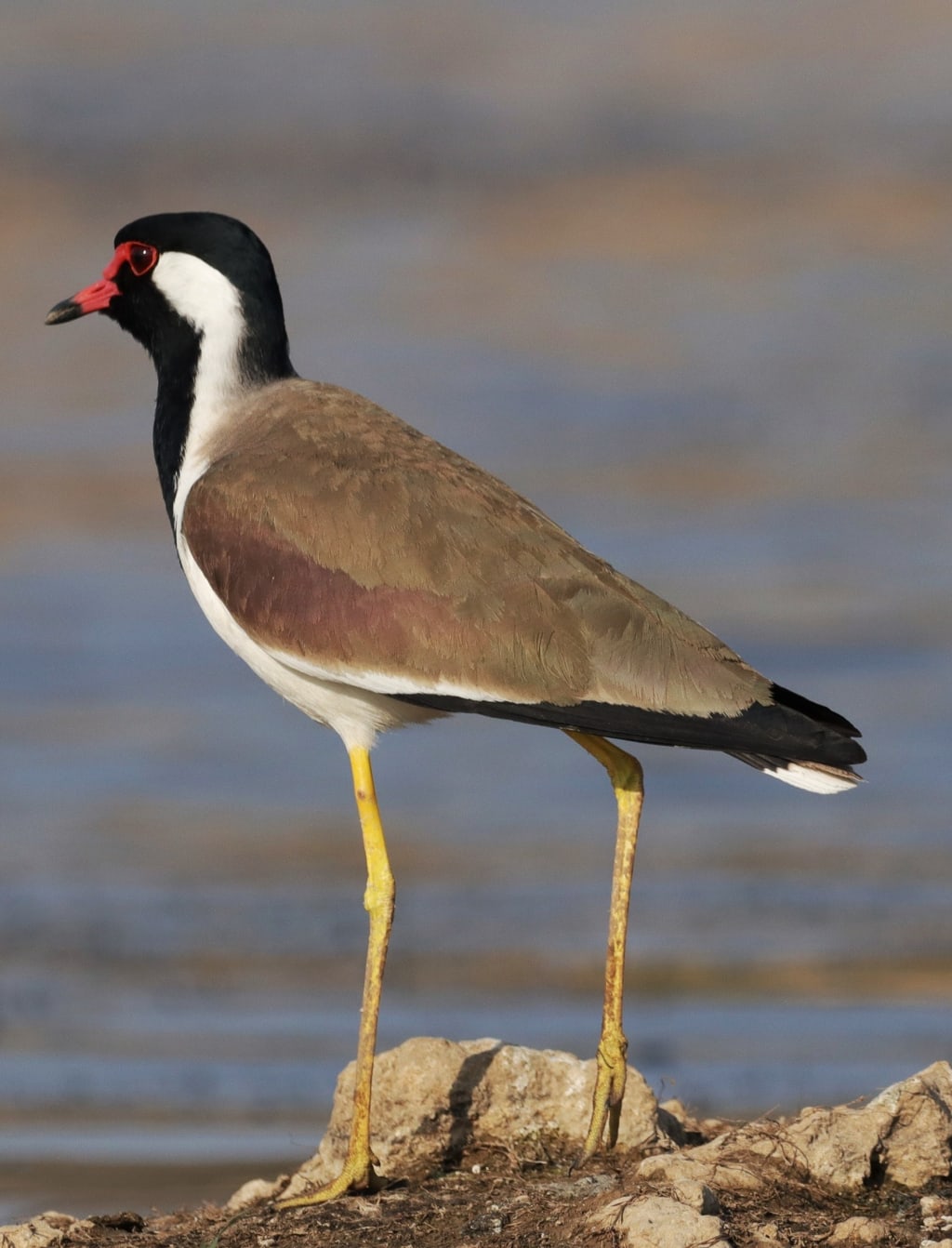
India, a land of diverse ecosystems, is home to a plethora of avian species that captivate birdwatchers and nature enthusiasts. One such charismatic bird is the Red-wattled Lapwing (Vanellus indicus). With its distinctive appearance, enchanting calls, and fascinating behaviors, this medium-sized wader has captured the attention and admiration of both locals and international bird lovers. In this article, we will explore the remarkable features, habitat, distribution, behavior, and conservation status of the Red-wattled Lapwing, shedding light on its significance in India's avian diversity.
1. Description and Features:
The Red-wattled Lapwing is a striking bird characterized by its medium-sized body, averaging about 35 centimeters in length. It possesses long, slender legs and a distinctively curved beak, perfectly adapted for its foraging habits. However, its most prominent features are the vivid red fleshy wattles present on either side of its head, which lend the bird its name. The wattles, along with the bright yellow facial patch, add a remarkable splash of color to its otherwise black and white plumage.
2. Habitat and Distribution :
The Red-wattled Lapwing is widely distributed across the Indian subcontinent, making its habitat in diverse ecosystems such as wetlands, marshes, open grasslands, agricultural fields, and even urban environments. It can be found in regions spanning from sea level up to an elevation of 2,000 meters.
The bird's preferred habitats include paddy fields, riverbanks, and muddy areas with shallow water bodies. These locations provide an abundant supply of insects, small crustaceans, mollusks, and earthworms, which form the primary diet of the Red-wattled Lapwing.
3. Behavior and Vocalizations :
The Red-wattled Lapwing is known for its unique behaviors, which make it a delight to observe. It is highly territorial and exhibits aggressive behavior when defending its nesting sites. During the breeding season, which typically occurs between March and August, the male performs an elaborate aerial display, soaring high into the sky while repeatedly calling out to attract a mate.
The bird's vocalizations are unmistakable. Its loud and repetitive calls, described as "did-he-do-it" or "pee-wee," reverberate through the air, drawing attention to its presence. These calls are often heard throughout the day, especially during the breeding season.
Another intriguing behavior of the Red-wattled Lapwing is its injury-feigning display. When it perceives a threat to its nest or chicks, it dramatically feigns injury, luring potential predators away from the vulnerable young ones. This tactic, known as the "broken-wing display," is a remarkable example of avian parental care.
4. Breeding and Nesting :
Red-wattled Lapwings build their nests on the ground, using a simple yet effective technique. The nest is a shallow scrape in the soil, often lined with pebbles, grass, and bits of vegetation. The location is carefully chosen to provide maximum visibility and protection.
Once the nest is ready, the female lays a clutch of three to four well-camouflaged eggs. Both parents take turns incubating the eggs, which hatch after an average of 25 to 30 days. The chicks are precocial, meaning they are relatively mature and mobile from birth. They leave the nest soon after hatching but are diligently guarded and cared for by their parents.
5. Conservation Status and Threats :
The Red-wattled Lapwing is considered a species of least concern on the IUCN Red List. However, certain threats continue to impact their population in specific areas. The destruction and degradation of wetland habitats, primarily due to urbanization and agriculture, pose a significant challenge. These birds are also vulnerable to the disturbance caused by human activities, such as livestock grazing and recreational activities near their breeding grounds.
Conservation efforts are crucial to ensuring the long-term survival of the Red-wattled Lapwing. Protecting and restoring wetland habitats, implementing sustainable agricultural practices, and raising awareness among local communities about the importance of avian conservation are essential steps in safeguarding this captivating bird's future.
Conclusion :
The Red-wattled Lapwing stands as a testament to the rich avian diversity of India. Its stunning appearance, captivating vocalizations, and intriguing behaviors make it a cherished species among birdwatchers and nature lovers. As we continue to appreciate the beauty and uniqueness of this remarkable bird, it becomes our responsibility to ensure its habitat and survival are protected. By preserving wetland ecosystems and promoting sustainable practices, we can contribute to the conservation of not just the Red-wattled Lapwing, but the entire avian fauna that enriches our natural heritage.
-------------
About the Creator
Subhash C
As a naturalist, I am passionate about conservation and educating others about the importance of biodiversity and ecological balance. My work involves field research, wildlife observation, and environmental advocacy.
A Planet the Size of Earth with an Atmosphere Like Our Own
For centuries, humans have looked up at the night sky and wondered whether Earth is the only world capable of supporting life. Advances in modern astronomy have brought us closer than ever to answering that question. Recently, astronomers announced the discovery of a planet roughly the size of Earth with an atmosphere that appears surprisingly similar to our own. This finding has sparked excitement among scientists and renewed hope that life might exist elsewhere in the universe.
By Irshad Abbasi 7 days ago in Earth



Comments
There are no comments for this story
Be the first to respond and start the conversation.