
Recycling Electronic Equipment
Why It Matters More Than Ever

In today’s world, almost everyone uses electronic devices—whether it's a smartphone, laptop, home appliance, or wearable tech. But what happens when those devices break, become outdated, or are simply no longer wanted? Unfortunately, many of them end up in landfills, contributing to one of the fastest-growing waste streams globally: electronic waste, or e-waste.
This growing environmental issue calls for responsible recycling of electronic equipment. And for companies that manufacture or sell electronics, proper end-of-life management is not just good practice—it’s often a legal obligation.
Let’s explore why recycling electronics matters, how it works, and what role companies must play in this global effort.
📉 The E-Waste Crisis: A Global Challenge
According to the Global E-Waste Monitor 2020, the world generated over 53 million metric tons of e-waste in 2019. Less than 20% of it was formally recycled. The rest? Either dumped in landfills, illegally exported, or left in drawers and garages.
E-waste contains toxic substances such as lead, mercury, and flame retardants, which can contaminate soil and water. At the same time, these discarded electronics also hold valuable raw materials like gold, copper, and rare earth elements.
Failing to recycle electronic equipment wastes resources and harms ecosystems. But when done right, electronics recycling can significantly reduce our environmental footprint.
🔁 Why Recycling Electronics Is Crucial
Recycling electronic equipment offers several environmental and economic benefits:
1. Conserves Resources
Many components inside electronics can be recovered and reused, reducing the need for raw material extraction. This helps preserve finite resources like copper, gold, and lithium.
2. Reduces Toxic Pollution
Proper recycling prevents harmful substances (like cadmium and lead) from leaching into the environment. This is especially important in landfills, where e-waste can contaminate water and air.
3. Cuts Greenhouse Gas Emissions
Producing electronics from recycled materials often uses less energy than manufacturing from raw resources—helping to lower carbon emissions.
4. Supports the Circular Economy
Recycling extends the lifecycle of products and materials, supporting a circular economy where waste is minimized and sustainability is prioritized.
🧾 What the Law Says: WEEE and Eco-Design Regulations
Many countries and regions have implemented e-waste management laws to hold producers accountable for recycling their products. In the European Union, for example, manufacturers must comply with:
- WEEE Directive (Waste of Electrical and Electronic Equipment): This requires producers to finance and manage the collection, recycling, and recovery of their electronic equipment.
- Ecodesign and Extended Producer Responsibility (EPR): Products must be designed with durability, repairability, and recyclability in mind.
- Other regions, including Canada, several U.S. states, and parts of Asia, have adopted similar regulations. Failing to meet these obligations can result in fines, market restrictions, or reputational damage.
🧠 How Businesses Can Prepare
If your company sells or manufactures electronic equipment, here are practical steps to ensure responsible end-of-life management:
✅ 1. Design for Sustainability
From the start, consider using recyclable materials, modular components, and easily removable batteries. This makes disassembly and recycling more efficient.
✅ 2. Understand Local E-Waste Laws
Every market has its own rules. Whether you're in the EU, Canada, or the U.S., make sure you understand your producer obligations and how to meet them.
✅ 3. Use Take-Back Programs
Offer or participate in take-back schemes that collect old products from customers for recycling or safe disposal.
✅ 4. Work With Authorized Recyclers
Partner with certified e-waste recyclers who follow legal and environmental best practices.
✅ 5. Label Clearly
Products and packaging should be marked with appropriate symbols (like the crossed-out wheeled bin) to indicate that they must not be discarded in regular trash.
🛠 How Enviropass Can Help
At Enviropass, we help electronics manufacturers and suppliers understand and meet global recycling regulations. Our services include:
- WEEE compliance support
- Ecodesign assessments
- Regulatory guidance for North America and the EU
- Supplier communication and documentation
- End-of-life product evaluations
We simplify complex rules and tailor our support to your business—so you can stay compliant and sustainable.
🌎 Final Thoughts
Electronic waste is one of the most pressing environmental challenges of our time. But it’s also an opportunity. Through smarter product design, responsible recycling, and better regulatory compliance, we can reduce our impact—and recover valuable materials in the process.
Whether you’re a manufacturer, importer, or brand owner, now is the time to invest in sustainable product lifecycles.
About the Creator
Keep reading
More stories from Mahgol Nikpayam and writers in Earth and other communities.
What You Should Know About California Proposition 65 and Product Compliance
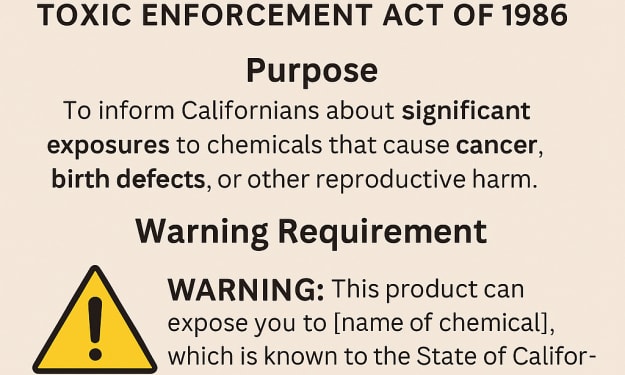
California is known not only for its innovation and environmental leadership but also for its strict safety regulations. One of the most impactful and far-reaching among them is California Proposition 65—officially titled the Safe Drinking Water and Toxic Enforcement Act of 1986.
By Mahgol Nikpayam5 months ago in Earth
Trump’s Venezuela Gambit Tests Investor Appetite for Geopolitical Risk
Former U.S. President Donald Trump’s renewed hardline posture toward Venezuela has reopened a familiar—but newly volatile—front in global geopolitics. By signaling tougher enforcement of sanctions and hinting at a recalibration of U.S. policy toward Caracas, Trump has injected uncertainty into energy markets and emerging-market assets, forcing investors to reassess how much geopolitical risk they are willing to absorb. For Wall Street and global funds alike, Venezuela has long been a paradox: a country with some of the world’s largest proven oil reserves, yet burdened by sanctions, political instability, and institutional collapse. Trump’s gambit is testing whether investors believe opportunity can outweigh risk—or whether capital will once again retreat at the first sign of escalation. Why Venezuela Is Back on the Radar Venezuela’s reemergence in U.S. political discourse is not accidental. Energy security has climbed back to the top of global priorities, driven by conflicts, sanctions, and supply chain disruptions. With oil prices sensitive to geopolitical shocks, even marginal producers can influence sentiment. During Trump’s previous term, the United States imposed sweeping sanctions aimed at pressuring President Nicolás Maduro to step down. Those measures sharply curtailed Venezuela’s oil exports and isolated its financial system. While later policy adjustments under subsequent administrations allowed limited easing—particularly to stabilize energy markets—Trump’s rhetoric suggests a return to maximum pressure. For investors, this raises a critical question: are sanctions about to tighten again, and if so, what does that mean for oil flows, regional stability, and risk premiums? Markets React to Policy Signals, Not Just Policy Financial markets are forward-looking. They react not only to decisions but to signals—and Trump’s statements are powerful signals. Even without immediate policy changes, the prospect of tougher sanctions or diplomatic confrontation can shift investor behavior. Oil traders are watching closely. Venezuela’s production remains far below its historical peak, but incremental barrels matter in a tight market. Any hint that U.S. policy could disrupt exports—even indirectly—tends to push volatility higher. Beyond oil, Venezuela-linked assets are thinly traded but symbolically important. Bonds, energy service contracts, and regional equities can swing sharply on geopolitical headlines, reinforcing the perception that politics, not fundamentals, drives outcomes. Investor Appetite Meets Political Reality The core test posed by Trump’s Venezuela gambit is whether investors are prepared to price in elevated geopolitical risk for potential upside. Some funds specialize in distressed assets, betting on political shifts or partial normalization. Others prefer stability and predictability, steering clear of jurisdictions where policy can change overnight. In recent months, there has been cautious interest in Venezuela-related opportunities, fueled by limited sanctions relief and the prospect—however remote—of political dialogue. Trump’s stance complicates that calculus. A harder U.S. line could reverse fragile gains, leaving investors exposed to sudden losses. For institutional investors with strict compliance requirements, even the perception of heightened sanctions risk can be enough to stay away. The Energy Dimension: Oil as Leverage Energy sits at the center of this drama. Venezuela’s oil sector has deteriorated after years of underinvestment and mismanagement, but it still represents strategic leverage. For Washington, sanctions are a tool to influence behavior; for Caracas, oil is both lifeline and bargaining chip. Trump’s approach historically framed sanctions as pressure mechanisms rather than negotiating tools. If that philosophy returns, markets may expect less flexibility and more confrontation. That expectation alone can deter capital, slow production recovery, and amplify price swings. Ironically, tighter sanctions could also strengthen Venezuela’s reliance on non-Western partners, reshaping trade routes and complicating enforcement—another layer of uncertainty investors must weigh. Regional Spillovers and Emerging Market Risk Venezuela does not exist in isolation. Its instability has ripple effects across Latin America, from migration pressures to regional energy dynamics. For investors, this means contagion risk. A sharper U.S.–Venezuela standoff could elevate risk premiums for neighboring markets, particularly those with political fragility or economic ties to Caracas. Currency volatility, capital outflows, and equity selloffs often follow periods of heightened regional tension. In this sense, Trump’s gambit tests not just appetite for Venezuela-specific risk, but for emerging markets broadly—especially at a time when global interest rates and macro uncertainty already weigh on sentiment. Election-Year Calculations and Uncertainty Trump’s Venezuela rhetoric also carries a domestic political dimension. Hardline foreign policy positions can resonate with certain voter blocs, particularly in an election context. For investors, election-year geopolitics are notoriously difficult to model. Policy announcements may serve political messaging rather than economic strategy, increasing the likelihood of abrupt shifts. Markets dislike surprises, and Trump’s unpredictability—whether admired or criticized—adds a premium to uncertainty. As a result, investors may demand higher returns to compensate for risk, or simply choose to allocate capital elsewhere. What Investors Are Watching Next Several indicators will shape market reaction in the months ahead: Sanctions enforcement: Any concrete moves to tighten or expand restrictions would have immediate market impact. Oil export data: Changes in Venezuelan output or shipment patterns will signal whether rhetoric is translating into reality. Diplomatic posture: Engagement—or lack thereof—with allies and regional partners will influence how isolated or escalatory U.S. policy becomes. Corporate exposure: Energy companies and service providers will reassess involvement, offering clues about private-sector confidence. Together, these signals will determine whether Trump’s gambit remains a headline risk or becomes a material market driver. A Calculated Risk—or a Warning Shot? It remains unclear whether Trump’s stance is a negotiating tactic, a campaign message, or a preview of future policy. For investors, the distinction matters less than the risk it introduces. Venezuela’s story has taught markets a hard lesson: political risk can overwhelm fundamentals. Even the promise of vast resources cannot compensate for uncertainty when rules change without warning. Conclusion Trump’s Venezuela gambit is testing investor appetite for geopolitical risk at a time when markets are already navigating inflation, interest rate shifts, and global instability. By reopening the question of sanctions and U.S. policy toward Caracas, Trump has reminded investors that politics remains a powerful market force. Whether capital retreats or selectively engages will depend on how rhetoric translates into action. But one thing is clear: in today’s interconnected world, geopolitical gambits do not stay confined to diplomacy—they ripple through markets, portfolios, and risk calculations worldwide.
By Muhammad Hassan7 days ago in Earth



Comments
There are no comments for this story
Be the first to respond and start the conversation.