
Quartz crystals on Mars could preserve signs of ancient life
Ancient life

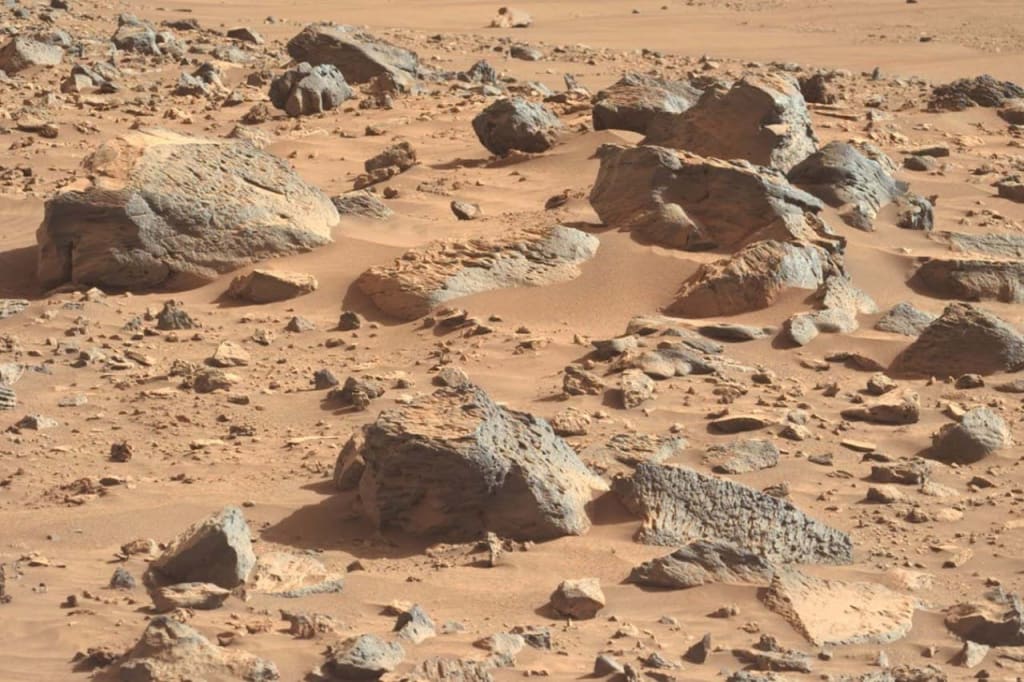
Quartz Crystals on Mars A Potential Key to Unlocking Ancient Life
The discovery of pure quartz crystals on Mars marks a groundbreaking moment in planetary science offering new insights into the planet’s geological past and the potential for ancient extraterrestrial life. Alongside quartz NASA’s Perseverance rover has also identified opal and other minerals that indicate significant hydrothermal activity. This discovery could be pivotal, as hydrothermal environments on Earth are known to harbor microbial life. If similar conditions once existed on Mars, these crystals might contain well preserved biosignatures offering crucial evidence of past Martian life.
The Perseverance Rover’s Journey
Since its arrival on Mars in 2020 NASA’s Perseverance rover has been exploring the Jezero crater an ancient lakebed believed to have formed billions of years ago. Scientists selected Jezero as a landing site because of its potential to have once supported life thanks to the presence of water in its geological history. The crater likely created by an asteroid impact has layers of sedimentary rock that could hold fossilized evidence of microbial life. Initially Perseverance focused its efforts on studying the lakebed where it discovered evidence of past liquid water and even organic molecules. However in 2023 the rover began climbing the crater’s rim shifting its exploration to higher elevations. It was during this phase of its mission that the rover identified quartz crystals embedded within Martian rocks an unprecedented find that has sparked excitement among planetary scientists.
The Significance of Quartz on Mars
Quartz is a mineral composed of silicon and oxygen and on Earth it is commonly associated with igneous and metamorphic processes. The presence of quartz on Mars suggests that significant geological transformations have taken place over millions or even billions of years. More importantly quartz crystals can form in environments rich in liquid water particularly in hydrothermal systems where water interacts with hot rock. Hydrothermal systems are crucial to the study of extraterrestrial life because they provide the necessary conditions for microbial organisms to thrive. On Earth life has been found in extreme environments such as deepbsea hydrothermal vents and hot springs, where quartz and other silica rich minerals often form. If Mars had similar hydrothermal activity in the past it increases the chances that microbial life could have existed there as well.
How Quartz Crystals Could Preserve Signs of Life
One of the most exciting aspects of this discovery is the potential for quartz crystals to act as natural time capsules, preserving ancient biological material. On Earth microscopic life forms have been found trapped within quartz and other silica-based minerals sometimes remaining intact for millions of years. These trapped biosignatures can include organic molecules microfossils or chemical traces that indicate biological activity. The same principle applies to Mars. If microbial life once thrived in the hydrothermal environments where these quartz crystals formed there is a possibility that some of that life or at least chemical evidence of it could still be embedded within the crystals today. Unlike organic material exposed to Mars' harsh surface conditions which degrade over time due to radiation and oxidation quartz provides a protective environment that could preserve ancient biosignatures.
The Role of Opal and Other Silica Minerals
In addition to quartz the Perseverance rover has identified opal another silica based mineral on Mars. Opal forms in water rich environments further supporting the idea that liquid water was once abundant in Jezero crater. Opal is particularly intriguing because it has been found on Earth in regions with microbial life where it can trap and protect biological material. The presence of opal and quartz together suggests that Mars experienced prolonged periods of water activity possibly in the form of underground hydrothermal systems. This adds to the growing body of evidence that Mars was once much more habitable than it appears today.
Implications for the Search for Life on Mars
The discovery of quartz crystals on Mars aligns with one of NASA’s primary objectives the search for signs of ancient life. The Perseverance rover is equipped with advanced scientific instruments designed to analyze rock samples detect organic molecules and identify potential biosignatures. Now that quartz has been identified scientists can prioritize these samples for further study. In the near future NASA plans to bring Martian rock samples back to Earth through the Mars Sample Return (MSR) mission. If the collected quartz samples contain preserved organic material or other chemical signatures of life it would be one of the most profound discoveries in human history providing the first direct evidence of life beyond Earth.
The Bigger Picture Mars as a Once Livable World
The presence of quartz crystals opal and other water related minerals paints a picture of a Mars that was once very different from the cold, dry desert we see today. Billions of years ago, the planet may have had an active hydrological cycle complete with lakes rivers and even underground hydrothermal systems. These conditions would have made Mars a suitable place for microbial life to emerge and persist. If life did exist on Mars, understanding how it evolved survived and possibly went extinct could provide crucial insights into the broader question of life's existence in the universe. The discovery of quartz on Mars also strengthens the case for further exploration of the planet, including the search for subsurface liquid water which might still harbor microbial life today.
Future Exploration and Research
While the discovery of quartz crystals on Mars is an exciting breakthrough much work remains to be done. Scientists will continue analyzing data from Perseverance’s instruments to determine the exact composition and origin of these crystals. The rover will also collect more samples some of which may eventually be returned to Earth for in depth laboratory analysis. Additionally future Mars missions, including those planned by NASA ESA European Space Agency and private space organizations will focus on exploring regions with strong evidence of past water activity. These missions may deploy more advanced drilling and analysis technologies to search for biosignatures hidden beneath the planet’s surface.
The discovery of quartz crystals on Mars marks a significant step forward in our understanding of the planet’s history and its potential to have once hosted life. These crystals along with opal and other silica based minerals provide compelling evidence that Mars experienced longnterm water activity possibly in hydrothermal environments ideal for microbial life. If these quartz crystals contain preserved biosignatures they could offer the first concrete proof of ancient extraterrestrial life reshaping our understanding of the cosmos and our place within it. As exploration of Mars continues each new discovery brings us closer to answering one of humanity’s oldest and most profound questions: Are we alone in the universe?
About the Creator
Adnan Rasheed
Author & Creator | Writing News , Science Fiction, and Worldwide Update| Digital Product Designer | Sharing life-changing strategies for success.
Keep reading
More stories from Adnan Rasheed and writers in Earth and other communities.
Four small planets discovered orbiting the nearest single star to Earth
Four small planets discovered orbiting the nearest single star to Earth Barnard’s Star one of the closest stars to our solar system has long fascinated astronomers due to its proximity and rapid movement across the sky. Located just six light years away it is the second closest star system to Earth after the Alpha Centauri system. For decades scientists have speculated about the possibility of planets orbiting Barnard’s Star hoping to uncover clues about planetary formation and the potential for life beyond our solar system. Now recent observations have provided compelling evidence for the existence of four miniature planets orbiting this star marking a significant milestone in exoplanetary research. These newly discovered planets are estimated to be between 20% and 30% the mass of Earth making them some of the smallest exoplanets ever detected. Their orbits are incredibly short with each planet completing a full revolution around Barnard’s Star in just a few days. This discovery is groundbreaking not only because it adds to our growing catalog of exoplanets but also because it highlights the increasing precision of modern astronomical instruments in detecting small and elusive celestial bodies.
By Adnan Rasheed12 months ago in Earth
Planning a Vegetable Garden Layout: Sun, Space, and Succession
You've decided to grow your own food. You've cleared a space, bought seeds, and imagined baskets overflowing with tomatoes and zucchini. Then reality intervenes. The tomatoes shade the basil. The zucchini engulfs the carrots. By midsummer, you have more lettuce than you can eat, followed by a gap of nothing until frost.
By Emma Wallaceabout 17 hours ago in Earth
A Knight of the Seven Kingdoms Series Review (Season 1)
As one of the biggest properties in fantasy, A Song of Ice and Fire remains immensely popular with audiences. After reaching far into the past with House of the Dragon, a second spin-off was on the cards. A Knight of the Seven Kingdoms serves up a bite-sized slice of action and drama, but it still claims a spot among the best small-screen titles.
By Robert Cain7 days ago in Geeks




Comments
There are no comments for this story
Be the first to respond and start the conversation.