
Quantum mechanics: what exactly does quantum entanglement entangle? How is it entangled? A simple explanation for you!
Quantum mechanics

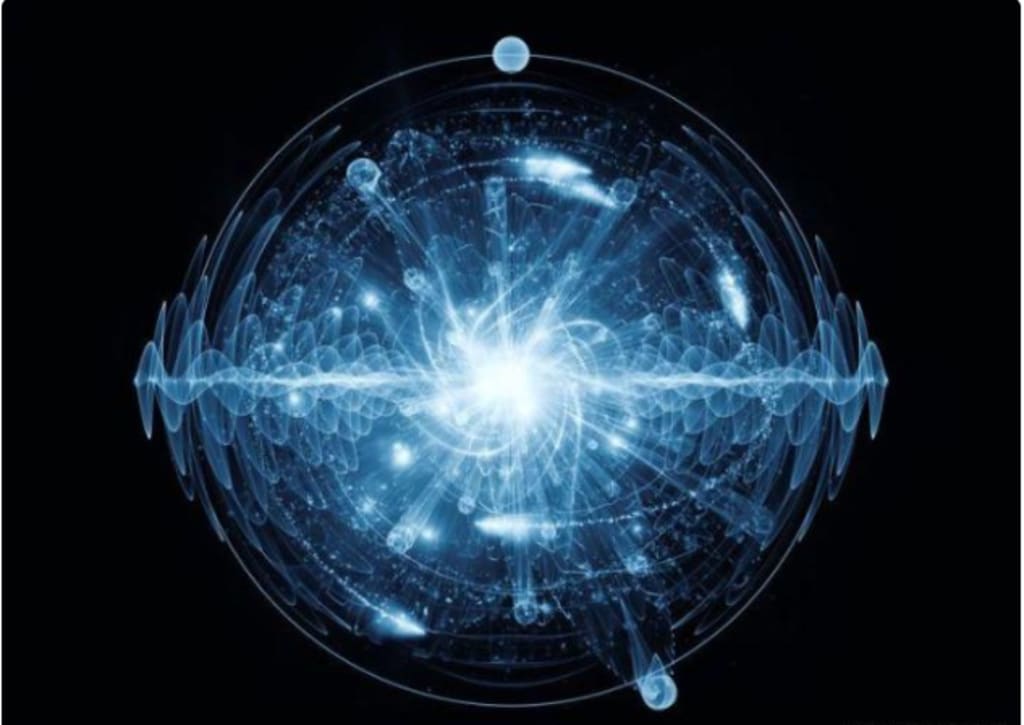
Quantum mechanics is the most important science research today, and if we could fully understand it and apply it to our lives. then our world would change dramatically. However, quantum mechanics is still only on the way for scientists to study. Quantum mechanics is not the same as common sense we have in Okawa. After all, it takes a lot of effort to understand what quantum mechanics is all about, so it is still a long way to go.
Because we live in a macroscopic world, both common sense, common knowledge, and our personal experiences are all perceptions and reactions under the microscope. Almost all kinds of things in our daily lives can be explained by old theories such as classical mechanics and classical electrodynamics. However, when scientists began to explore the microscopic world, they found that most of the old theories of the macroscopic world were no longer applicable, and so, thanks to the combined efforts of a large group of physicists (Einstein, Planck, Schrödinger, Heisenberg, etc.), quantum mechanics was created.
What exactly is quantum mechanics? Let me explain. Quantum mechanics focus on the structure and properties of atoms, molecules, and condensed matter, as well as the nucleus and elementary particles. It is a branch of physics that studies the laws of motion of microscopic particles in the material world. Together with the theory of relativity, it forms the theoretical basis of modern physics. In addition to physics, quantum mechanics is also widely used in other disciplines and technologies such as chemistry.
The creation of quantum mechanics opened the door to the microscopic world. It has not only changed the perception of the structure of matter, but also the perception of the interaction between various particles. Many things that seem counterintuitive can be explained by quantum mechanics. Even new and unthinkable phenomena were predicted by quantum mechanics and proved to exist in subsequent experiments. It also led to quantum field theory, a physical theory that combines classical field theory, special relativity, and quantum mechanics. All the physics in general relativity other than gravity interact with each other and can be described by this theory.
In my previous article, I introduced you to Schrödinger's cat. I am sure you have already experienced the "charm" of quantum mechanics through this article. Schrödinger's cat is actually about the uncertainty of microscopic particles, that is, their volatility. Only observation can make the results collapse into what we see. Otherwise, all possibilities exist side by side, not as we know them by common sense. He is there, even if you do not observe. This uncertainty is already a challenge to our macroscopic common sense. Then there is quantum entanglement.
Scientists take the first image of quantum entanglement
Quantum entanglement, also known as quantum entanglement (this paragraph will be boring and probably overwhelming, so you can probably read it, or skip this paragraph and look at the examples I give later), is when several particles interact, and the properties of each particle combine to form the overall properties of those particles so that they can no longer exhibit their individual properties independently, they are all unified and exhibit the combined overall properties.
The hypothetical experiment of quantum entanglement is such that a neutral π meson with zero spins is assumed to decay into an electron and a positron. The two decay products each move in opposite directions, with the electron moving to region A, where the observer 'Alice' will observe the electron spinning along a particular axis, and the positron moving to region B, where the observer 'Bob' will also observe the positron spinning along the same axis. spin along the same axis.
Before the measurement, the two entangled particles together form an entangled state with zero spins, which is a superposition of two direct product states. The electron's spin may be up-spin, while the positron is down-spin. It is also possible that the two are reversed, with the electron having a downward spin and the positron having an upward spin. These two situations are superimposed on each other. We only know the spin of the two particles when the observer "Alice" or "Bob" looks at them (in this case Schrödinger's cat, the observation collapses).
Because the two particles are intertwined and interconnected, when we observe the spin of only one of them, we immediately know what is happening to the other one. This entanglement has little to do with space, even if the two electrons are far apart, there will still be such a relationship.
Let me give you an example from a macroscopic point of view. I am a person who can only sing and the other person is a person who can only dance. We both form a band. But after the group, we both learned each other's skills, which means that now we both can sing and dance, and both of us have an equal level of skill. But when we both perform, it's always just one of us singing and one of us dancing.
You don't know who's singing and who's dancing today until you see us perform. Even when the two of us can't go out and are not together, we still sing and dance alone when we perform live at home for everyone. So when you see one of us, you can tell what the other one is performing. Of course, this macroscopic example is not a complete and accurate representation, but it is still something we need to understand for ourselves.
Quantum entanglement is a physical resource that, like time and energy, can be extracted and transformed, and therefore has a wide range of applications in quantum informatics. A single quantum entanglement alone can already be applied, not to mention the whole of quantum mechanics. The above is just a brief introduction to the most basic things in quantum mechanics. If you are interested, you can learn more about quantum mechanics yourself. If you are interested, you can learn more about it yourself, otherwise, you don't need to look deeper.
I think it is a summary of the main points:
1. If quantum mechanics were applied to everyday life, our lives would be changed forever, but there is a long road ahead.
2. because the old theories did not apply when it came to discovering and exploring microscopic time. Scientists came together to create quantum mechanics.
3. Quantum mechanics focuses on the structure and properties of atoms, molecules, and condensed matter, as well as nuclei and elementary particles. It is a branch of physics that studies the laws of motion of microscopic particles in the material world. Together with the theory of relativity, it forms the theoretical basis of modern physics. In addition to physics, quantum mechanics is also widely used in other disciplines and technologies such as chemistry.
4. Quantum mechanics has changed the way people perceive the structure of matter and the interactions between various particles. It also explains many things that seem to be new and innovative.
5. Quantum mechanics combines classical field theory, special relativity, and quantum mechanics to form quantum field theory. All other fundamental physical interactions in general relativity, except gravity, can be described in this theory.
6. Quantum entanglement, also known as quantum entanglement, is when several particles interact, and the properties of each particle combine to form the overall properties of those particles so that they can no longer exhibit their individual properties individually, they are all unified into a combined overall property.
7. Explain quantum entanglement from a macroscopic point of view. I am a person who can only sing, and the other person is a person who can only dance. We both formed a band. But after the group, we both learned each other's skills, which means that now we both can sing and dance, and both of us have equal skill levels. But when we both perform, it's always just one of us singing and one of us dancing. You don't know who's singing and who's dancing today until you see us perform. Even when the two of us can't go out and are not together, we still sing and dance alone when we perform live at home for everyone. So when you see one of us, you can tell what the other one is performing. Of course, this macro example does not give a complete and accurate picture, but it is still something we need to understand for ourselves.
About the Creator
Aliser
be happy every day
Pruning Shrubs with Confidence: When and How to Make the Cut
For many gardeners, pruning triggers anxiety. The fear of cutting the wrong branch at the wrong time and ruining years of growth stops countless pruners in their tracks. The result? Overgrown shrubs that bloom poorly, harbor disease, and obscure windows and walkways.
By Emma Wallace4 days ago in Earth


Comments
There are no comments for this story
Be the first to respond and start the conversation.