
Pruning Shrubs with Confidence: When and How to Make the Cut
Master the essential skill that keeps your shrubs healthy, shapely, and bursting with blooms.

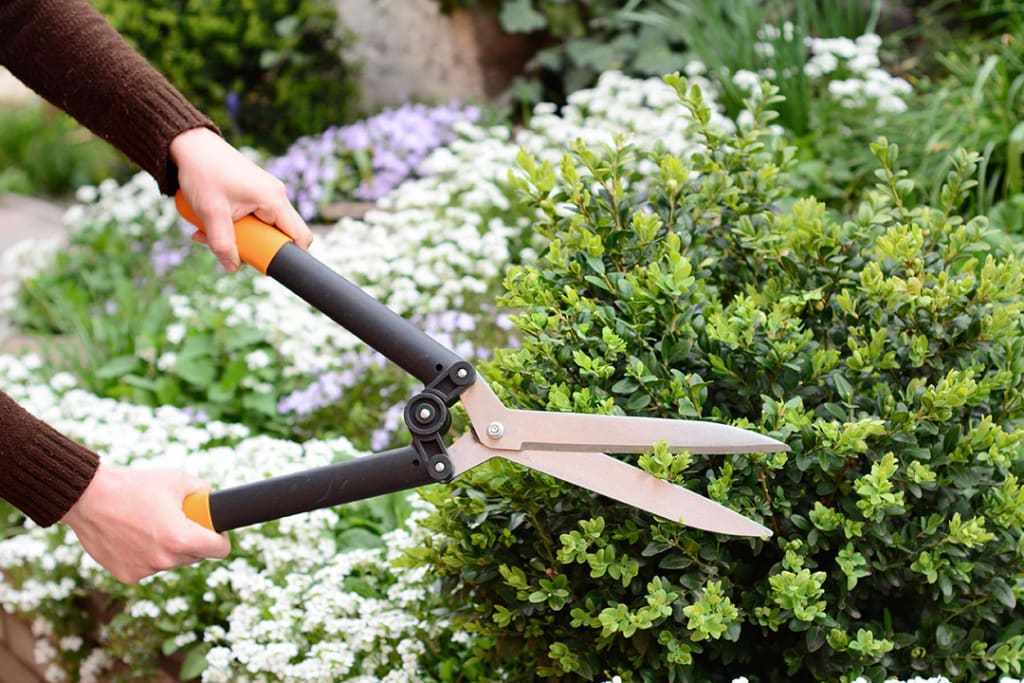
For many gardeners, pruning triggers anxiety. The fear of cutting the wrong branch at the wrong time and ruining years of growth stops countless pruners in their tracks. The result? Overgrown shrubs that bloom poorly, harbor disease, and obscure windows and walkways.
Here is the liberating truth: Most shrubs are far more forgiving than you imagine. A badly timed prune may cost you a season of blooms, but it rarely kills the plant. With a basic understanding of why, when, and how to prune, you can approach your shrubs with confidence rather than fear.
✂️ Why We Prune: The Purpose Behind the Cuts
Pruning is not punishment. It is healthcare and training for your plants. You prune to:
- Remove the dead, diseased, or damaged—the "three D's" that threaten plant health
- Improve shape and structure for a more attractive, natural form
- Control size to keep shrubs within their allotted space
- Encourage flowering and fruiting by stimulating fresh growth
- Rejuvenate old shrubs by removing ancient, unproductive wood
- Improve air circulation to reduce fungal diseases
Every cut should serve one of these purposes. Random hacking is not pruning; it is vandalism.
📅 The Golden Rule of Timing: When to Prune
Timing determines whether you'll see flowers next season. The single most important question is: When does your shrub bloom?
Spring Bloomers (Before Late June)
Lilacs, forsythia, azaleas, rhododendrons, weigela, and most flowering quince set their flower buds the previous summer and fall. If you prune them in winter or early spring, you cut off all the buds and sacrifice that year's blooms.
Prune spring bloomers immediately after they finish flowering. This gives them the entire growing season to form next year's buds.
Summer Bloomers (After Late June)
Hydrangeas (most types), butterfly bush, rose of Sharon, and crape myrtle bloom on new growth produced the same season. You can prune them in late winter or early spring without losing a single flower.
Prune summer bloomers in late winter or very early spring before new growth begins.
Broad Exceptions
- Hydrangeas are confusing: Bigleaf and oakleaf hydrangeas bloom on old wood (spring pruners). Panicle and smooth hydrangeas bloom on new wood (late winter pruners). Know which you have before cutting.
- Evergreens: Prune in early spring just before growth starts.
- Dead or damaged wood: Remove anytime, regardless of bloom schedule.
🌿 The Art of the Cut: How to Prune Correctly
1. Find the Right Spot
Always cut just above a bud, branch, or leaf node—the point where new growth will emerge. Cut too far above and you leave a stub that dies back and invites disease. Cut too close and you damage the bud.
The ideal cut: Angle away from the bud at about 45 degrees, ¼ inch above it.
2. Remove the Three D's First
Start every pruning session by removing:
- Dead (brittle, no green under bark)
- Diseased (discolored, cankered, mildewed)
- Damaged (broken, rubbed, crossing)
3. Follow the Three-Step Method for Large Branches
For branches over 1 inch thick, prevent bark tearing:
- Cut upward about 6 inches from the trunk, cutting one-third through the branch.
- Cut downward from the top, 1 inch farther out, allowing the branch to fall cleanly.
- Remove the remaining stub with a final cut just outside the branch collar (the swollen ring where branch meets trunk).
4. Thin, Don't Shear
For natural-looking shrubs, selective thinning is superior to shearing. Remove entire branches back to their point of origin, opening the plant to light and air while preserving its natural form. Shearing creates a dense outer shell of foliage that blocks light from the interior, leading to bare centers and dieback.
🔄 Special Cases: Rejuvenation and Renovation
Rejuvenation Pruning
Severely overgrown or neglected shrubs can be renewed by cutting the entire plant back to 6-12 inches from the ground in late winter. This drastic measure works best on multi-stemmed shrubs like spirea, dogwood, and ninebark. The plant will regrow vigorously from the base.
Warning: You'll sacrifice one season of blooms, but you'll gain a completely renewed shrub.
Renewal Pruning
A gentler approach: each year, remove the oldest one-third of stems (those thicker than 1½ inches or with peeling bark) at ground level. After three years, the shrub is completely renewed without ever looking butchered.
🌸 When You're Unsure
If you inherit an unknown shrub and don't know its identity or bloom time, take a cautious approach:
- Observe for a full year. Note when it blooms and how it grows.
- Remove only dead wood until you understand its cycle.
- Use technology for identification. A quick photo uploaded to a reliable plant identification app can reveal your shrub's name and its specific pruning requirements. Once you know what you're growing, you can prune with precision.
🧠 The Confident Pruner's Mindset
Approach pruning as conversation with your plants. You are not imposing your will; you are guiding growth toward health and beauty. Observe how your shrub responds to cuts and adjust next season. Each year, your understanding deepens.
The worst that happens from a mistaken prune is a season without flowers or a temporarily awkward shape. The shrub will grow, adapt, and forgive. Armed with the basic principles of timing and technique, you can make each cut count—and watch your shrubs thrive because of it.
About the Creator
Emma Wallace
Director of Research and Development at AI Plant Finder (Author)
Emma Wallace is an esteemed researcher and developer with a background in botany and data analytics.
Keep reading
More stories from Emma Wallace and writers in Earth and other communities.




Comments
There are no comments for this story
Be the first to respond and start the conversation.