
Nitrifying bacteria should also be cultivated with care, ignorance is what leads to mistakes when keeping fish
Knowledge of fish keeping


A friend of mine recently prepared to keep small animals. After considering many pets, he finally chose the time-saving fish as a pet to keep. After keeping them for a while, he heard from others that adding nitrifying bacteria could purify the water. So he bought and added some more, and it didn't work. When he told me about it, I immediately realized what the problem was and quickly worked with him to understand nitrifying bacteria.
Nitrifying bacteria are autotrophic aerobic bacteria, and both nitrosobacteria (ammonia-oxidizing bacteria) and nitrate bacteria (nitrite-oxidizing bacteria) are nitrifying bacteria. Nitrifying bacteria include bacteria belonging to the genera Nitrosomonas, Nitrosococcus, Helicobacter, and Nitrobacter. Nitrifying bacteria include Nitrobacter, enterococcus, and bacteria in nitrocellulose.
Both types of nitrifying bacteria are essentially present at the same time, and ammonia and ammonium salts also require the combined action of both types of nitrifying bacteria to be converted to nitrate. The nitrite bacteria first oxidize ammonia to nitrite and the nitrate bacteria then oxidize the nitrite to nitrate. Oxidation is also a process by which nitrifying bacteria gain energy and grow. The process of growth allows nitrifying bacteria to play an important role in the natural nitrogen cycle and also allows nitrifying bacteria to play an important role in the purification of water in the nitrogen cycle.
One other thing needs to be said. Scientists have managed to isolate bacteria capable of directly converting ammonia nitrogen into nitrate nitrogen, a bacterium known as shortcut nitrifying bacteria. It appears to be the ultimate form that combines two other single functions.
Nitrifying bacteria are widespread in the natural environment but need to meet a supply of water and oxygen to survive. Generally found in soil, freshwater, and seawater, they live in aerobic water or sand layers, but some bacteria are only found in seawater. They are more suited to proliferate in various microporous filter materials such as soil, sand, biochemical cotton, biochemical balls, glass rings, and ceramic rings. Nitrifying bacteria are best suited to living in weakly alkaline water and grow and multiply fastest when temperatures reach around 25°C.
Back to my friend's question here. Firstly, his perception is wrong. Although nitrifying bacteria can purify the water, this purification is not about making the water clearer, but about removing that toxic ammonia and nitrite. Nitrifying bacteria consume ammonia and nitrite through their growth process. At the same time, non-toxic nitrates are produced, which are the best nutrients for algae. So while eliminating harmful substances, they also bring in nutrients, killing two birds with one stone.
In addition, you don't need to add nitrifying bacteria to keep fish at home. When a new fish tank has normal levels of oxygen and organic matter, a stable community of nitrifying bacteria can be established in about a month or two. Once stabilized, nitrifying bacteria will continue to colonize as long as there are no drastic changes in the environment (such as the addition of fungicides or sudden temperature changes).
Although nitrifying bacteria can appear on their own, they are still "delicate". This is why it is important to "nurture" the nitrifying bacteria properly, both in the tank and in the pond. After all, without nitrifying bacteria, the water will become worse.
Cultivating nitrifying bacteria starts with what we know about it. Firstly, nitrifying bacteria need water and oxygen. Since we are raising fish, there is no shortage of water. Then we need to start with oxygen, and oxygenating the water is key. An oxygenator can solve this problem. Of course, it is best to turn stagnant water into living water.
If conditions allow, you can prepare something with microporous holes to allow the nitrifying bacteria to "stay". Most filter media meet the 'space requirement' for nitrifying bacteria. Of course, we can also put sand or soil in the bottom of the tank, which has a similar effect.
Then it is important to maintain the underwater environment. Because nitrifying bacteria live best in weakly alkaline water, they thrive best when the temperature reaches around 25 degrees. So you can't allow the pH and temperature to change dramatically. Also, you must not use any fungicides or disinfectants. These will kill the nitrifying bacteria.
There are two other points that people will pay less attention to. People may think that since nitrifying bacteria are so useful, the more the better, and will add other beneficial bacteria to work together, but this is exactly the wrong idea. If there are too many nitrifying bacteria but no ammonia or ammonium in the water for them to grow, it will cause the nitrifying bacteria to die and lead to pollution instead. Photosynthetic bacteria and nitrifying bacteria simply inhibit each other. If you put these two types of bacteria together, they will have the opposite effect. So the more bacteria the better.
Whatever the good thing is, it is important to understand the things involved before you decide to go for it. That way you will get twice as much done with less hassle.
I think it is a summary of the main points :
1. Nitrifying bacteria are a kind of autotrophic aerobic bacteria, nitrite bacteria (ammonia-oxidizing bacteria) and nitrate bacteria (nitrite-oxidizing bacteria) are both nitrifying bacteria.
2. Both types of nitrifying bacteria are present at the same time, and ammonia and ammonium salts also require the coexistence of both types of nitrifying bacteria to be converted into nitrate.
3. The growth process of nitrifying bacteria allows nitrifying bacteria to play an important role in the natural nitrogen cycle and also in the water purification process of the nitrogen cycle.
4. Scientists have successfully isolated bacteria capable of directly converting ammonia nitrogen to nitrate nitrogen, and these bacteria are known as shortcut nitrifying bacteria.
Nitrifying bacteria are widespread in the natural environment, but they need to meet the supply of water and oxygen to survive.
6. Nitrifying bacteria are best suited to living in weakly alkaline water and grow and multiply fastest when temperatures reach around 25 degrees.
7. Although nitrifying bacteria can purify water, this purification is not to make the water clearer, but to remove the toxic ammonia and nitrite.
About the Creator
Aliser
be happy every day
BRICS Wargames: Why They Matter — And Why India Chose to Sit Out
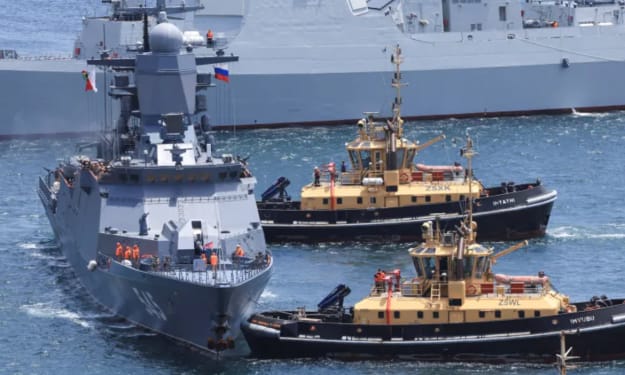
BRICS — the economic and political bloc comprising Brazil, Russia, India, China, and South Africa — has long been seen as a counterweight to Western-dominated global institutions. Over the years, it has expanded its influence in finance, trade, and diplomacy. Yet, in recent times, BRICS has begun exploring another domain that grabs headlines and sparks speculation: military cooperation, including large-scale wargames. These exercises are designed to simulate joint operations, test interoperability, and send a signal of strength. For members like Russia and China, wargames serve as both a show of force and a tool to deepen military collaboration within the bloc. However, India’s decision to opt out of recent BRICS wargames has raised questions: why does this matter, and why is India taking a different path from its BRICS partners? The Rise of BRICS Military Exercises Historically, BRICS has been portrayed as primarily economic, focused on initiatives like the New Development Bank (NDB) and trade agreements aimed at reducing Western dominance. But recent years have seen an evolution. Military drills among BRICS members are increasingly prominent, especially in the context of global tension and regional conflicts. These wargames are about more than just tactical drills. They serve multiple purposes: Strategic signaling: By conducting joint exercises, BRICS countries demonstrate unity and military capability to the rest of the world. Operational readiness: Countries test their ability to coordinate in complex scenarios, from humanitarian missions to potential combat operations. Diplomatic leverage: The exercises send subtle messages to other global powers, indicating that BRICS members can collaborate beyond economic forums. For nations like Russia, recently facing sanctions and international scrutiny, these exercises are particularly important. They showcase the ability to maintain partnerships and project power despite global isolation. For China, it is a way to cement strategic influence in Asia and beyond. Why BRICS Wargames Matter Globally The significance of these exercises extends beyond the bloc itself. Analysts note several key implications: Challenge to NATO and U.S. influence: BRICS wargames signal that alternative power centers exist outside Western-led military alliances. Regional security dynamics: Countries bordering BRICS members, particularly in South Asia, Africa, and Latin America, must monitor these developments carefully. Economic-military linkages: Military coordination among major emerging economies could shape security considerations in trade corridors, energy supply routes, and resource-rich regions. In essence, BRICS wargames are not just about soldiers and tanks, but about the broader geopolitical landscape: signaling, strategy, and shaping perceptions of influence. India’s Calculated Decision to Opt Out While Russia, China, Brazil, and South Africa have shown interest in participating actively, India has strategically chosen to abstain from the most recent wargames. This decision may appear surprising, given India’s economic and political stake in BRICS, but several factors explain it. Geopolitical balancing: India maintains complex relations with both China and Russia. While it has defense and historical ties with Russia, its relationship with China has grown tense due to border disputes and regional competition. Joining a wargame with China could be politically and militarily sensitive. Alignment with Western partnerships: India has strengthened ties with Western-led coalitions, including the Quad (U.S., Japan, Australia, India). Participating in BRICS military drills could conflict with these alliances, potentially sending mixed signals. Strategic autonomy: India has long emphasized a policy of strategic autonomy — making decisions based on national interest rather than bloc pressure. Opting out allows India to maintain flexibility in foreign policy and avoid entanglement in exercises that may not align with its regional objectives. Domestic perception: Indian public opinion and political narratives favor cautious engagement with China and Russia on military matters. Skipping the wargames minimizes domestic criticism of appearing too closely aligned with either of the more assertive BRICS powers. What India Gains by Sitting Out Choosing not to participate does not mean India is disengaged from BRICS. Economically and diplomatically, it remains a key player in the bloc. By skipping the wargames, India can: Maintain regional credibility in South Asia while avoiding the perception of aligning militarily with China. Signal strategic independence, reinforcing its image as a nation that prioritizes national security over bloc politics. Focus on bilateral and multilateral exercises elsewhere, such as those with the U.S., Japan, and Australia, which are more aligned with India’s current security priorities. In short, opting out allows India to navigate the delicate balance between its BRICS commitments and broader global strategic interests. Implications for BRICS and Global Security India’s abstention also reflects broader trends within BRICS: the bloc is not monolithic. While economic cooperation is often strong, military integration faces political and strategic limits. Differing national interests, historical rivalries, and regional tensions prevent uniform alignment. For global observers, this is crucial. It shows that while BRICS wargames are important, they are not necessarily indicative of a fully unified military bloc. The exercises are as much about optics as operations, and India’s absence underscores the challenges of aligning countries with divergent security priorities. Conclusion BRICS wargames matter because they are a window into the bloc’s evolving strategic ambitions. They signal power, test cooperation, and demonstrate emerging global influence. Yet India’s decision to opt out highlights that even within this growing coalition, national interests remain paramount. For India, the choice reflects a calculated approach: engage where it benefits national interest, avoid where risks outweigh gains, and maintain strategic flexibility. For the rest of the world, it is a reminder that BRICS, while increasingly important, is not a military monolith. Ultimately, BRICS wargames are as much about geopolitics and signaling as they are about military maneuvers — and India’s careful stance illustrates how emerging powers navigate this complex global chessboard.Start writing...
By Muhammad Hassan7 days ago in Earth
Tensions in the Sky: North Korea Calls on South Korea to Probe Drone Incidents
Tensions between North and South Korea have once again made international headlines after North Korea accused its southern neighbor of sending drones into its airspace. At the center of the issue is Kim Yo Jong, the influential sister of North Korean leader Kim Jong Un, who has urged South Korea to investigate the alleged drone incidents and provide a clear explanation. While drones may seem small, the political impact of this dispute is anything but minor.
By dua fatima8 days ago in Earth



Comments
There are no comments for this story
Be the first to respond and start the conversation.