
Profiting Off India's Garbage
Innovative solutions

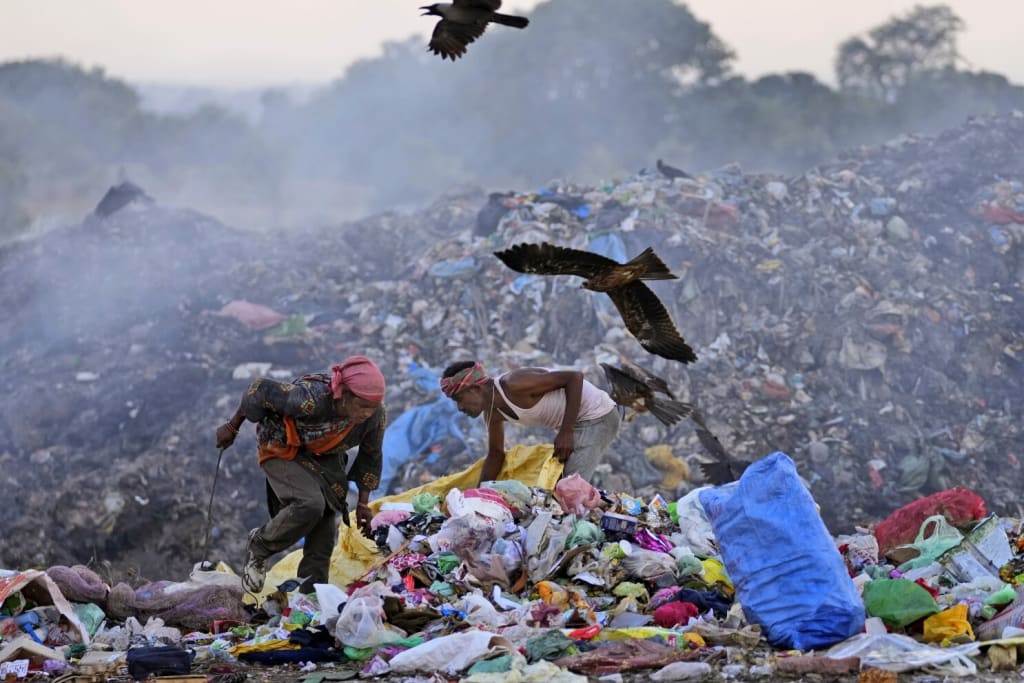
India faces a massive challenge with waste management. It generates more garbage than almost any other country, second only to China. The government has stepped in with measures like banning single-use plastics. However, people across the country are also taking the initiative.
Innovative solutions are emerging. Some are transforming smog into tiles. Others are filling teddy bears with discarded cigarette butts. Each creative attempt is a testament to how India is tackling global waste issues.
Look at these sneakers! They’re made entirely from garbage. Each pair contains 10 plastic bags and 12 bottles. For just $110, the company will ship them anywhere in the world.
The process is simple yet effective. They clean the plastic bags in water, without any chemicals, and hang them to dry. Inside their warehouse, they stack layers of bags, then press the pile under heat to create a unique fabric they call ThaelyTex. It’s entirely made from upcycled plastic.
Next, these materials travel north to the Nitush Footwear factory for assembly. Here, they use metal forms to cut the ThaelyTex into shapes. They also use recycled fabric made from bottles. Workers stitch everything together, creating the shoe’s upper part, while the soles are made from industrial rubber crumbs. After prepping the soles and applying a special adhesive, the shoes are ready for final assembly.
India generates 3.5 million tons of plastic waste each year. A brand called Chuk is addressing this by replacing some plastic with biodegradable sugarcane waste. India is the second-largest sugar producer, generating mountains of bagasse. Most of this byproduct gets burned for energy, but it has other uses too.
For over 40 years, Ved Krishna’s family has been making sugarcane waste into paper. They ran into financial troubles, pushing Ved to rethink their approach. After years of experimentation, he turned bagasse into tableware products under a new brand, Chuk. It’s all about creating disposable items that are environmentally friendly.
Ved has his factory near sugar plantations to minimize costs and carbon footprint. Daily, around 100 trucks deliver fresh bagasse. To process it, workers wash and pressure-cook the material before molding it into shape. Chuk refuses to bleach their products, opting instead for a natural look that reflects their commitment to sustainability.
The factory produces a whopping 1 million items daily! Meanwhile, in another part of India, a company called Phool is turning temple flower waste into incense sticks. Each day, tons of flowers are disposed of in the sacred Ganges River, often loaded with toxic chemicals. Ankit, the founder of Phool, collects these sacred flowers and transforms them into cleaner incense.
Workers dry the petals, grind them into powder, and mix them with essential oils to create a fragrant product. This process, dubbed "flower-cycling," not only minimizes waste but also promotes a healthier alternative to traditional incense.
In cities like Hyderabad, food waste is tackled by converting it into biogas for energy. Every day, 10 tons of unsold vegetables are processed into electricity powering kitchens that serve hundreds of meals. This low-tech approach burns cleaner than fossil fuels and makes good use of waste.
Cigarette butts are another major issue. Every year, 4.5 trillion butts are discarded. One company, Code Effort, has found a way to recycle them into teddy bear stuffing and other products. Workers meticulously sift through millions of butts, separating harmful materials before transforming the remains into safe, marketable goods.
They use a secret chemical process to sterilize the filters, making them fluffy and safe for stuffed toys. The final products, which include cushions and mosquito repellents, are sold online and in shops, proving that recycling can be both innovative and productive.
Across India, from sneakers to tableware, and incense to teddy bears, waste is no longer just a problem; it’s an opportunity for creativity and sustainability!
About the Creator
Tafara Sibotshiwe
A versatile authentic writer and passionate storyteller. With a background in, Journalism, Engineering, History, Health & finance, they combine profound insight with creative flair to explore the complexities of the human experience.
Keep reading
More stories from Tafara Sibotshiwe and writers in Earth and other communities.
Most dangerous places on Earth
There are some places on Earth that are extremely dangerous to visit. These include lakes, caves, and islands that pose serious risks to human life. For instance, Death Road, or Yungas Road in Bolivia, is known for its perilous twists along high cliffs. The road is narrow, without guardrails, and has been the site of numerous accidents. In 2006, a new, safer road was built, but some daredevil drivers still choose Death Road, which is now technically illegal.
By Tafara Sibotshiweabout a year ago in Earth
Mount Sinai, the World’s Oldest Monastery, and the Prophet’s Letter: Faith, History, and a Controversial Development Plan
At a sacred site revered by Muslims, Christians, and Jews alike, an ambitious modernization project has stirred debate after reports of graves being relocated—raising questions about heritage, memory, and the cost of progress.
By Irshad Abbasi 3 days ago in Earth
REEEEEEEEE!
I'm on a low road right now. There are a literal million things to do and not one of them worth my time. I would rather sit in place and burn but the orbit takes me on its inevitable route 'round the center; and I a center in my own right, around which others orbit, and so on and so forth, ad infinitum, ad nauseum.
By C. Rommial Butler5 days ago in Poets


Comments
There are no comments for this story
Be the first to respond and start the conversation.