
Plants
If I had a flower for every time I thought of you… I could walk through my garden forever

Plants are the backbone of the earth's ecosystem. They produce oxygen and food for many living organisms, and also provide habitat and shelter. There are approximately 390,900 species of plants known to science, and new species are still being discovered.
Plants are categorized into two main groups: vascular and nonvascular. Vascular plants have a specialized transport system that helps them distribute water, nutrients, and sugars throughout their body. Nonvascular plants, on the other hand, do not have this system and must rely on diffusion to transport nutrients.
One of the most important processes in plants is photosynthesis. Through photosynthesis, plants convert sunlight into energy, which they use to produce their own food. They also release oxygen as a byproduct of this process, which is essential for the survival of many living organisms.
Another important characteristic of plants is their ability to reproduce. Most plants can reproduce sexually or asexually. Sexual reproduction involves the fusion of male and female gametes, while asexual reproduction involves the production of new individuals from a single individual without the fusion of gametes.
Plants play a vital role in many different ecosystems. They provide habitat and food for many animals, help regulate the Earth's climate, and play a role in soil formation and nutrient cycling. Some plants also have medicinal properties and have been used for thousands of years to treat various illnesses.
Despite their importance, many plant species are threatened with extinction due to human activities such as deforestation, pollution, and climate change. It is important that we work to protect and conserve these valuable species to ensure the health of our planet and its ecosystems.
In conclusion, plants are a critical part of the earth's ecosystem and play a vital role in many different processes. They produce food, oxygen, and medicine, provide habitat and shelter for many living organisms, and help regulate the Earth's climate. It is important that we work to protect and conserve plant species for the health of our planet and its ecosystems.
Without plants, the balance of the ecosystem would be severely disrupted. Plants play a crucial role in the food chain as they provide food for herbivores and serve as a source of oxygen through photosynthesis. Additionally, plants play a significant role in maintaining the Earth's climate by absorbing carbon dioxide from the atmosphere and producing oxygen. Without them, the levels of carbon dioxide in the atmosphere would increase, leading to climate change and potentially making the planet uninhabitable for most species, including humans.Plants are important for several reasons:
Oxygen production: Plants produce oxygen through the process of photosynthesis, which is essential for human and animal life.
Food source: Many plants are a source of food for humans and animals, providing essential nutrients and energy.
Climate regulation: Plants absorb carbon dioxide from the atmosphere and release oxygen, helping to regulate the Earth's climate.
Ecosystem support: Plants play a crucial role in supporting ecosystems by providing habitat and food for wildlife, and helping to maintain soil stability and water quality.
Medicinal uses: Many plants have been used for centuries to treat various illnesses and health conditions, and some continue to be used in modern medicine.
Overall, plants are essential to life on Earth, and play a critical role in supporting human and animal well-being.Plants are disappearing from the Earth due to several reasons such as deforestation, urbanization, agriculture expansion, and climate change. These activities result in destruction of natural habitats and loss of biodiversity. Additionally, overexploitation of wild plant species for food, medicine, and other uses also contributes to their decline. Climate change is causing shifts in species distribution and altering growing seasons, making it difficult for some plants to survive. Conservation efforts, such as protecting natural habitats, reducing over-exploitation, and replanting efforts can help to slow down the rate of plant extinction.
About the Creator
Keep reading
More stories from writers in Earth and other communities.
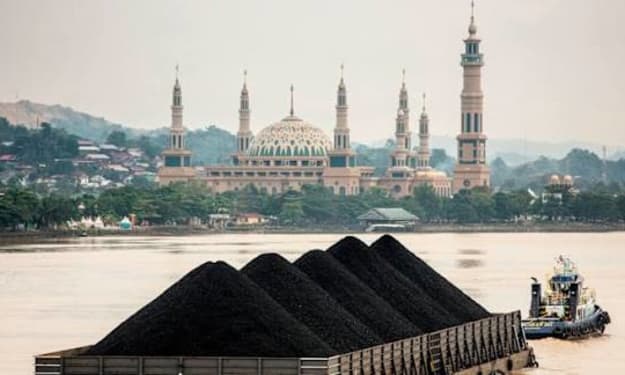
Amid European Energy Fears, Coal Creeps Back Into Favour
Europe’s energy landscape is shifting as fears over supply security and rising costs drive some countries back toward coal, a fossil fuel many had hoped to phase out entirely. The resurgence comes amid heightened tensions over energy imports, particularly natural gas, as the war in Ukraine and geopolitical friction with Russia have exposed vulnerabilities in the continent’s energy systems. Germany, long seen as a leader in renewable energy adoption, recently announced plans to keep several coal-fired power plants online longer than initially scheduled. Officials cited winter energy demands and the need to maintain a reliable baseload while natural gas supplies remain constrained. Similar considerations are emerging in Poland, the Czech Republic, and other nations that rely heavily on imported energy. “The energy crisis has forced governments to make difficult choices,” said Dr. Klaus Weber, an energy policy analyst at European Energy Institute. “While the climate goals remain important, ensuring citizens have access to electricity and heat this winter has become a more immediate priority.” The return to coal is not simply a response to price spikes. Energy security has become a pressing concern after European reliance on Russian gas pipelines was disrupted, prompting countries to diversify sources and store reserves. Coal, abundant in Europe and globally traded at competitive prices, provides a short-term buffer against shortages. At the same time, rising electricity costs have placed enormous pressure on households and industries. According to recent statistics from the International Energy Agency, European electricity prices surged by nearly 40% in the past year, prompting governments to subsidize energy bills and rethink fuel strategies. Coal-fired generation, though more polluting, offers predictable output and can be ramped up quickly to stabilize grids. Renewable energy advocates have expressed concern that this shift could undermine Europe’s climate leadership. Coal emits roughly twice the CO₂ per unit of energy compared to natural gas, posing challenges to achieving net-zero targets. Critics warn that extending coal use—even temporarily—risks locking in infrastructure that is inconsistent with long-term decarbonization goals. “Every megawatt-hour produced from coal is a step backward for Europe’s climate ambitions,” said Maria López, senior campaigner at Greenpeace Europe. “Governments need to pair any temporary measures with accelerated renewable deployment to avoid backsliding on emissions reductions.” Some nations are attempting to balance these pressures by deploying cleaner coal technologies. Advanced coal plants with carbon capture and storage (CCS) can reduce emissions by capturing a significant portion of CO₂ before it enters the atmosphere. Germany and the Netherlands are investing in pilot projects to integrate CCS into existing power plants, though critics note that large-scale implementation remains costly and complex. Analysts suggest that Europe’s return to coal is likely to be temporary. Once gas supplies stabilize and renewable infrastructure expands, reliance on coal is expected to decline. Yet the episode has highlighted the fragility of energy systems in the face of geopolitical shocks and the tension between short-term energy security and long-term climate goals. Meanwhile, citizens and businesses are feeling the immediate impact. Many households in Eastern and Central Europe face sharply higher heating costs this winter, and industrial manufacturers are warning that energy-intensive production could be scaled back if prices remain high. Policymakers are caught between the urgent need to maintain supply and the imperative to meet climate commitments. The European Union is working on strategies to mitigate these challenges. Measures include expanding LNG import terminals, investing in cross-border electricity interconnectors, and boosting renewable energy capacity. However, the gap between energy supply and demand, exacerbated by geopolitical tensions, means coal may remain a stopgap solution for months to come. Europe’s cautious return to coal underscores a broader reality: energy transitions are never linear. Even as governments and citizens push toward a greener future, external shocks—conflict, supply disruptions, and price volatility—can temporarily alter priorities. The key challenge for policymakers will be ensuring that short-term reliance on fossil fuels does not derail long-term climate ambitions.
By Fiaz Ahmed about 11 hours ago in Earth
Two Grumpy Old Men Solve the Problem
Marty and Steve were two grumpy old men who lived together. They had known each other for years. Marty had been a bachelor all his life. Steve said it was because no one could stand to ever live with. Marty’s standard reply was “Well, you are, so what sort of a moron does that make you!”
By Calvin London4 days ago in Humor
Early March 2026: 4 Goals Accomplished
It's early March and I've now accomplished my 4th writing goal for the year of 2026. Before diving into the behind-the-scenes of it... why not tell you up front what that accomplishment was? I was published in a 2nd publication for this year. Published in Helix Literary Magazine out of Central Connecticut State University. You can read it for free right now!
By Stephen Kramer Avitabilea day ago in Writers



Comments (1)
NICE