
PLANET AT RISK: HOW HUMANITY CAN STOP ENVIRONMENTAL DISASTER
There are too many people on planet Earth who are used to using resources in a consumerist way.

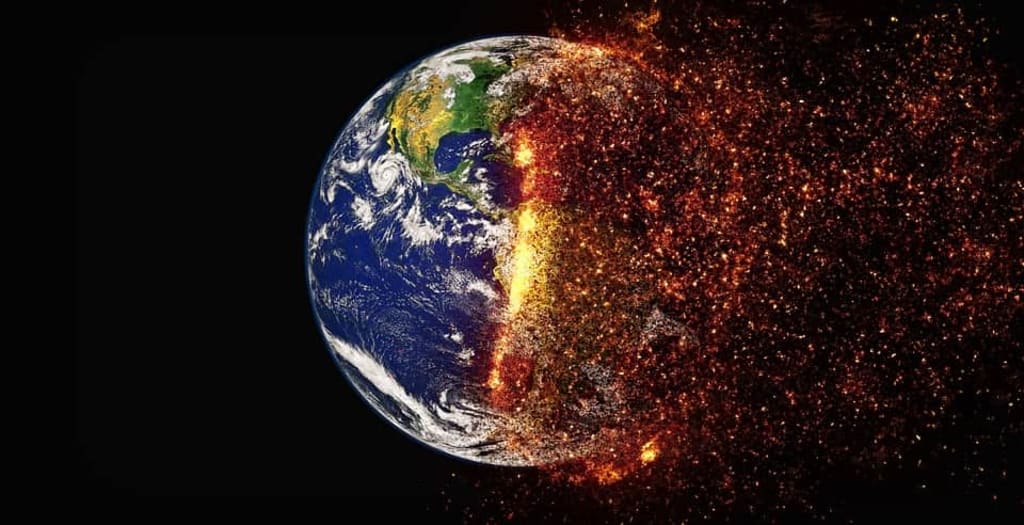
They turn on all electrical appliances in their apartment, make ashes after their picnics in the woods, do not sort waste, and throw away lithium batteries. It seems that it is not a very big deal as everyone does so. Meanwhile, through thoughtless consumerism, humanity has triggered almost irreversible consequences for the climate. Nature resists as best as it can through natural disasters, floods, and unexpected climatic changes. After what happened recently in Pakistan, I could not remain indifferent and I want to share my thoughts and suggestions with the readers.
Angelina Jolie, the famous American actress and goodwill ambassador of the Office of the United Nations High Commissioner for Refugees, recently visited Pakistan, which was devastated by terrible floods. She saw with her own eyes terrible consequences of the flooding, which covered a third of the country. As a result, 1,100 people died and 1,600 were wounded. A total of 33 million people became victims of the disaster, while 6 million need urgent help. Infrastructure was also badly damaged: buildings, bridges and roads were destroyed. 4 million hectares of farmland were destroyed and almost 800,000 livestock killed. It is no exaggeration to say that Pakistan is experiencing a major humanitarian disaster.
This affects everyone
Trying to be diplomatic, Angelina Jolie directly pointed out who is to blame for the climate disaster on Earth – its inhabitants. Humans had been mocking nature for so long that it finally could not bear it. Now, according to Jolie, it is necessary to correct the mistakes.
"Governments need to be pushed to understand that the lack of fair trade, rising emissions and the failure to resolve conflicts are causing more deaths and suffering for millions of families all around the world," said the actress.
The tragedy in Pakistan is only an episode in a chain of other horrific disasters around the world. Rivers in Europe and China were drying up. The abnormal summer heat destroyed crops in Pakistan and India. In Germany and Austria, on the contrary, the crops were flooded by heavy rains. Weather conditions have repeatedly made the United States declare of a state of emergency.
According to UN Secretary-General António Guterres, Pakistan is one of the ten countries most affected by climate change. And this is despite the fact that the country accounts for only 1% of global carbon dioxide emissions.
Guterres emphasized: “Pakistan and other developing countries are paying a terrible price for relentlessness of the countries that continue to rely on fossil fuels in their economies. I am sending a global message from Islamabad: stop the madness. Invest in renewable energy immediately. Stop the war with nature".
Worst of all, the natural disasters that are occurring on the planet in the 21st century are the result of man-made climate change. According to German scientists, the probability of major flooding in different regions of the planet has increased by a factor of 1.2-9. The disasters are likely to be 3-19% stronger than they used to be 120 years ago. Taking the flooding in Pakistan as an example, the level of rainfall that led to the disaster was almost three times the average of the past 30 years. This was confirmed by Claire Nullis from the World Meteorological Organization, who stated that the flooding in Pakistan "is a consequence of climate change, which is becoming more and more extreme”.
There is some hope
Climate and weather change are responsible for 90% of the world's natural disasters. Because of disasters, the world economy annually loses an average of $ 520 billion. Consequently, 26 million people on the planet are in complete poverty. And what for? So that the insatiable fuel corporations can make more super-profits? After all, extraction of environmentally unfriendly energy resources - oil, gas and coal - releases billions of tons of carbon dioxide into the atmosphere of the planet.
The World Meteorological Organization has presented terrifying statistics: if the rate of emissions does not slow down, by 2100 the average temperature on the planet will increase by 3 degrees Celsius as compared to pre-industrial levels. Now it is only 1 degree warmer, and we can see what sad consequences this has caused.
The main thing is that there is some hope. Thanks to modern technology, it is possible to reduce more than 70% of emissions into the atmosphere. Another piece of good news is that each of us can counteract the global environmental disaster. According to experts of the UN Environment Programme, if 1 billion people take practical environmental steps, up to 20% of global carbon emissions will simply disappear.
It does not require much. Limit energy use in all areas of life, from sensible energy conservation in your own home to switching to electric cars or bicycles. Take care of everything around you, including the environment and your own things. Think about changing your own diet – eat more plant foods and, if possible, give up meat. Forget about cigarettes, the smoke from which harms all living things. Significantly reduce the amount of waste, and carefully sort and send the remaining waste for further recycling. It does not seem that hard to do these things. Especially since the future of the planet and the health of future generations are at stake.
About the Creator
Yelena Likhach
Columnist, businesswoman and philanthropist.
Author of blogs and articles on humanitarian, human rights and environmental issues
Keep reading
More stories from Yelena Likhach and writers in Earth and other communities.
Refugees are hostage to our political games and environmental experiments: don’t push them away
Kate Blanchet, Goodwill Ambassador of the UN High Commissioner for Refugees (UNHCR) and outstanding actress, has met with many dedicated staff in Jordan, South Sudan and Niger this year.
By Yelena Likhach2 years ago in Earth
Stock Market Today: Nasdaq Futures Rise; Oil Skids After Trump Dials Down Iran Tension
If you’ve been following the markets this week, you’ve probably noticed how sensitive traders are to geopolitical headlines. On Thursday, Nasdaq futures rose, while oil prices dropped after U.S. President Donald Trump made remarks that dialed down fears of immediate military escalation with Iran. It’s a classic example of how news can move multiple markets at once — tech stocks climbing while commodities react in the opposite direction. Nasdaq Futures Bounce Back Technology and growth-focused stocks led the recovery in futures trading. Nasdaq futures climbed, signaling that investors are regaining confidence after recent volatility. Many traders have been cautious, with some taking profits from high-flying tech names, but today’s rebound shows that market optimism is returning. Corporate earnings are a big factor here. Several tech giants, including semiconductor and software companies, have beaten analyst expectations in recent weeks. These results support longer-term growth narratives, giving investors confidence that the tech sector can continue to outperform even amid economic uncertainty. For anyone watching the markets, this is a reminder: futures are forward-looking indicators. When traders see signs of stabilization — like reduced geopolitical tension or strong earnings — markets often react positively before the official trading session even begins. Oil Prices Fall Amid Eased Tensions On the flip side, oil prices skidded. The energy market had been pricing in potential supply disruptions due to the tension with Iran, particularly in critical regions like the Strait of Hormuz. But after Trump’s comments, traders interpreted a lower risk of military conflict, and crude futures dropped sharply. West Texas Intermediate (WTI) and Brent crude both saw declines of around 4–5%, as investors adjusted their positions. This shows how geopolitical risk premiums can inflate commodity prices — and how quickly they can disappear once the perceived threat diminishes. Lower oil prices are a double-edged sword. On one hand, cheaper fuel eases costs for consumers and businesses. On the other, energy companies and oil-exporting nations may face pressure on revenue and profits if prices remain soft. Why Geopolitics Moves Markets The Middle East continues to be a major driver of global market sentiment. Even the possibility of conflict in oil-rich regions can make investors nervous, sending equities lower and commodities higher. Conversely, statements that calm these fears can produce quick rebounds in risk assets like stocks and a decline in commodities like oil. This week’s developments show just how reactive the markets have become. A single remark from a world leader — in this case, Trump — can shift risk perception and trigger immediate moves across multiple asset classes. Earnings and Economic Data Still Key While geopolitical headlines dominate daily moves, corporate earnings and economic data remain critical for long-term market trends. Financial giants like Morgan Stanley recently reported results that beat expectations, boosting their stock prices and reinforcing positive sentiment in the sector. Investors are paying close attention to these fundamentals. Earnings reports and macroeconomic indicators provide insight into underlying trends, helping traders separate short-term volatility from sustainable growth. What Investors Should Watch For stock investors: The rebound in Nasdaq futures suggests that growth and technology stocks are finding support, but volatility is still high. Active risk management and portfolio diversification remain essential. For energy markets: Today’s slump in oil prices highlights how commodities react to geopolitical sentiment. Traders should watch for developments in the Middle East, as any escalation could reverse the decline in prices almost immediately. For global markets overall: Investors must balance multiple narratives — geopolitical events, corporate earnings, economic data, and interest rate expectations. This interplay shapes risk appetite and influences how capital flows across sectors and regions. The Takeaway Today’s market action illustrates a broader theme: markets are highly sensitive to shifts in risk perception. When geopolitical tension eases, equities tend to rise, and risk-sensitive commodities like oil fall. But when threats reappear, sentiment can flip, reminding investors that global markets are dynamic and interconnected. This combination of Nasdaq gains and falling oil prices isn’t just about numbers — it’s about investor psychology, risk management, and the speed at which news travels in our global economy. The lesson is clear: staying informed and flexible is more important than ever for anyone participating in today’s markets.
By Muhammad Hassan2 days ago in Earth
Cement's Quiet Pivot
Why this is under-the-radar progress Cement and concrete account for a sizable slice of global CO₂, but the fastest cuts right now aren’t headline-grabbing moonshots — they’re practical shifts already filtering through specifications, standards, and procurement. Three forces are converging: (1) modern cement standards that enable big clinker reductions with reliable performance; (2) rapid market adoption of Portland-limestone cement (PLC) and new ternary blends such as limestone–calcined clay cements (LC3); and (3) public buyers setting embodied-carbon requirements that move the market. Together, these are driving real-world emission declines from the most-used construction material on earth — often without changing how structures are designed or built [8].
By Futoshi Tachino5 days ago in Earth
Do You have a Support Network?
Life is harder when you’re on your own. Human beings are social creatures, and we usually feel better when we have support from a strong social network around us. For most people, it’s our families that hold us together like glue.
By Elizabeth Woodsabout 18 hours ago in Psyche


Comments
There are no comments for this story
Be the first to respond and start the conversation.