
Pick Your Favorite Seal
Different types of seals

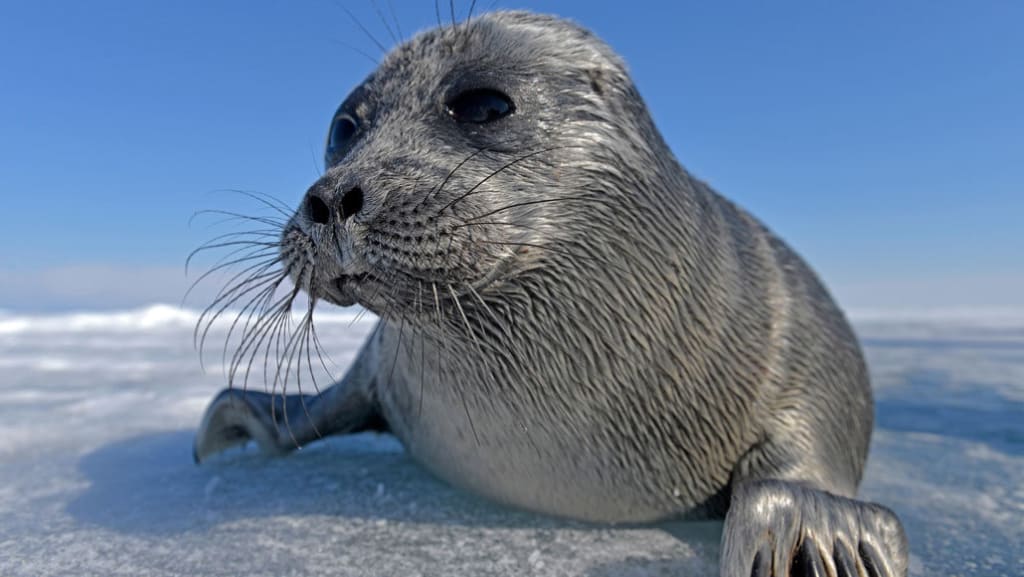
Seals are semi-aquatic mammals in the order Carnivora. They differ in size from 3 ft 3 in for Balkan seals and 16 ft for southern Elephant seals. Their four limbs are flippers and when compared to dolpins, seals are more agile and flexible. Most seal species inhabit the cold waters of the Southern and Northern Hemispheres. They mate and give birth on the shores.
Baikal Seals
Baikal seals are recognized as the only pinnipeds limited to freshwater habitats. Their torpedo-shaped flexible bodies make them graceful swimmers while their powerful hindquarters propel the seals through the water. Adult Baikal seals dense sports fur which appears dark silver-grey on the upper parts and yellowish-grey on the undersides. A thick layer of blubber resides under the seal's body which provides both buoyancy and insulation. The animal only inhabits Russia's Lake Baikal which is recognized as the world's oldest and deepest lake. They feed on tiny crustacians.
Bearded Seals
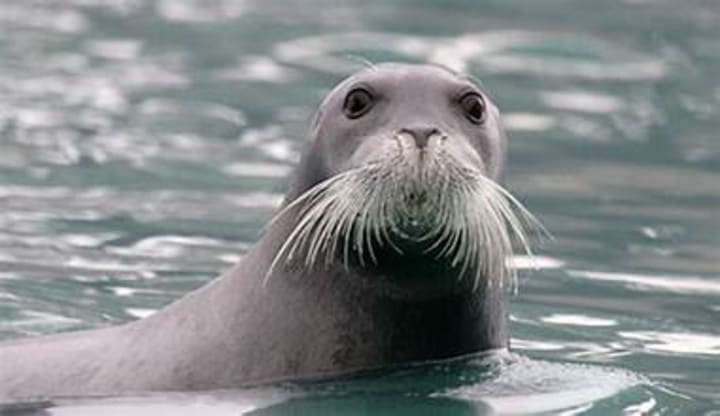
Bearded seals inhabit the Arctic Ocean and shores. The seals are called bearded due to their prominent and abundant whiskers. The whiskers curl quite elegantly when they are dry giving the animal a "raffish look." Bearded seals feed on small prey present along the ocean floor including fish, clams, and squid. The animal's whiskers act as feelers in the sediments.Bearded seals represent an essential food source for the predatory polar bears and also for the Inuit of the Arctic coast.
Caspian Seals
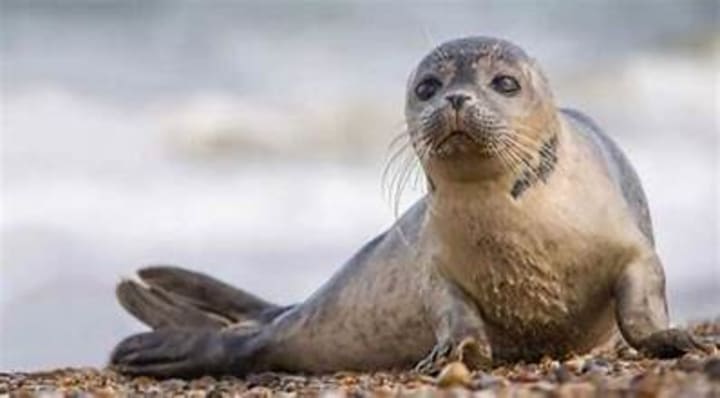
Caspian Seals inhabit the landlocked Caspian Sea. Their upperparts range from greyish-yellow to dark grey with lighter grey sides and belly while the back has irregular dark spots. The seals feed on kilka and crustaceans among other small fish. These seals are listed as endangered.
Crabeater Seals
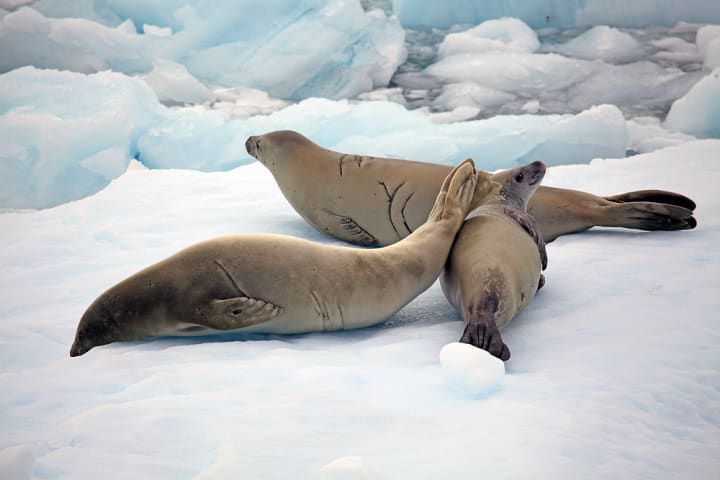
Crabeater seals have a circumpolar distribution around the Antarctica although they may wander to the extreme southern coasts of New Zealand, Africa, South America, and Australia. The animal's body is fairly slender with long snouts and skulls in comparison to other phocids. Crabeater seals are recognized as the world's most abundant seal species with possibly as numerous as 75 million individuals. The abundance is attributed to its specialized predation of the Southern Ocean's abundant Antarctic krill by the use of its sieve-like tooth structure.
Gray Seals

Gray seals inhabit the shores of the North Atlantic. They are large, and the eastern Atlantic bulls can reach lengths of 8.2 feet to 10.8 feet with the females being 5.2 to 6.6 feet long. These seals dine on wrasse, sand eels, lobsters, gadids, herring, skates, and flatfish. The seals are protected in the US as well as in the UK.
Harbor Seals
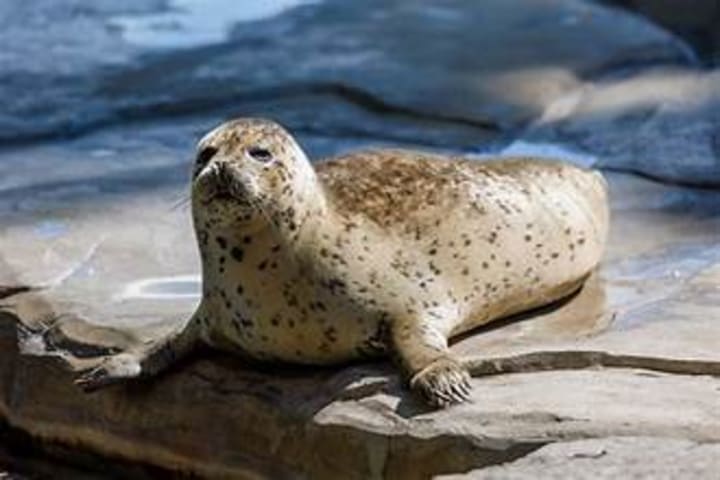
Harbor seals inhabit the Northern Hemisphere's Arctic and temperate marine coastlines. They rank as the most distributed among the seals with a presence in the coastal waters of the Pacific Ocean, Baltic Sea, Atlantic Ocean, and the North Sea. The seals appear tan, brown, gray, or silvery white with characteristic V-shaped nostrils. Adult harbor seals eat squid, crustaceans, molluscs, and a variety of fish; including, rockfish, herring, flounder, salmon, hake, and sand lance.
Harp Seals
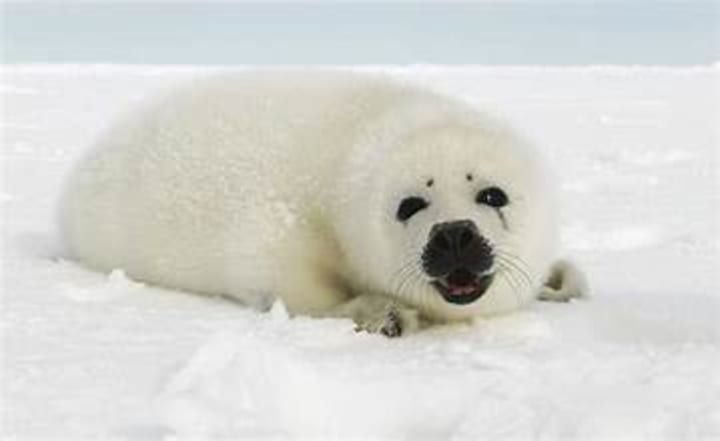
Harp seals are indigenous to the northernmost regions of the Atlantic Ocean and some areas of the Arctic Ocean. Their bodies appear silvery-gray with wishbone-shaped or black harp marks on its back. Harp seals prefer to stay in the ocean and spend fairly little time on land. They are very social, and can be quite noisy.
Hawaiian Monk Seals

Hawaiian monk seals inhabit the northwestern Hawaiian Island including the Laysan and Lisianski Islands, Kure Atoll, Peral and Hermes Reef, and the Midway Islands. These seals prefer warm subtropical waters. They breed on land as well as haul-out on the sand, volcanic rock, and corals. The seals feed on fish, crustaceans, eels, and cephalopods, and other benthic organisms. These seals are considered endangered.
Hooded Seals
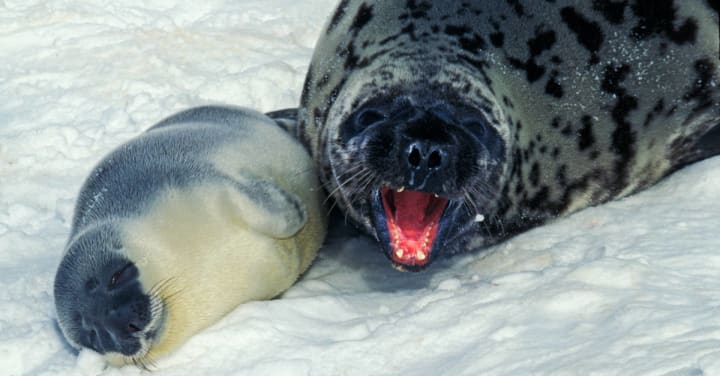
Their name was inspired by the inflatable hoods present on the forehead of adult males. Hooded seals inhabit the deep waters of the extreme north of the Atlantic Ocean. Their flippers are heavily clawed while their foreflippers are useful in steerage and not propulsion. They have silver or bluish grey coats with scattered black blotches and spots.
The hooded seals are carnivorous and mostly feast upon fish like herring, cod, redfish, and capelin. Other than that, they also hunt for mollusks like mussels, octopuses, squids, starfish, and shrimps.
Leopard Seals
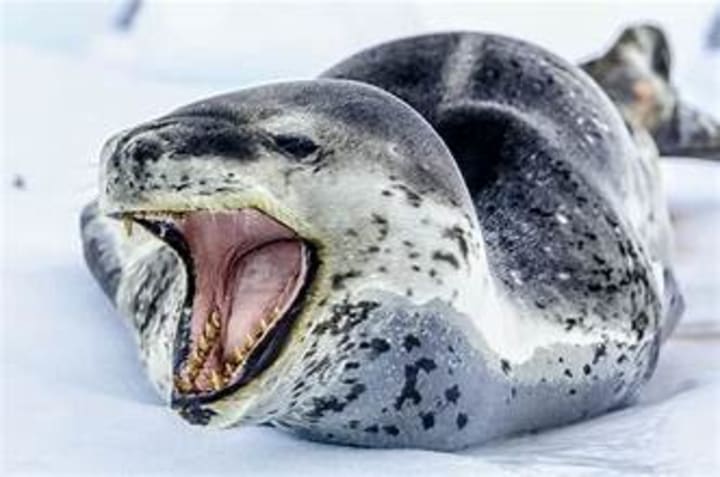
Leopard seals are large and muscular with light gray stomachs and dark gray backs. Their throats are white with black spots which gave them their name. Leopard seals inhabit the Antarctic. The seals have molars fashioned like those of the crabeater seals in that they can lock together to sieve krill from the water.
Mediterranean Monk Seals
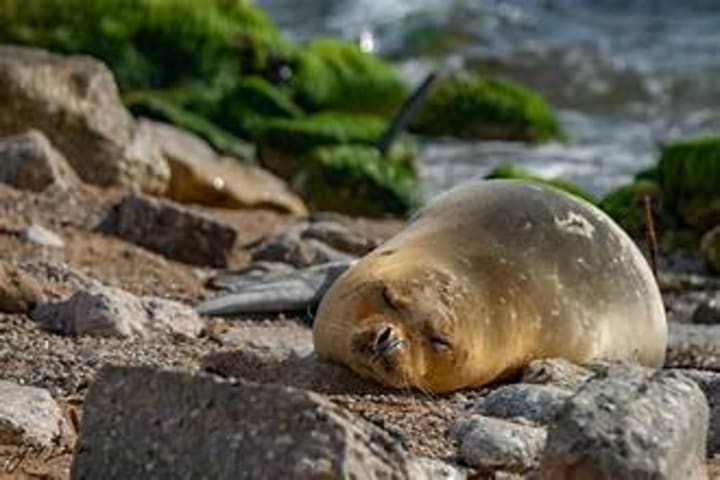
These seals inhabit the Cabo Blanco region in the northeastern Atlantic Ocean, the Agean Sea, and the Madeira archepalago. Unfortunately, fewer than 700 of them survive. Reproductive maturity for the seal is reached at roughly age four while the average lifespan falls between 20 to 25 years.
Mediterranean monk seals can be found in Western Sahara, Mauritania, Cyprus, Turkey, Greece, and Croatia. They are generally solitary and diurnal; they spend their days foraging, basking, sleeping, and hauling out. They prefer to feed in shallow coastal waters but may also forage at depths up to 250 meters. They feed on a variety of fish and mollusks, primarily octopus, squid, and eels.
Northern Elephant Seals
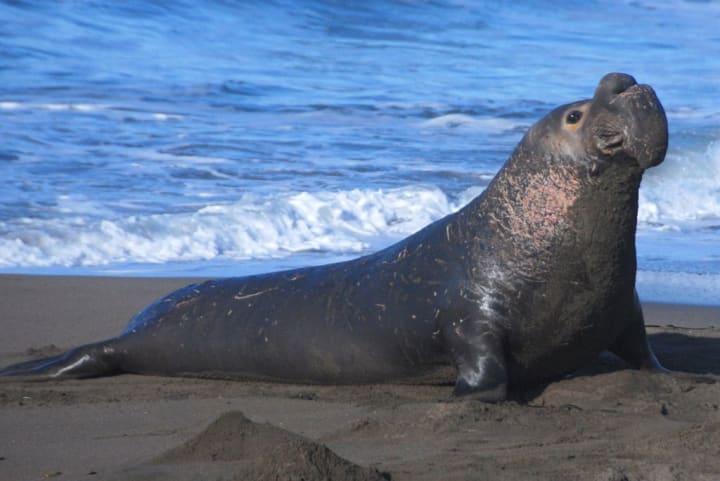
Northern elephant seals were named for their great size as well as the large proboscis that male seals have which they use to make loud roaring noises. They make their homes in the eastern Pacific Ocean with important breeding sites existing at the Farallon Islands, Channel Islands, Piedras Blancas Light, and the Año Nuevo State Reserve in the US and Mexico's Isla Cedros and Isla Benito del Este. . The Northern elephant seal inhabits the Pacific coast of Mexico, the U.S., and Canada. Race Rocks are the most northerly breeding area on the Pacific Coast, at the southern end of Vancouver Island's Strait of Juan de Fuca. The seals inhabit gravel or sandy beaches, far away from human activity, as their preferred places for breeding.
They are the largest extant carnivorans that can weigh up to 5,000 kilograms (11,000 lb). Elephant seals are considered true seals; they do not have external ears and reduced limbs. The reduction of their limbs helps them be more streamlined and move easily in the water. Elephant seals are carnivores (piscivores) and their favorite foods are skates, rays, squid, octopuses, eels, small sharks, and large fish.
Southern Elephant Seals
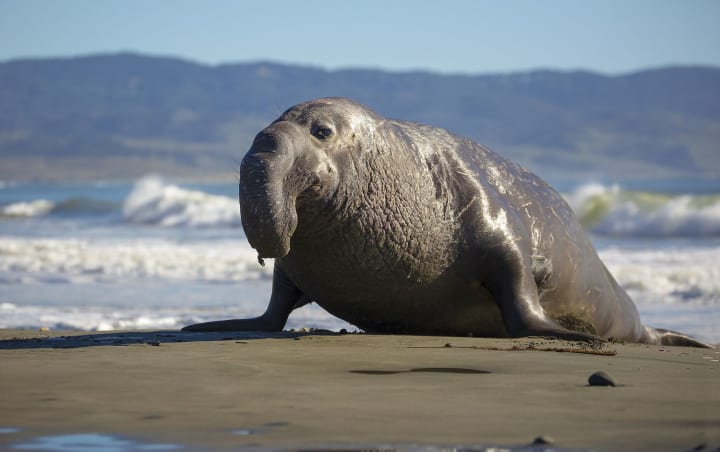
On average, the Southern elephant seal tends to be larger than the Northern species. Southern elephant seals are found on big and small islands along the coasts of South Africa, New Zealand, Argentina, and Chile. During the breeding season, these seals are generally found on rocky terrain and beaches, and sometimes on snow and ice. They live in the open ocean during the non-breeding season. The seal has a shorter proboscis and a larger body mass than the northern elephant seal.
Ringed Seals
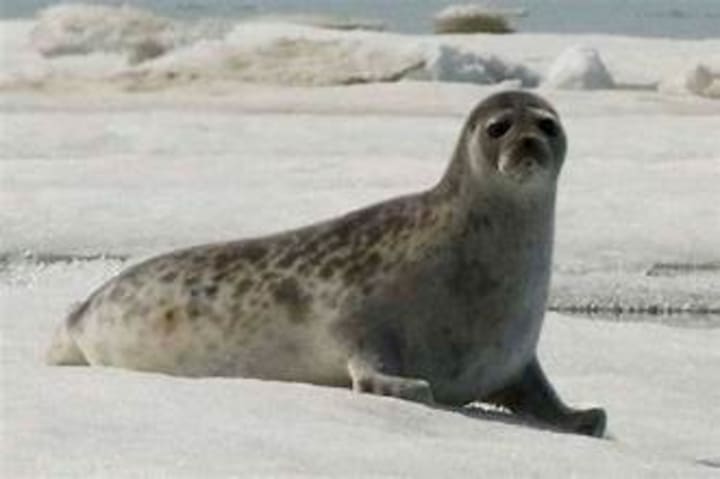
Ringed seals live in both the Arctic and sub-Arctic regions and have been sighted in the Hudson Bay and the Baltic and Bering Seas. These are the smallest of the Arctic seals and have samll heads, plump bodies, and short cat-like snouts. Their coats appear dark with silver rings on the sides and back, and silver bellies. These seals rest on ice floes. They dine on herring, mysids, arctic cod, and shrimp.
Ross Seals
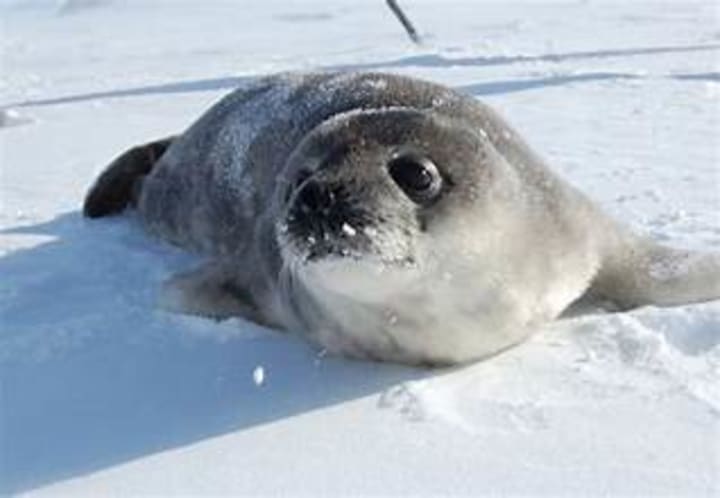
Ross seals inhabit ice packs around the Antarctic. They have long fore and hind flippers, very short fur, and rather small heads. These are solitary animals and don't form large colonies. They are named after a British explorer, James Ross, who first discovered the species in the 19th century during an expedition to Antarctica. These seals have dark brown-black coats and silver gray undersides. Their enormous eyes are adapted for low light conditions. Their diet consists of fish such as Antarctic silverfish, cephalopods like squid and invertebrates.
Spotted Seals
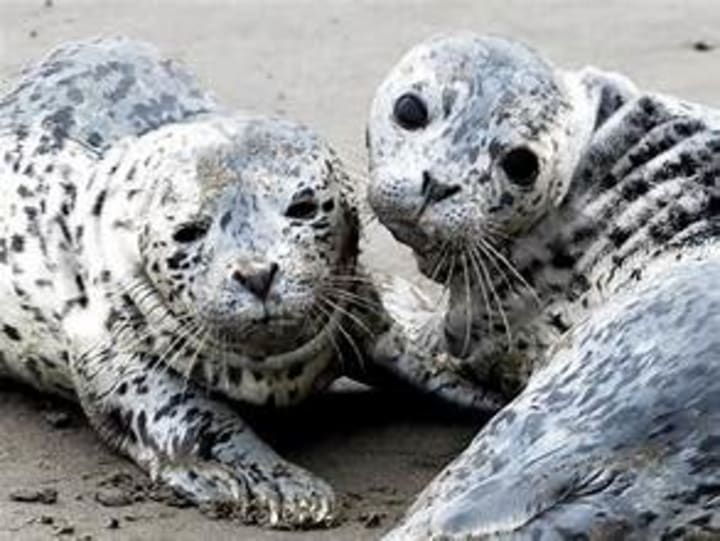
Spotted seals have pale undersides with the rest of the body having dark silver of grey. Their coats possesses a pattern of dark spots which are evenly distributed throughout the body. The heads are round with narrow snouts and narrow and short flippers. They inhabit the North Pacific Ocean as well as far north the Arctic Ocean. Spotted seals are carnivores (piscivores), they mainly eat fish, especially herring, pollock, capelin and cod. They also eat mollusks and crustaceans.
Weddell Seals
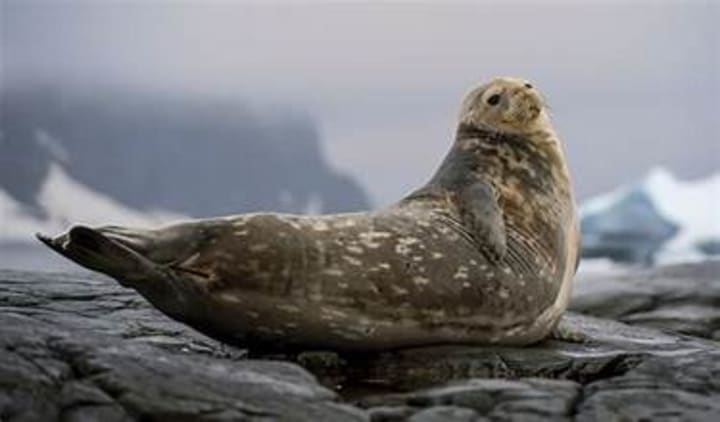
Weddell seals have spindle-shaped bodies which appear dark-silver gray and are lighter below and mottled with white, black, and grey blotches. The seals coats can fade to brownish during summer. They live on pack ice and the shorelines of Antarctica. Weddell seals are excellent divers and can reach depths of more than 600 meters and stay underwater for up to 82 minutes. These seals have excellent underwater vision, and nictitating membranes which shield their eyes from blowing snow and salt water. Their diet includes mostly fish and squid.
About the Creator
Rasma Raisters
My passions are writing and creating poetry. I write for several sites online and have four themed blogs on Wordpress. Please follow me on Twitter.
Keep reading
More stories from Rasma Raisters and writers in Earth and other communities.
Lovely National Parks Egypt
Gebel Elba National Park Gebel Elba National Park is located located near Marsa Alam, a tourist town in southeastern Egypt. The park has a lovely mountainous area with valleys and hills including a stretch of coral reef and mangrove coastline, a stretch of desert, and 22 islands in the Red Sea. At its heart stands Gebel Elba Mountain, a towering granite peak surrounded by arid plains, wadis (dry river valleys), and coastal wetlands along the Red Sea.
By Rasma Raisters7 months ago in Earth


Comments (1)
I had no idea there were so many varieties!