
Paradise Lost: How California's Policies Set the Stage for Disaster
Gavin Newsom’s focus on politics over practicality leaves the Golden State vulnerable to raging wildfires and deeper crises.

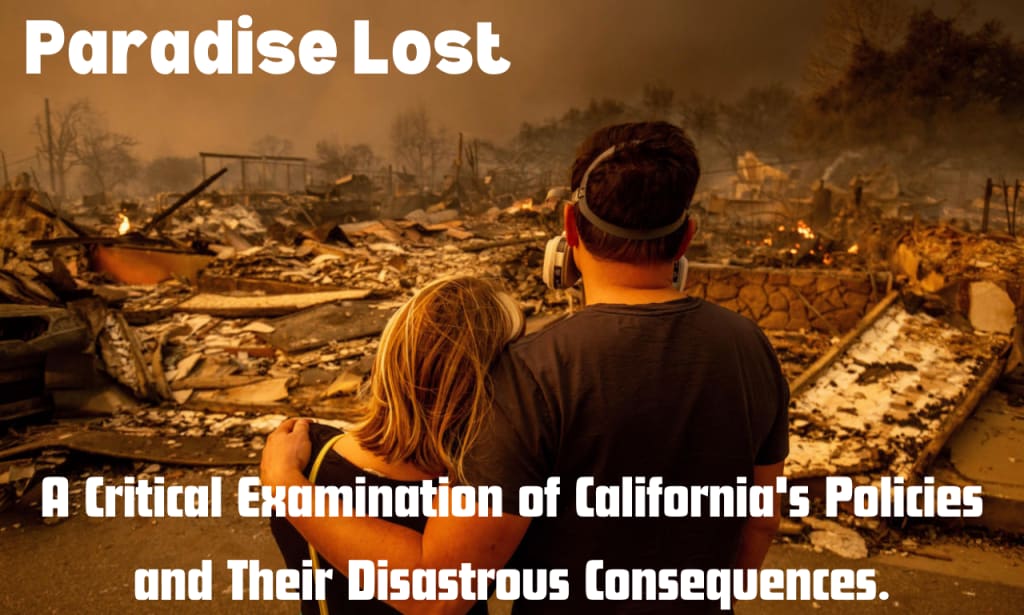
California, long celebrated for its natural beauty and economic opportunities, now finds itself grappling with a crisis that transcends politics and affects every resident. Governor Gavin Newsom’s post-election promise to “Trump-proof” the Golden State resonated with progressive voters, but recent catastrophic wildfires reveal a glaring oversight: fireproofing California itself.
The devastation in Los Angeles, where infernos sweep through affluent neighborhoods and working-class communities alike, underscores the dire consequences of mismanaged priorities. Even the wealthiest, ensconced in their Palisades mansions, cannot escape the flames fueled by what critics call the failures of progressive governance.
Environmental Goals vs. Practical Necessities
At the heart of California’s wildfire woes is its rigid environmental agenda, often pursued at the expense of practical safety measures. Consider the case of the Los Angeles Department of Water and Power (LADWP) in 2019. The agency planned to widen a fire-access road and replace outdated wooden utility poles in the Topanga Canyon area with fire- and wind-resistant steel alternatives. This was a sensible initiative designed to protect communities and mitigate fire risks.
However, these efforts were stalled due to environmental regulations protecting Braunton’s milkvetch, an endangered plant species. The removal of 182 plants triggered outcry and regulatory delays, prioritizing flora over fire prevention. While conservation is vital, critics argue that such policies often ignore the broader context of human safety and environmental sustainability.
The Cost of California’s Progressive Policies
California’s commitment to ambitious environmental and social goals has often come at a steep price. The state’s refusal to adapt its forest management practices to the growing threat of wildfires exemplifies this tension. Decades of overgrowth, compounded by resistance to controlled burns and thinning initiatives, have turned forests into tinderboxes.
Adding fuel to the fire—literally—is the state’s reliance on renewable energy mandates, which prioritize wind and solar power over grid reliability. During peak wildfire seasons, utilities are forced to preemptively shut down power to prevent sparks from igniting dry brush. These blackouts inconvenience millions and highlight the fragility of a system stretched thin by policy-driven constraints.
The economic impact is equally troubling. California’s high taxes and strict regulations, designed to fund progressive programs, have driven businesses and middle-class families out of the state in droves. The resulting exodus has left behind a growing disparity between the ultra-wealthy and those struggling to survive in one of the most expensive places in the nation.
Wildfires as the Great Equalizer
Wildfires, however, make no distinction between rich and poor. When the flames engulf neighborhoods, everyone is vulnerable. Mansions in the Palisades and modest homes in lower-income areas burn indiscriminately, exposing the shared risk faced by all Californians.
The irony is hard to miss: those who once championed California’s progressive policies are now among the loudest voices decrying the state’s failures. High-profile residents, including celebrities and tech moguls, have been vocal about the inadequacy of fire prevention efforts. Their frustration highlights a growing disillusionment with a system that seems more focused on political posturing than pragmatic governance.
What Needs to Change
California’s current trajectory demands a reevaluation of its priorities. To prevent future disasters, the state must strike a balance between environmental goals and practical safety measures. This includes:
Streamlining Fire Prevention Efforts:
Loosen regulations that hinder essential fireproofing projects, such as replacing utility poles and widening access roads.
Invest in advanced technologies for early fire detection and suppression.
Reforming Forest Management:
Embrace controlled burns and thinning practices to reduce fuel loads in forests.
Collaborate with federal agencies and private landowners to implement large-scale wildfire prevention strategies.
Enhancing Infrastructure Resilience:
Prioritize upgrades to the electrical grid to prevent fire-related blackouts.
Ensure that renewable energy initiatives do not compromise reliability during emergencies.
Rebuilding Trust:
Focus on transparent communication with residents about the trade-offs between environmental protections and safety.
Address the growing perception that California’s policies disproportionately benefit special interests over the general population.
A Wake-Up Call for the Golden State
California’s wildfires are more than a natural disaster—they are a wake-up call. The flames have laid bare the vulnerabilities of a state that once seemed invincible. Behind the charred hills and smoldering ruins is a stark message: policies must be grounded in practicality, not ideology.
Governor Newsom’s administration has an opportunity to turn this crisis into a turning point. By prioritizing fireproofing over political maneuvering, California can begin to rebuild its reputation as a land of opportunity and resilience.
Conclusion
The Golden State’s allure has always been its promise of endless possibility—a place where dreams can flourish. But as wildfires continue to devastate communities, California risks losing not just its luster but its future. The challenge now is clear: to reclaim its identity as a paradise, California must confront the realities of its policies and embrace solutions that protect its people, its land, and its legacy.
In the end, California’s redemption lies in finding a balance between its progressive ideals and the practical needs of its residents. Only then can it truly shine as the Golden State once more.
About the Creator
mureed hussain
Hi, I’m a creative writer passionate about health & wellness, love, longevity, aging, and pet care. With extensive Quora experience, I craft engaging posts, thoughtful questions, and insightful answers.
Find me at>>[email protected]
Keep reading
More stories from mureed hussain and writers in Earth and other communities.
A City Ablaze: Lessons from Los Angeles' Wildfire Tragedy
As the iconic skyline of Los Angeles fades into a veil of smoke and ash, the city finds itself grappling with one of the most devastating wildfires in its history. Declared a "terrible tragedy" by the United Nations' weather agency, this catastrophe has not only shaken the sprawling metropolis but also forced the world to confront the urgent realities of climate change.
By mureed hussainabout a year ago in Earth
US Balks as UK and France Pledge Troops to Postwar Ukraine
As the war in Ukraine grinds on with no clear end in sight, the debate over what comes after the fighting has taken a sharper turn. The United States has signalled reluctance about committing troops to Ukraine once the war ends, even as the United Kingdom and France openly pledge to consider deploying forces in a postwar security role. The divergence has exposed differing strategic priorities among Western allies and raised new questions about how Ukraine’s future security will be guaranteed. While all three nations remain united in their support for Kyiv during the war, the emerging split over postwar troop commitments highlights the complexity of planning for peace in a conflict that continues to reshape Europe’s security landscape. What the UK and France Are Proposing British and French leaders have increasingly spoken about the need for long-term security arrangements for Ukraine once active hostilities end. Their position reflects a growing concern that any ceasefire or peace agreement could be fragile, leaving Ukraine vulnerable to renewed aggression. The idea under discussion is not a combat deployment in an active war zone, but rather a stabilisation or reassurance force. Such troops could help train Ukrainian forces, protect critical infrastructure, and serve as a visible deterrent against future attacks. Supporters argue that a limited but credible international presence would help ensure that any peace settlement is respected. For London and Paris, this approach fits within a broader European push to take more responsibility for continental security. Both governments see Ukraine not only as a partner but as a frontline state whose stability directly affects Europe as a whole. Why Washington Is Hesitant The United States, while remaining Ukraine’s most significant military backer during the war, has taken a more cautious stance on postwar troop deployments. American officials have stressed that there are no plans to send US forces into Ukraine, even after a potential peace agreement. This hesitation is rooted in several factors. First, Washington remains wary of any move that could risk a direct confrontation with Russia. Even in a postwar scenario, the presence of US troops on Ukrainian soil could be portrayed by Moscow as a provocation, escalating tensions rather than reducing them. Second, domestic considerations play a major role. After years of overseas military engagements, there is limited appetite among the American public and political class for new long-term deployments abroad, particularly in a region where risks remain high and outcomes uncertain. Finally, US strategy has increasingly emphasised supporting allies through funding, training, and equipment rather than large-scale troop commitments. From Washington’s perspective, enabling Ukraine to defend itself may be preferable to stationing American forces on the ground. A Question of Deterrence At the heart of the debate lies a fundamental question: what will actually deter future aggression against Ukraine? The UK and France appear to believe that a physical presence, however limited, would send a powerful signal of commitment. Troops on the ground would demonstrate that Ukraine’s security is directly tied to that of major European powers, raising the cost of any future attack. The US, by contrast, seems to place greater faith in alternative mechanisms such as long-term military aid, security guarantees, and sanctions frameworks. American officials argue that deterrence does not necessarily require boots on the ground, especially if Ukraine emerges from the war better armed and more integrated with Western institutions. This difference reflects broader strategic cultures. European powers, facing the immediate proximity of the conflict, may feel a stronger need for visible reassurance measures, while the US assesses risks from a more global perspective. Implications for NATO Unity Although Ukraine is not a NATO member, the discussion has clear implications for the alliance. Any deployment of UK or French troops would be closely scrutinised for what it means for NATO’s role and credibility. NATO operates on consensus, and the absence of US support for a postwar troop presence could complicate coordination. Even if London and Paris act independently or as part of a smaller coalition, questions would remain about command structures, rules of engagement, and the political backing required for such a mission. At the same time, the situation underscores a broader shift within NATO, with European members increasingly expected to shoulder more responsibility. If the UK and France proceed with their plans, it could mark a significant step toward a more autonomous European security posture. Ukraine’s Perspective For Kyiv, the debate is both encouraging and frustrating. On one hand, the willingness of major European powers to consider troop deployments signals long-term commitment and recognition of Ukraine’s security concerns. On the other hand, uncertainty from the US—Ukraine’s most powerful ally—adds another layer of unpredictability. Ukrainian leaders have consistently argued that security guarantees must be concrete, not symbolic. From their perspective, any postwar arrangement must ensure that Russia cannot simply regroup and strike again. Whether this is achieved through foreign troops, binding treaties, or accelerated integration with Western institutions remains an open question. What is clear is that Ukraine wants assurances that go beyond promises and declarations. The Risk of Mixed Signals One potential danger of the current divergence is the message it sends to Moscow. Differing positions among Western allies could be interpreted as hesitation or lack of unity, potentially weakening deterrence rather than strengthening it. At the same time, open debate is not necessarily a sign of weakness. Allies often disagree on tactics while remaining aligned on broader goals. The challenge will be ensuring that these differences do not undermine the core objective of securing a stable and sovereign Ukraine. Diplomats on both sides of the Atlantic are likely to continue working behind the scenes to narrow the gap, even if public statements suggest a clear divide. Looking Ahead The question of postwar Ukraine remains largely theoretical while fighting continues. Yet the discussion itself reveals how seriously Western governments are taking the long-term consequences of the conflict. The UK and France’s willingness to pledge troops reflects a belief that peace must be actively protected. The US reluctance highlights concerns about escalation, sustainability, and domestic support. Reconciling these approaches will be one of the most important diplomatic challenges once the guns eventually fall silent. For now, the disagreement does not signal a breakdown in alliance unity, but it does expose the difficult choices ahead. As the war continues, planning for peace is proving almost as complex—and politically sensitive—as managing the conflict itself.
By Muhammad Hassan8 days ago in Earth




Comments (1)
A disaster! The sad thing is that we don't even agree on what environmental protection is! You fight for a couple of trees and then you lose hectares of territory, and of human and animal lives...