
Pakistan’s 2025 Flood Crisis: Nature’s Fury and Human Resilience
From Mountain Peaks to Coastal Plains – The Monsoon Disaster That Shook a Nation

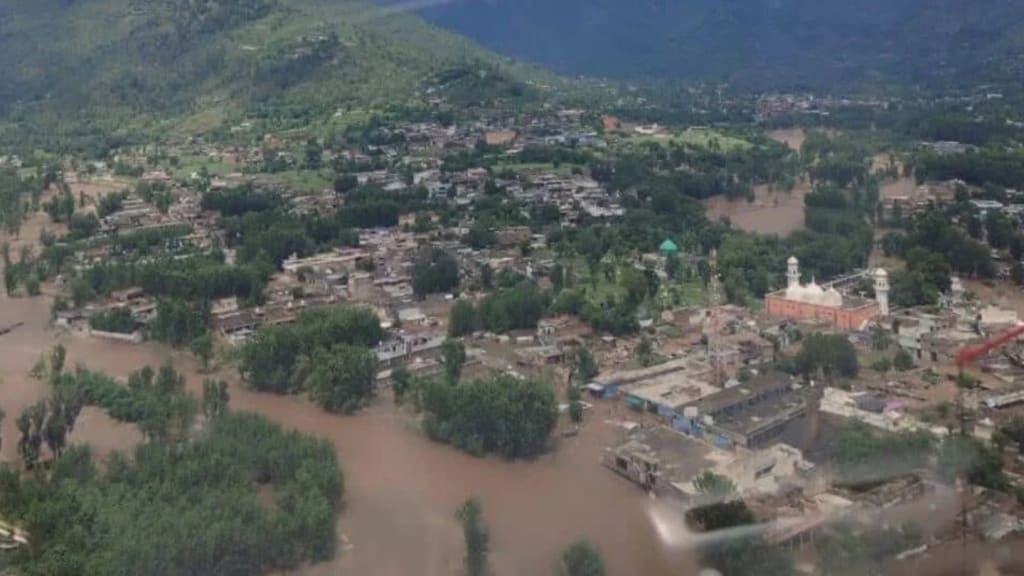
From Mountain Peaks to Coastal Plains, The Monsoon Disaster That Shook a Nation
In 2025, Pakistan has once again found itself at the mercy of extreme monsoon rains and unexpected weather events, pushing communities, rescue teams, and the government to their limits. The floods of this year have been among the most devastating in recent history, impacting millions, destroying infrastructure, and claiming hundreds of lives. This tragedy has highlighted not only the vulnerabilities of the country’s geography but also the growing threat of climate change.
The Climatic Trigger Behind the Catastrophe
The monsoon season, which began in June 2025, brought much more than the usual rains. Meteorologists reported an increase of nearly 50% above normal rainfall, with some areas receiving unprecedented cloudbursts. A particularly severe event struck Buner district in Khyber Pakhtunkhwa (KP), where more than 150 mm of rain fell within an hour, triggering flash floods and landslides. Such events, known as “cloudbursts,” are rare but becoming increasingly frequent as climate patterns shift.
According to the National Disaster Management Authority (NDMA), Pakistan experienced multiple episodes of intense downpours, many of which caused rivers to overflow and hilly terrains to collapse. This year’s flooding has been described by experts as not just a seasonal challenge but a direct reminder of the region’s growing susceptibility to climate extremes.
Human Tragedy in the Wake of Floodwaters
Khyber Pakhtunkhwa: The Hardest Hit
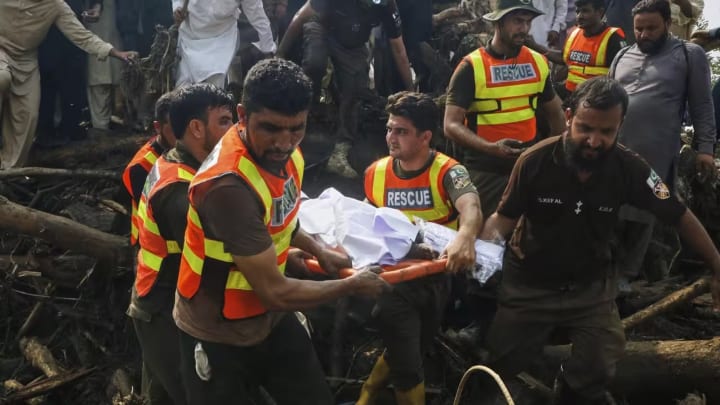
- Buner District became the epicenter of tragedy when sudden floods swept through villages, killing more than 200 people and leaving many missing. Search and rescue teams, including military units and volunteers, are still combing debris for survivors and victims.
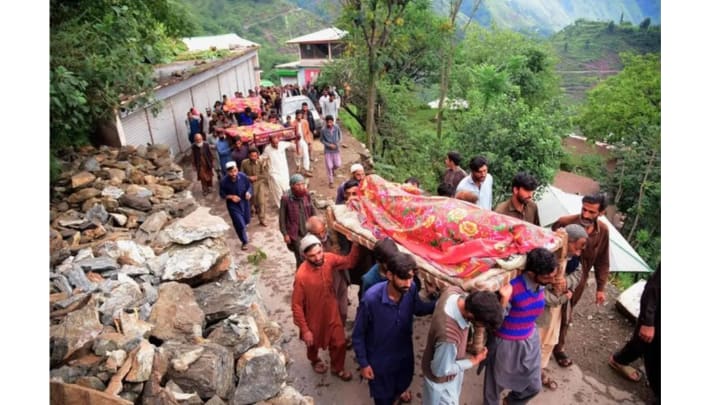
- In another heart-wrenching incident, a family preparing for a wedding lost 24 members when their large ancestral home collapsed during the floods. The celebration turned into mass funerals within days.
- Overall, KP and adjoining northern areas have reported 300–350 deaths, with dozens more feared missing.
Nationwide Impact
- By late August 2025, official counts placed the death toll at over 710, with nearly 1,000 injured and more than 200 missing across Pakistan.
- Floods and landslides have damaged thousands of homes, roads, and bridges across Punjab, Sindh, Balochistan, Gilgit-Baltistan, and Azad Kashmir, leaving tens of thousands displaced.
- A new threat emerged in the north when a mountain landslide in Gilgit-Baltistan blocked the Ghizer River, forming a 7 km-long lake. Authorities are closely monitoring the lake amid fears of a catastrophic outburst if rains continue.
Government Response and Relief Efforts
Emergency Operations
The federal and provincial governments have mobilized all available resources to cope with the disaster. The army, navy, and rescue units were deployed for evacuations, aerial monitoring, and supply drops. Relief camps have been set up in affected districts to provide shelter, food, and medical care.
Despite these efforts, rescuers face significant challenges. Damaged infrastructure has hampered access to remote areas, while continuing rains and unstable terrain make operations risky. NDMA has issued warnings for further flooding, urging communities near rivers and hilly slopes to evacuate early.
Humanitarian Outreach
Local and international NGOs have stepped in, providing emergency supplies and medical assistance. Social media campaigns have helped raise funds and awareness, but the scale of the disaster demands long-term recovery plans. Experts emphasize the need to integrate climate adaptation strategies, such as better drainage systems, stronger embankments, and early warning technologies.
Climate Change and the Need for Preparedness
The 2025 floods have reignited debates about climate resilience in Pakistan. The country is ranked among the most vulnerable to climate change, yet investment in disaster mitigation remains insufficient. Rapid urbanization, deforestation, and poorly planned infrastructure have worsened the impact of heavy rains.
Scientists warn that events like the Buner cloudburst and mountain lake formation could become more frequent if global temperatures continue to rise. Adaptation and mitigation efforts are critical, not only to protect lives and property but also to safeguard agriculture, industry, and water resources that sustain millions.
Lessons and the Way Forward
This year’s floods are a stark reminder that Pakistan’s battle with natural disasters is far from over. Beyond emergency responses, there is a dire need for long-term strategies that include:
- Strengthening flood defenses such as embankments and reservoirs.
- Investing in early warning systems and community education.
- Promoting climate-smart agriculture and land use practices.
- Enhancing coordination among federal, provincial, and local authorities.
The resilience of the Pakistani people has been evident in the way communities have come together, supporting each other amid loss and uncertainty. Yet, without structural changes and climate action, such tragedies may repeat with increasing severity.
About the Creator
Farooq Hashmi
Thanks for reading! Subscribe to my newsletters.
- Storyteller, Love/Romance, Dark, Surrealism, Psychological, Nature, Mythical, Whimsical
Keep reading
More stories from Farooq Hashmi and writers in Earth and other communities.
The Last Human City Underwater
The Last Human City Underwater A Tale of Survival, Secrets, and the Future of Humanity The year was 2197, and the Earth’s surface was no longer home to humankind. Rising sea levels had swallowed entire continents, storms ripped across what was once dry land, and the old world had been lost to the waves. Humanity’s last refuge was not in the sky, nor on other planets—it was beneath the ocean itself.
By Farooq Hashmi4 months ago in Earth
Chinese Planetary Engineering: The Great Green Wall and the Reclamation of Climate
There are junctures in history where a civilization no longer chooses between comfort and progress, but between adaptation and extinction. At the dawn of the new millennium, China hit one of those silent thresholds where geography ceases to be a backdrop and becomes an adversary. The desert was advancing, not as a metaphor for decay, but as a physical, methodical, and relentless force. Sand was devouring the horizon, winds grew heavy with dust, and the soil lost its fertile memory, taking with it the promise of social stability.
By Laurenceau Porte5 days ago in Earth
US Warns Airlines About Military Activity in Parts of Latin America
Commercial aviation is built on predictability—clearly defined airspace, coordinated air traffic control, and shared international rules. When that predictability is disrupted, even subtly, the ripple effects can stretch far beyond the cockpit. That is exactly why a recent warning from the United States has caught the attention of airlines, governments, and travelers alike. In early 2026, US aviation authorities issued an advisory warning airlines about military activity in parts of Latin America, urging pilots to exercise heightened caution when flying over certain regions. While no immediate restrictions or flight bans were imposed, the message itself was clear: something in the skies has changed, and the risks—however limited—can no longer be ignored. This development is not just about aviation safety. It reflects a growing intersection between geopolitics, military operations, and civilian infrastructure in a region that has long balanced cooperation with tension. What Exactly Did the US Warn About? The advisory, released through official aviation safety channels, highlighted concerns over potential military activity affecting airspace across parts of Mexico, Central America, South America, and nearby oceanic regions. Airlines were advised to remain vigilant during all phases of flight, including cruising at high altitudes, takeoff, and landing. Unlike routine notices related to weather systems or airport congestion, this warning explicitly referenced security-related risks. These include the possibility of unexpected military movements, temporary airspace disruptions, and interference with navigation systems that modern aircraft rely on for safe operations. Importantly, the warning did not accuse any specific country of wrongdoing, nor did it suggest an immediate danger to passengers. Instead, it served as a precaution—one designed to ensure airlines adjust flight planning, monitoring, and communication protocols accordingly. Why Military Activity Matters to Civil Aviation To the average traveler, military exercises or operations may seem distant from the experience of flying on a commercial jet. In reality, the two worlds often share the same skies. Civilian aircraft depend heavily on satellite navigation, coordinated air traffic control, and stable airspace rules. Military operations—especially those involving fast-moving aircraft, surveillance systems, or electronic equipment—can introduce uncertainty into that environment. Some of the key risks aviation authorities monitor include: Unplanned military aircraft movements that may not follow civilian flight patterns Temporary airspace closures or restrictions that require last-minute rerouting Navigation signal disruptions, whether accidental or intentional Increased congestion in strategic corridors used by both civilian and military flights While these risks are typically managed through coordination and communication, heightened military activity raises the stakes. The FAA’s advisory suggests that such activity has reached a level where additional caution is warranted. The Geopolitical Context Behind the Warning The timing of the advisory is not accidental. Latin America has seen a noticeable rise in security operations and military coordination involving the United States over the past year. These efforts are largely focused on counter-narcotics missions, maritime security, and regional stability, particularly in areas with strategic shipping routes or ongoing political tension. At the same time, broader global dynamics—ranging from great-power competition to shifting alliances—have increased the strategic importance of air and sea routes across the Western Hemisphere. From Washington’s perspective, issuing an aviation warning is not about alarmism. It is about acknowledging that military and security activities in the region may temporarily affect civilian systems, including aviation. How Airlines Are Responding For airlines, advisories like this are not unusual—but they are taken seriously. Most major carriers already operate with layered safety systems that allow them to respond quickly to changing conditions. In practical terms, this warning may lead to: Slight route adjustments to avoid specific airspace Enhanced pilot briefings before flights Increased coordination with air traffic controllers Closer monitoring of navigation and communication systems So far, there have been no widespread flight cancellations or suspensions linked directly to the warning. That suggests airlines view the risk as manageable, provided proper precautions are followed. Reactions from Latin American Governments Some governments in the region have been quick to reassure the public. Officials have emphasized that their national airspace remains safe and fully operational, and that civilian flights continue without disruption. This response highlights an important tension: while the US warning is precautionary, it can still affect public perception. Tourism, business travel, and investor confidence are all sensitive to suggestions of instability—even when no immediate danger exists. As a result, many countries are walking a careful line between cooperating on aviation safety and defending their reputation for stability. What This Means for Passengers For travelers, the key takeaway is simple: commercial aviation remains safe. Warnings like this are designed to prevent incidents, not predict them. Passengers flying through or over affected regions may experience slightly longer flight times or minor schedule adjustments, but there is no indication of increased danger to civilian aircraft. In fact, the existence of such advisories demonstrates how seriously aviation authorities take even low-probability risks. A Sign of a More Complex World The US warning to airlines is a reminder that modern air travel does not exist in a vacuum. As military operations, security concerns, and geopolitical rivalries evolve, civilian systems—from shipping lanes to flight paths—are increasingly affected. This moment underscores a broader reality: the skies are becoming more crowded, more contested, and more interconnected with global politics. Managing that complexity will require continued transparency, cooperation, and vigilance from governments, regulators, and airlines alike. For now, planes continue to fly, passengers continue to travel, and the system continues to work. But behind the scenes, aviation authorities are quietly adjusting to a world where safety is shaped not just by weather and mechanics—but by geopolitics as well.
By Muhammad Hassan2 days ago in Earth




Comments
There are no comments for this story
Be the first to respond and start the conversation.