

An oligarchy is a form of government where power is held by a small group of people, often the wealthy or the elite. These individuals, known as oligarchs, have control over the government and make decisions that benefit their own interests rather than those of the wider population.
Oligarchies can take many forms and can be found in both democracies and autocracies. In some cases, the oligarchs may hold political office and use their positions to advance their interests, while in others they may operate behind the scenes, using their wealth and influence to control the government.
One of the key features of oligarchies is the concentration of wealth and power in the hands of a small number of people. This can lead to unequal distribution of resources and opportunities, with the majority of the population being excluded from political and economic decision-making. This can result in widespread poverty and social unrest, as well as a lack of accountability for those in power.
Another feature of oligarchies is the lack of transparency and accountability in the decision-making process. Oligarchs may use their wealth and influence to manipulate the political system, making it difficult for the wider population to hold them accountable for their actions. This can result in corruption and abuse of power, as well as a lack of accountability for those in power.
In some cases, oligarchies can be stable and long-lasting, with the oligarchs maintaining their power through a combination of wealth, political savvy, and military force. However, in other cases, oligarchies can be unstable and prone to internal conflict, as different factions within the ruling elite compete for power and resources.
The rise of oligarchies can be traced back to a number of factors, including the concentration of wealth and resources in the hands of a few individuals, the decline of democratic institutions, and the erosion of the rule of law. In some cases, oligarchies may emerge as a result of political and economic instability, as the ruling elites seek to consolidate their power and maintain control over the government and the economy.
Overall, oligarchies have a negative impact on democracy and human rights, and can lead to widespread poverty and inequality. In order to address this, it is important to strengthen democratic institutions, promote transparency and accountability, and address the underlying economic and political factors that contribute to the rise of oligarchies.
An oligarch is a person who is part of a small group of people that wields significant power and influence over a country, industry or sector. The word oligarchy comes from the Greek words "oligos," meaning "few," and "arkho," meaning "to rule."
Oligarchs typically come from wealthy and powerful families and use their wealth and influence to maintain their positions of power. They often control key industries, such as finance, energy, media, and real estate, and use their control of these industries to influence government policies and protect their own interests.
In some countries, oligarchs have gained power through corrupt means, such as bribery, embezzlement, and manipulation of elections. They may also use their wealth and influence to control the media and restrict the flow of information to the public. This allows them to shape public opinion and maintain their grip on power.
The rise of oligarchs can be seen as a response to the downfall of the Soviet Union and the Eastern Bloc. During the transition to a market-based economy, many former Communist Party officials and state-owned enterprise managers became oligarchs, acquiring vast wealth and control over key industries.
In recent years, the term "oligarch" has become synonymous with a new class of ultra-wealthy individuals who have gained wealth and influence through their control of large corporations and financial institutions. These individuals often have a significant impact on the global economy and are sometimes referred to as "global oligarchs."
However, the term oligarch can also have negative connotations, as many people view oligarchs as symbols of economic and political inequality. Critics argue that the concentration of wealth and power in the hands of a few individuals undermines democracy and creates a system in which the interests of the wealthy few are prioritized over those of the broader population.
In conclusion, an oligarch is a member of a small group of people with significant wealth, power and influence over a country, industry or sector. They often gain their power and influence through corrupt means and use it to shape government policies and maintain their positions of power. The rise of oligarchs can have negative consequences for democracy and can lead to increased economic and political inequality.
About the Creator
Kumara Swamy
Creator
Keep reading
More stories from Kumara Swamy and writers in Earth and other communities.
Gaslighting
Gaslighting is a form of psychological manipulation where a person or a group makes someone question their own sanity, memory, or perception. The term originates from the 1938 play "Gas Light" in which a husband manipulates his wife into thinking she is losing her mind by dimming the gas lights in their home and denying it when she points it out.
By Kumara Swamy3 years ago in Earth
Himalayas Bare and Rocky After Reduced Winter Snowfall, Scientists Warn
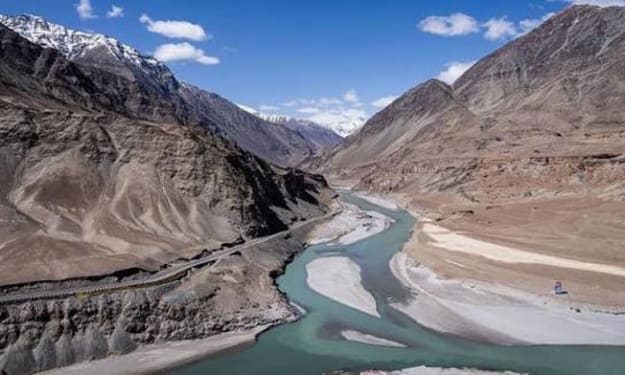
The Himalayas, often described as the world’s “Third Pole,” are facing a dramatic and worrying transformation. Scientists are warning that reduced winter snowfall is leaving vast stretches of the mountain range bare, rocky, and increasingly vulnerable to long-term environmental damage. Once known for their thick snow blankets and powerful glaciers, parts of the Himalayas are now showing exposed rock earlier than ever before—an alarming sign of climate stress in one of Earth’s most critical ecosystems. A Visible Change in the World’s Highest Mountains Winter snowfall plays a vital role in the Himalayan climate system. Snow acts as a protective layer, insulating glaciers and regulating the slow release of meltwater into rivers during warmer months. However, researchers monitoring satellite data and ground stations report that recent winters have brought significantly less snowfall across large areas of the range. As a result, snowlines are rising higher up the slopes, leaving lower and mid-altitude regions exposed. This has turned once-white mountain landscapes into expanses of dark rock, which absorb more heat from the sun, accelerating warming in a dangerous feedback loop. Why Reduced Snowfall Matters Snow is more than a scenic feature—it is essential to the health of Himalayan glaciers. When snowfall declines, glaciers lose their main source of replenishment. At the same time, exposed ice and rock melt faster under direct sunlight. Scientists warn that this imbalance is speeding up glacier retreat across the Himalayas. Many glaciers are now shrinking at rates not previously recorded, threatening the long-term stability of water systems that support nearly two billion people across South and Southeast Asia. Impact on Asia’s Major Rivers The Himalayas feed some of the world’s most important rivers, including the Indus, Ganges, Brahmaputra, Yangtze, and Mekong. These rivers depend on seasonal snow and ice melt to maintain consistent flow throughout the year. Reduced snowfall means less stored water for the dry season. In the short term, faster melting can cause floods and landslides. In the long term, however, shrinking glaciers could lead to water shortages, affecting agriculture, hydropower, and drinking supplies across multiple countries. A Growing Risk of Disasters Bare, rocky slopes are far more unstable than snow-covered ones. Snow helps bind loose material together, while exposed rock and soil increase the likelihood of landslides and avalanches. Scientists have already observed a rise in slope failures and glacial lake outburst floods in the region. As glaciers retreat, meltwater often accumulates in fragile lakes dammed by loose rock and ice. These lakes can burst suddenly, releasing destructive floods that threaten mountain communities and downstream infrastructure. Climate Change at the Core Researchers agree that climate change is the primary driver behind the declining snowfall. Rising global temperatures are altering weather patterns, causing more winter precipitation to fall as rain rather than snow. Even small temperature increases at high altitudes can drastically change how moisture behaves. Additionally, warming oceans and shifting atmospheric circulation are affecting the timing and intensity of winter storms that traditionally brought snow to the Himalayas. Effects on Local Communities and Wildlife Mountain communities that rely on predictable snowfall for farming, tourism, and water storage are already feeling the effects. Farmers report changes in planting cycles, while winter tourism has declined in some regions due to unreliable snow conditions. Wildlife is also under pressure. Species adapted to cold environments are losing habitat as snow cover shrinks. Plants that depend on snowmelt are struggling to survive in drier, warmer conditions, disrupting fragile alpine ecosystems. Scientists Call for Urgent Monitoring and Action Experts stress the importance of improved monitoring of snowfall, glacier health, and water flows across the Himalayan region. Better data can help governments plan for future water management challenges and disaster risks. At the same time, scientists emphasize that local adaptation alone is not enough. Reducing global greenhouse gas emissions remains critical to slowing temperature rise and preserving what remains of the Himalayan snow and ice. What the Future Holds If current trends continue, large parts of the Himalayas could see permanent changes within decades. Reduced snowfall and accelerating glacier loss may reshape landscapes, ecosystems, and human livelihoods on an unprecedented scale. The sight of bare, rocky Himalayan slopes is more than a visual change—it is a warning signal. The world’s highest mountains are responding rapidly to a warming planet, and the consequences will extend far beyond the peaks themselves.
By Fiazahmedbrohi 3 days ago in Earth
Biochar: Unlocking the Potential for Climate Change Mitigation and Carbon Markets
Biochar is created through the process of pyrolysis, where organic materials such as agricultural waste, wood, or even certain types of plastic are heated in the absence of oxygen. This process breaks down the biomass into three main products: gas, liquid (bio-oil), and solid carbon-rich residue—biochar. Unlike organic matter that decomposes naturally, releasing carbon dioxide (CO₂) into the atmosphere, biochar locks carbon in a stable form that can persist in the soil for hundreds or even thousands of years.
By Bestonpyrolysis5 days ago in Earth



Comments
There are no comments for this story
Be the first to respond and start the conversation.