
Ocean trenches (Mariana Trench)
The Mariana Trench is the deepest part of the world's oceans and one of the most fascinating features of the Earth's oceanic system.

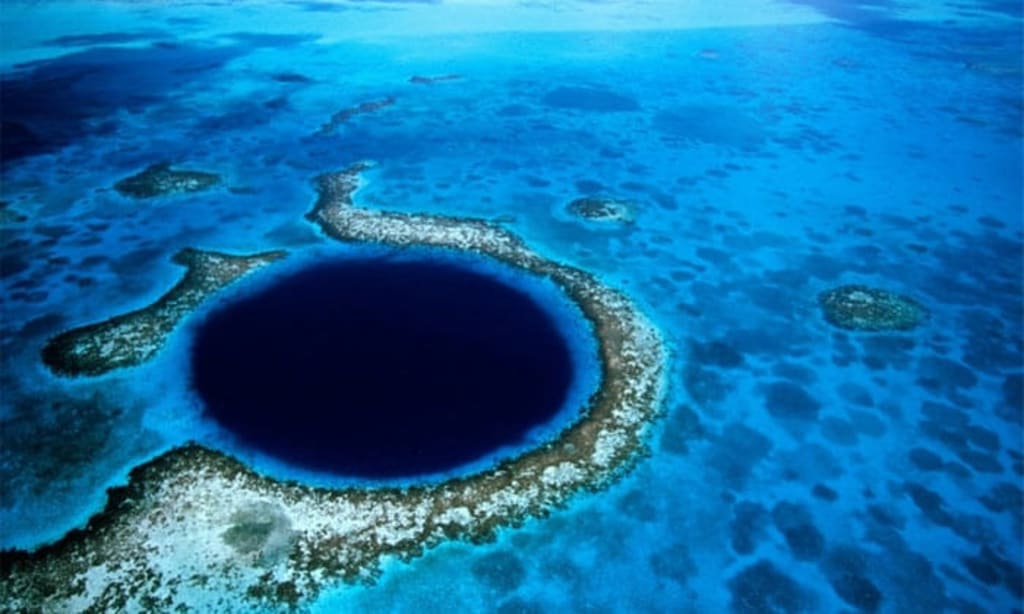
Located in the western Pacific Ocean, it reaches a depth of approximately 36,070 feet (10,994 meters) at its deepest point, known as the Challenger Deep. This incredible depth makes it the lowest point on the Earth's surface, deeper than Mount Everest is tall. The trench, part of a larger subduction zone, was formed by the tectonic processes that occur when one tectonic plate is forced beneath another, resulting in the extreme depths of the ocean in that area.
- The Mariana Trench is named after the nearby Mariana Islands, which are located just to the east of the trench. The trench itself is about 1,550 miles (2,500 kilometers) long and varies in width from around 45 miles (72 kilometers) at its broadest points to much narrower sections. It is primarily the result of the Pacific Plate being subducted under the smaller Mariana Plate, causing the seafloor to plunge deep into the Earth’s mantle. The immense pressure and darkness in the trench create an environment that is vastly different from anything found in other parts of the ocean.
- The conditions at the bottom of the Mariana Trench are extreme, with pressures more than 1,000 times greater than at sea level. The temperature is just above freezing, and there is no sunlight, which means that organisms living there must be adapted to survive without the light-dependent photosynthesis that supports life elsewhere in the ocean. Despite these harsh conditions, life thrives in the trench. Creatures such as the giant amoeba, bioluminescent fish, and the rare snailfish are found deep within the trench. These organisms have developed unique adaptations to survive the crushing pressure, lack of sunlight, and cold temperatures, such as producing their own light or having specialized enzymes and cellular structures to withstand extreme pressure.
- One of the most remarkable aspects of the trench is its role in the global oceanic and tectonic systems. The Mariana Trench plays a significant role in the Earth’s plate tectonics by being a subduction zone, where the Pacific Plate slides beneath the smaller Mariana Plate. This process is responsible for volcanic activity, and it also contributes to the creation of new material for the ocean floor. Subduction zones like the Mariana Trench are essential for recycling Earth's crust, which helps regulate the planet's internal temperature and maintains the balance of elements in the Earth's crust.
- The trench has also been the subject of scientific exploration. Due to the extreme depths, it is difficult and costly to explore the trench fully, and only a few expeditions have ventured to its deepest parts. In 1960, Swiss oceanographer Jacques Piccard and U.S. Navy Lieutenant Don Walsh made history when they reached the Challenger Deep in a bathyscaphe called the Trieste. This mission lasted for only a few hours, but it was a landmark event in underwater exploration. More recently, filmmaker James Cameron became the first person to solo dive to the bottom of the trench in 2012, spending several hours exploring and collecting data.
- Today, modern technology has advanced our ability to study the trench. Submersible vehicles, remotely operated vehicles (ROVs), and deep-sea sensors allow scientists to gather valuable information about the trench’s geology, oceanography, and ecosystems. These expeditions have uncovered many new species and deepened our understanding of life in extreme environments.
- However, despite its remote location, the Mariana Trench is not untouched by human activity. The oceanic environment is affected by pollution, including plastics and chemicals, which can drift down to even the deepest parts of the trench. In 2017, scientists discovered a plastic bag and candy wrappers at the bottom of the trench, highlighting the pervasive nature of human waste. The trench’s unique ecosystem is also vulnerable to the impacts of climate change, including the effects of rising ocean temperatures and ocean acidification.
- In addition to being a geological wonder, the Mariana Trench holds significant importance for scientific research. It provides insights into the Earth’s interior, ocean currents, the global climate system, and the potential for life to exist in extreme conditions. The trench also serves as a reminder of the vastness of the Earth’s oceans and the mysteries that remain hidden beneath the waves.
- In conclusion, the Mariana Trench is a remarkable feature of the Earth's ocean, offering a unique glimpse into the planet's deep, unexplored regions. Its extreme depth, unique ecosystems, and role in the Earth’s tectonic system make it a subject of great scientific interest. Despite its harsh environment, life in the trench has evolved to thrive under conditions that seem inhospitable to most forms of life, showcasing the adaptability and resilience of organisms. The Mariana Trench continues to be a focus of exploration, offering the potential for new discoveries that could further expand our understanding of the Earth and its ecosystems.
About the Creator
Badhan Sen
Myself Badhan, I am a professional writer.I like to share some stories with my friends.
Keep reading
More stories from Badhan Sen and writers in Earth and other communities.
Oceans & Hydrology
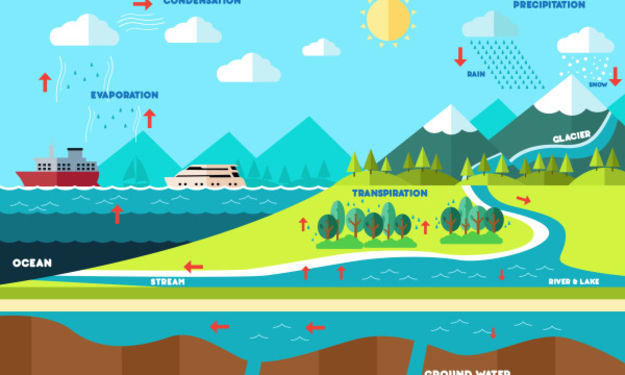
Hydrology, the study of water, is closely connected to the oceans, as they are the primary source of Earth's water cycle. The study of oceans and hydrology is vital to understanding how the Earth's water systems function, how we can sustainably manage water resources, and how human activities influence both natural processes.
By Badhan Senabout a year ago in Earth
Dozens of Flood Warnings Issued in England After Days of Relentless Rain
England is grappling with widespread flooding after several days of continuous heavy rain, prompting the Environment Agency to issue dozens of flood warnings across multiple regions. The intense rainfall has overwhelmed rivers and drainage systems, causing water levels to rise dangerously in both urban and rural areas. Emergency services are on high alert, assisting communities affected by the deluge.
By Ayesha Lashariabout 12 hours ago in Earth
Earthquakes Today
Earthquakes are a daily reminder that the planet beneath our feet is constantly in motion. Today was no exception. Across different regions of the world, seismic instruments recorded a series of small to moderate earthquakes—most of them unnoticed by the general public, yet each one contributing to scientists’ understanding of how Earth releases stress along its tectonic boundaries. While major, destructive earthquakes capture headlines, the reality is that earthquakes happen every day, often dozens at a time. Today’s activity followed that familiar pattern: brief moments of shaking in some areas, subtle ground movement in others, and long strings of data flowing into global monitoring systems. A Snapshot of Earthquakes Today Throughout the day, earthquakes were detected in both well-known seismic zones and regions where shaking is less common. Coastal fault systems, subduction zones near ocean trenches, and continental plate boundaries all showed signs of movement. Most of today’s earthquakes were relatively low in magnitude, meaning they posed little to no danger to people or infrastructure. In places where earthquakes are frequent, such as parts of the Pacific Rim, small tremors are considered routine. Residents may feel a quick jolt, hear a faint rumble, or notice hanging objects sway briefly before everything settles again. Elsewhere, similar-sized quakes might go entirely unnoticed, detected only by sensitive instruments. The takeaway from today’s seismic activity is not alarm, but continuity: Earth is behaving exactly as geologists expect it to. Why Earthquakes Occur So Frequently Earth’s outer shell is broken into massive slabs called tectonic plates. These plates are constantly moving, though usually at speeds measured in centimeters per year. Where they collide, pull apart, or slide past one another, stress builds up over time. When that stress is released suddenly, an earthquake occurs. Today’s earthquakes are part of that ongoing process. Some happened along major fault lines that have been active for millions of years. Others occurred within plates themselves, caused by smaller fractures responding to distant stress changes. Each event, no matter how small, helps redistribute energy within the crust. Importantly, a day with multiple earthquakes does not necessarily signal that a larger one is imminent. In many cases, frequent small quakes actually release stress gradually, reducing the likelihood of a major rupture in the short term. What Scientists Learn From Today’s Quakes Every earthquake recorded today adds to a growing global dataset. Seismologists analyze factors such as depth, magnitude, wave patterns, and location to understand what is happening below the surface. Shallow earthquakes, even if small, are more likely to be felt by people, while deeper ones may pass unnoticed. Today’s events included a mix of both, offering insights into how stress is distributed at different levels of the Earth’s crust. Scientists also watch for earthquake “swarms,” where many small quakes occur in a concentrated area over a short period. These swarms can be linked to fluid movement underground, volcanic systems, or gradual fault adjustments. When swarms appear, researchers monitor them closely, though most fade without leading to a larger event. How Communities Experience Earthquakes Today For most people, today’s earthquakes were little more than a brief interruption—if they noticed them at all. In regions accustomed to seismic activity, daily life continues with little concern after minor shaking. Buildings designed to withstand earthquakes absorb the motion, and residents know basic safety steps by heart. In areas where earthquakes are less common, even a small tremor can spark curiosity or concern. Social media often fills with posts asking, “Did you feel that?” These moments serve as reminders that preparedness matters everywhere, not just in high-risk zones. Today’s earthquakes, while largely harmless, reinforce the importance of awareness. Knowing what to do during shaking—such as dropping to the ground, taking cover, and holding on—can make a critical difference during stronger events. Are Earthquakes Becoming More Common? A common question after days like today is whether earthquakes are increasing. The short answer is no—at least not in a way that indicates growing danger. What has increased is our ability to detect them. Modern seismic networks are far more advanced than those of previous decades. Instruments now pick up tiny earthquakes that would have gone unnoticed in the past. As a result, it can seem like earthquakes are happening more often, when in reality we are simply observing them more accurately. Today’s activity fits well within historical norms. Earth has always been active, and it will continue to be so long after human timelines have passed. The Role of Preparedness Even on a day dominated by small earthquakes, preparedness remains essential. Large earthquakes are rare, but they do occur without warning. Today’s minor tremors are a reminder to review safety plans, secure heavy furniture, and ensure emergency supplies are accessible. Preparedness is not about fear—it is about readiness. Communities that invest in earthquake-resistant infrastructure and public education recover more quickly when stronger shaking occurs. Looking Ahead As today comes to a close, seismic monitoring will continue uninterrupted. New earthquakes will occur overnight, tomorrow, and every day after that. Most will be small. A few may be felt. Very few will cause damage. Earthquakes today remind us that the planet is alive with motion beneath its surface. While we cannot stop or predict them with precision, we can understand them, respect them, and prepare for their impact. In that sense, today’s earthquakes are not just geological events—they are lessons in coexistence with a dynamic planet, one that is constantly reshaping itself, one subtle tremor at a time.
By Saboor Brohi 3 days ago in Earth


Comments (1)
Great detailing.