
Oceans & Hydrology
Oceans are vast bodies of saltwater that cover more than 70% of the Earth's surface, playing an essential role in regulating the planet's climate and supporting various forms of life.

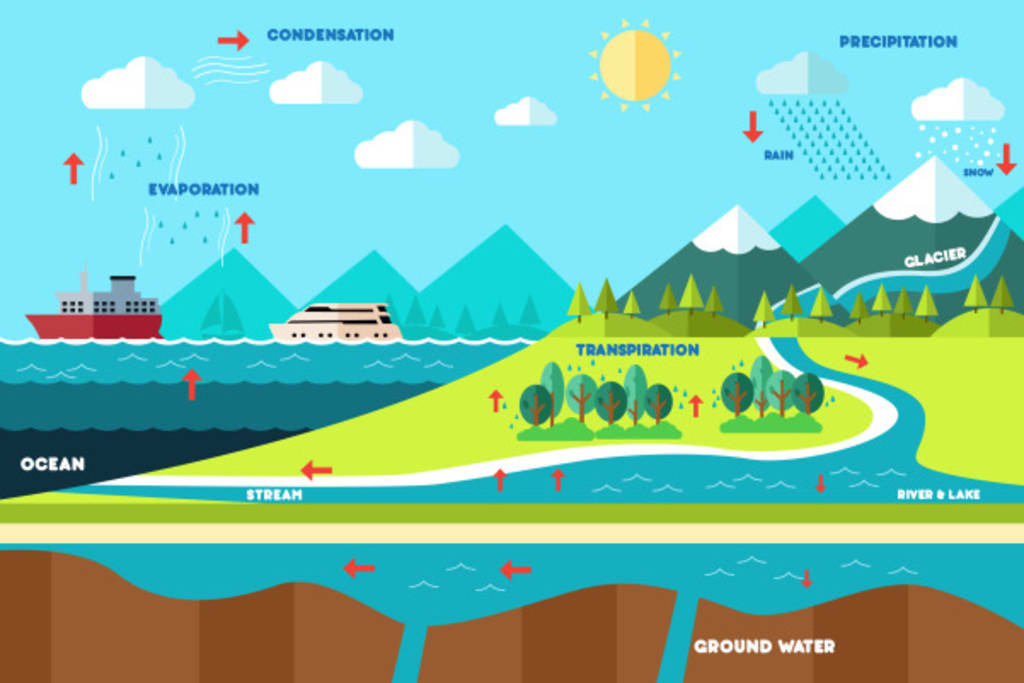
Hydrology, the study of water, is closely connected to the oceans, as they are the primary source of Earth's water cycle. The study of oceans and hydrology is vital to understanding how the Earth's water systems function, how we can sustainably manage water resources, and how human activities influence both natural processes.
The Water Cycle and the Role of Oceans
One of the most important processes in hydrology is the water cycle, which describes how water moves across the planet. This cycle involves various stages: evaporation, condensation, precipitation, and runoff. Oceans play a central role in this process, as they provide the bulk of water vapor that enters the atmosphere through evaporation. The Sun's heat causes the water on the surface of the oceans to evaporate into the atmosphere, where it cools and condenses to form clouds. These clouds eventually release water in the form of precipitation, such as rain or snow, which then flows back into rivers, lakes, and oceans, completing the cycle.
Oceans also act as a heat reservoir, absorbing and storing a significant portion of the solar energy that reaches Earth. The thermal energy stored in oceans influences weather patterns, atmospheric conditions, and even global climate systems. Warm ocean currents, like the Gulf Stream, transport heat from the equator toward the poles, while cold currents, like the Antarctic Circumpolar Current, have the opposite effect. This exchange of heat contributes to the regulation of Earth's climate and helps to moderate temperatures across different regions.
Ocean Circulation and Hydrology
The movement of water within the oceans is another essential aspect of ocean hydrology. Ocean circulation is driven by a combination of wind patterns, the Earth's rotation (Coriolis effect), and the varying temperatures and salinities of seawater. These factors create ocean currents, which are large-scale movements of water that circulate throughout the oceans. There are two main types of ocean currents: surface currents and deep-water currents.
Surface currents are primarily driven by wind patterns and influence coastal climates. For example, the warm waters of the Gulf Stream bring mild temperatures to northwestern Europe. These surface currents can also impact the distribution of nutrients and marine life in different oceanic regions. In contrast, deep-water currents, also known as thermohaline circulation, are driven by differences in water temperature and salinity. Cold, salty water sinks in polar regions and flows along the ocean floor toward the equator, where it is gradually replaced by warmer water from the surface. This "global conveyor belt" of ocean circulation helps to distribute heat and nutrients throughout the oceans.
These currents are crucial not only for regulating Earth's climate but also for supporting marine ecosystems. Nutrients from the ocean floor, such as plankton and other organic matter, are carried by currents to different parts of the ocean, providing food for marine life. Disruptions in ocean currents, due to climate change or other factors, can impact marine biodiversity and food security.
Ocean and Hydrological Interaction: The Impact of Climate Change
The interaction between oceans and hydrology is being increasingly affected by climate change. As global temperatures rise, oceans are absorbing more heat, leading to a rise in sea levels and a shift in ocean currents. Melting polar ice caps and glaciers contribute to sea-level rise, which can lead to coastal flooding and the loss of habitats for both humans and wildlife.
Increased ocean temperatures also have significant implications for the water cycle. Higher ocean temperatures result in increased evaporation rates, leading to more moisture in the atmosphere. This can intensify rainfall and extreme weather events, such as hurricanes and typhoons. On the other hand, droughts can become more severe in regions where the water cycle is disrupted, leading to decreased water availability and agricultural losses.
The acidification of oceans is another consequence of rising carbon dioxide (CO2) levels in the atmosphere. Oceans absorb approximately a quarter of the CO2 released into the atmosphere, leading to a decrease in the pH levels of seawater. This process, known as ocean acidification, can harm marine organisms, particularly those that rely on calcium carbonate to build their shells, such as corals, mollusks, and plankton. The disruption of marine ecosystems can have cascading effects on food chains and human industries, such as fishing and tourism.
The Future of Oceans and Hydrology
Given the critical importance of oceans in the hydrological cycle and global climate, understanding and protecting these systems is essential. Efforts to mitigate climate change, reduce greenhouse gas emissions, and protect marine ecosystems are key to maintaining the balance of Earth's water systems. Furthermore, research into ocean dynamics, such as ocean circulation, marine biodiversity, and the impacts of climate change, is crucial for developing sustainable strategies for managing water resources and preserving ocean health.
Sustainable practices, such as reducing pollution, conserving marine habitats, and supporting renewable energy sources like wind and solar power, can help reduce the strain on oceans and their ability to regulate Earth's hydrological systems. The future of both hydrology and oceanography depends on our ability to recognize the interconnectedness of these systems and take proactive steps to protect and preserve them for future generations.
In conclusion, oceans and hydrology are deeply interconnected, playing a crucial role in Earth's water cycle, climate regulation, and support for marine ecosystems. Understanding the science behind these systems is essential for ensuring the long-term sustainability of both water resources and ocean health. Through research, conservation, and global cooperation, we can work to protect and preserve these vital natural resources for the future.
About the Creator
Badhan Sen
Myself Badhan, I am a professional writer.I like to share some stories with my friends.
Keep reading
More stories from Badhan Sen and writers in Earth and other communities.
Climate change policies (Paris Agreement, COP)
Climate change has become one of the most pressing global issues, and addressing it requires cooperation among nations, governments, and organizations worldwide. One of the most significant international efforts to combat climate change is the Paris Agreement, which was established within the framework of the United Nations Framework Convention on Climate Change (UNFCCC). This agreement emerged from the Conference of the Parties (COP), which is held annually to assess progress and negotiate further steps in climate change mitigation. The Paris Agreement and COP represent the backbone of global efforts to limit the effects of climate change, promote sustainable development, and ensure a cleaner future for the planet.
By Badhan Senabout a year ago in Earth
Stories Before a Wedding, or The Happily Ever After of Cinderella
Cinderella had always dreamt of marrying a prince. She had dreamt of nothing else since she was a small girl. Now, however, as the Prince’s wife of three days, she had to admit that the reality was not as she had dreamt it to be.
By Dionearia Red4 days ago in Fiction



Comments (1)
Nice work.