
Not So Itsy Bitsy Spiders
Biggest spiders in the world

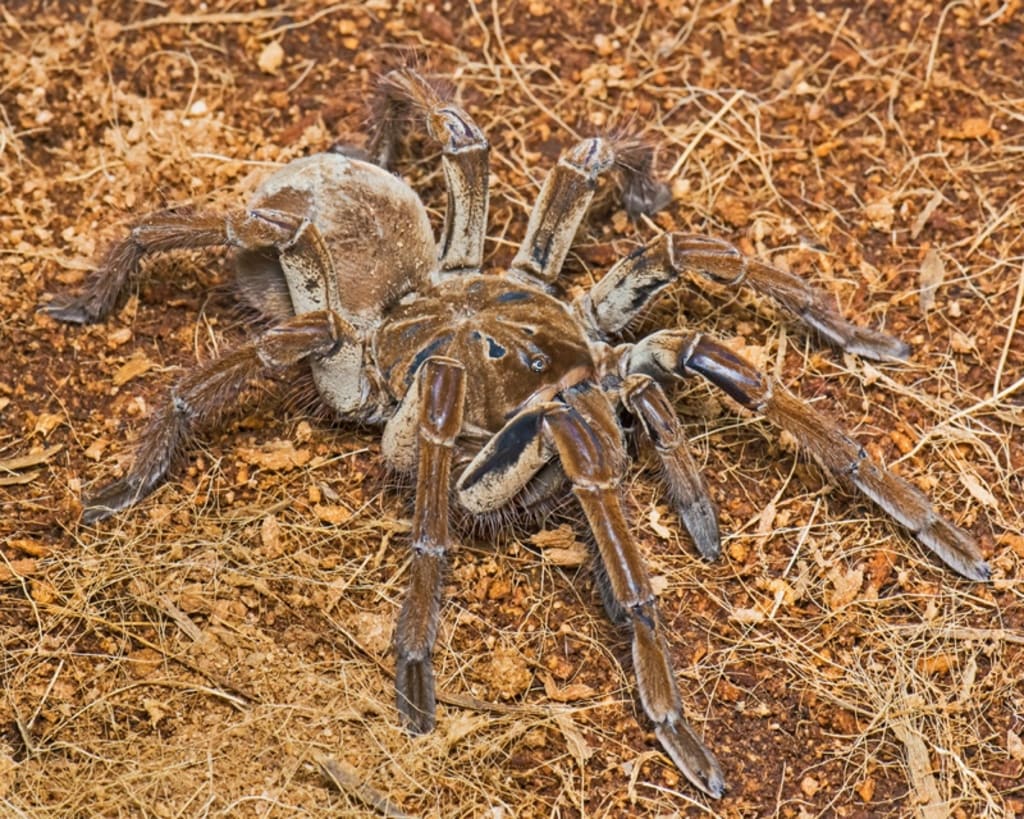
Many of these big spiders belong to the trantula family. They can eat small birds, lizards, frogs, and fish.
Even though giant spiders aren't aggressive they will bit to defen themselves or their egg sacs.
There are some exception but most of the large spiders are nonvenomous.
Male spiders have specialized appendages known as setae they use t0 produce sounds for defense and sexual communication. The largest spiders produce sound that are loud enough for humans to hear.
It is amazing to realize that in this world here are quadrillions of spiders. This includes almost 50,000 known species and perhaps 50,000 not yet discovered. Most people are glad to be faced with those spiders they can just smack and kill. Here are those that are not so easy to get rid of.
Brazilian Giant Tawny Red Tarantulas

These enormous spiders live in Argentina, Brazil, Paraguay, and Uruguay. They dine on mice and crickets. They use their venom mostly to get food but will bite if scared.
Brazilian Salmon-Pink Birdeaters
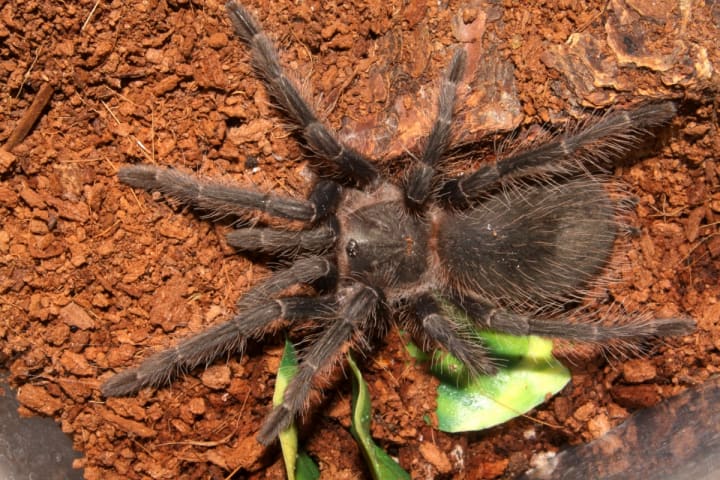
Brazilian salmon pink birdeaters are the third-largest spiders in the world. They live in the forests of Brazil. Male spiders have longer legs than femals. Even though they are considered docile they can provide a bite comparable to a cat.
Brazilian Wandering Spiders

These spiders come from South America. They are also known as banana spiders and look like tarantulas. They have earned the 2010 Guinness World Book of Records spot for the world's most venomous spiders and can kill a person within two hours.
They dine on mice, lizards, and large insects.
Camel Spiders

Camel spiders are camel-colored and live in the desert or scrublands of Australia. They are a cross between scorpions and true spiders. They use two gigantic fangs for biting and make creepy spider sounds. Even though they are nonvenomous they can run after someone at top speeds of around 10 miles an hour.
Chaco Golden-knee Tarantulas

These spiders come from Argentina or Paraguay. They enjoy inhabiting subtropical regions. They have black bodies with golden stripes around their legs and pink hairs on the body. They use their urticating hairs to defend themselves and to burrow underground.
Columbian Giant Tarantulas

Columbian giant tarantulas live in the tropical rainforests of Brazil and Colombia. They're known for their aggressive temperament. Threats to them can cause the spiders to spin, striking out with spiked rear legs.
They dine on mice, lizards, and large insects.
Giant Huntsman Spiders
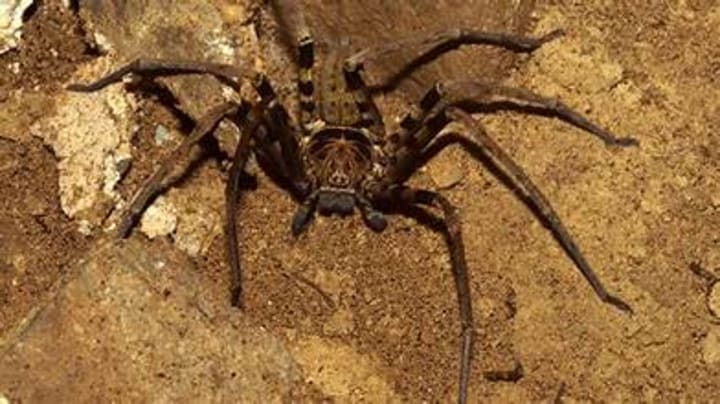
Giant Huntsman spiders have longer legs and a larger appearance than Goliath birdeaters. These spiders are only found in a cave in Laos however, related huntsman spiders live in all temperate regions of the planet.
They can be recognized by the twisted orientation of their legs giving them a crab-like walk. They deliver a venomous bite that can lead to hospitalization. Humans can hear them by the rhythmic ticking sound males make which resembles the sound of a quartz clock.
Giant Huntsman spiders eat many types of pests, such as cockroaches and even other spiders. They also eat worms, other arthropods, and larger animals like frogs.
Goliath Birdeaters (Pictured above)
Goliath birdeaters are the world's largest spiders by mass and weigh round 6.2 ounces. These are types of tarantulas and can bite delivering a venom comparable to a wasp sting. These spiders live in the burrows in the rainforests and swamps of northern South America.
These spiders dine on birds. There are people who catch them and cook them since they taste like shrimp.
Hercules Baboon Spiders

These spiders live in East Africa and deliver a strong venom. These are one of Africa's largest spider species.
About the Creator
Rasma Raisters
My passions are writing and creating poetry. I write for several sites online and have four themed blogs on Wordpress. Please follow me on Twitter.
Keep reading
More stories from Rasma Raisters and writers in Earth and other communities.
Step Into a Blooming Jungle
Banana Flowers Even though banana trees are mostly known for their edible fruit they also have lovely delicate flowers that bloom in spring or summer. These trees are native to parts of Asia and Australia. They produce large flower pikes of purplish-red bracts to protect the flowers.
By Rasma Raisters11 months ago in Earth
Half of World’s CO2 Emissions Come From Just 32 Fossil Fuel Firms, Study Shows
A groundbreaking new study has revealed that 32 fossil fuel companies are responsible for half of global carbon dioxide emissions since the industrial era began. The findings highlight the outsized influence of major oil, gas, and coal producers on climate change, and raise urgent questions about accountability, regulation, and the transition to cleaner energy.
By Aarif Lashari6 days ago in Earth
“Do Not Copy This Site’s Content”: Why Originality Matters More Than Ever in the Digital Age
“Do not copy this site’s content.” It’s a warning most internet users have seen countless times, often at the bottom of webpages or buried in terms and conditions. Many scroll past it without a second thought. But in today’s digital world, that simple sentence carries far more weight than people realize.
By Muhammad Hassan3 days ago in Earth




Comments (1)
Gee! I wonder how a spider gets to dine on birds and fish. Perhaps by crawling up a tree to a nest, but what about the fish? The spider they catch and eat because it tastes like shrimp it probably large and meaty. Yak. It was interesting to read about all these spiders!