
Not Just Instinct: Wild Birds Show Signs of True Friendship
Beyond instinct and flight, a hidden world of avian friendship takes wing
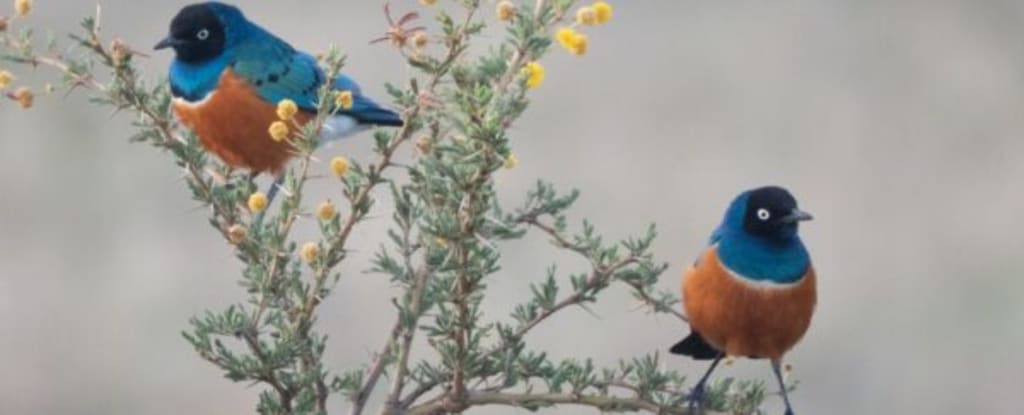
Scientists Discover Wild Birds Behaving Suspiciously Like Friends
For years, the idea of “friendship” was considered a uniquely human trait—something built on complex emotions, shared experiences, and mutual understanding. In some cases, scientists extended this idea to highly social mammals like dolphins, elephants, and primates. But birds? Most people think of them as either solitary or following instinct-driven flocks. However, recent scientific discoveries are beginning to change that view dramatically. New research shows that many species of wild birds may, in fact, behave in ways that strongly resemble human-like friendships—complete with trust, memory, cooperation, and emotional bonds.
The most surprising part? These behaviors are not only being seen in domesticated or captive birds, but also among wild species in their natural habitats. From ravens that form alliances, to parrots that console each other after conflict, scientists are now paying closer attention to the social lives of birds—and what they’re finding is reshaping how we think about animal intelligence and emotion.
Social Bonds in the Sky
In a landmark study published in recent years, researchers observed wild ravens forming strong, stable relationships over long periods of time. These birds were seen engaging in mutual grooming, sharing food, and defending one another during conflicts with outsiders. Some of these partnerships lasted for years and were not solely linked to mating or family ties.
Similarly, parrots have been shown to remember individual companions and seek them out, even after long separations. In some cases, when one bird was distressed, its companion would approach to comfort it—a behavior that many scientists interpret as a sign of emotional empathy.
Magpies, jays, and cockatoos are also showing up in these studies, with behaviors suggesting not just temporary alliances, but real, enduring social relationships. Researchers are cautious about using the word “friendship,” since it has human connotations, but the parallels are hard to ignore.
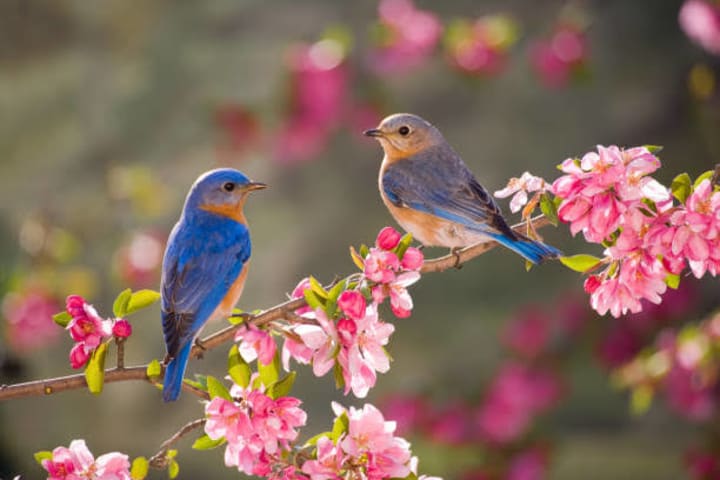
Intelligence and Emotion
Birds have long been underestimated when it comes to intelligence. For much of scientific history, their brains were thought to be too small and primitive to support complex thinking. But that myth has been steadily debunked. We now know that the avian brain is structured differently but is highly efficient—especially in corvids (crows, ravens, magpies) and parrots.
These birds have demonstrated abilities like problem-solving, planning for the future, using tools, and even understanding cause and effect. Now, with social behavior added to the list, scientists are beginning to accept that birds may have emotional lives that are much richer than previously imagined.
In one experiment, African grey parrots were given a choice: take a treat for themselves or share it with a friend. Many chose to share. Not only does this suggest empathy, but it also shows a sense of fairness—a trait once thought to be purely human.
Why Friendship in Birds Matters
This discovery is more than a quirky observation. It has serious implications for our understanding of the evolution of social behavior. If birds, who last shared a common ancestor with humans over 300 million years ago, can form friendships, then such behaviors may have evolved multiple times independently across different species. That suggests that social bonding offers significant evolutionary advantages.
Friendship-like bonds can help animals survive by providing support in conflicts, improving cooperation in raising young, and strengthening group stability. For birds, especially those living in complex environments or large social groups, these relationships may be key to navigating their world.
Rethinking Our Relationship with Nature
The idea that birds can form friendships challenges many of the assumptions humans have long made about our place in the natural world. It reminds us that intelligence and emotional complexity are not the exclusive domain of humans or mammals. Instead, they may be part of a broader, more interconnected picture of life on Earth—one where many species are capable of forming bonds, feeling emotions, and supporting one another.
As scientists continue to explore the social lives of animals, birds are becoming an exciting frontier. Each new discovery not only changes how we view them, but also how we think about friendship itself.
Are we really so different from the birds above us? Or have we simply not been paying close enough attention?
About the Creator
El Niño is likely to return in 2026. Here's what that means for Houston and Texas.
La Niña has been active since mid-October. However, according to the January update from the National Oceanic and Atmospheric Administration, it’s likely to end over the next couple of months, and a transition to El Niño is likely to occur later this year.
By Dena Falken Esq5 days ago in Earth
Trump’s Greenland Threats Push Europe Toward Divorcing America
When you think of Greenland, the first things that probably come to mind are icebergs, polar bears, and maybe some adventurous explorers. But lately, Greenland has become the center of a major diplomatic drama — one that’s forcing Europe to question its long-standing relationship with the United States. And the spark? Donald Trump’s threats over Greenland. The Controversy: Trump’s Unusual Move Back in January 2026, Trump shocked the world again, not with an election campaign but with a bold — and many would say bizarre — plan to acquire Greenland. But he didn’t stop at just “expressing interest.” He threatened eight European nations with tariffs — starting at 10% and potentially climbing to 25% — unless Denmark agreed to sell Greenland to the U.S. Yes, you read that right: tariffs on allies to buy a remote Arctic island. For Europe, this was more than shocking — it felt like a betrayal from a partner they’ve relied on for decades. Europe’s Response: Outrage and Solidarity European leaders didn’t hold back. Germany, France, Norway, the UK, and others banded together to condemn Trump’s approach. The message was clear: Europe won’t be blackmailed. Even usually cautious leaders spoke up. Norway’s Prime Minister bluntly said, “Threats have no place among allies.” Meanwhile, European Commission President Ursula von der Leyen emphasized that tariffs between allies “have no place” and could undermine decades of cooperation. This isn’t just a political disagreement. Europe sees this as a test of trust, sovereignty, and alliance reliability. Why Greenland Matters At first glance, Greenland might seem like just a frozen island. But strategically, it’s a big deal: Location: Greenland sits between North America and Europe, controlling key air and sea routes. Military Importance: It hosts radar and U.S. military infrastructure critical to early-warning systems. Resources: Beneath the ice lie minerals and rare earth elements that the world desperately needs. For Europe, Greenland is also about principle. The island belongs to Denmark and the Greenlandic people, not Washington. Europe’s support for Denmark shows a broader commitment to respecting sovereignty — a principle that Trump’s threats directly challenged. The Bigger Picture: A Crisis of Trust Greenland may just be the tip of the iceberg. For years, European nations have felt frustrated by U.S. policies that seemed unpredictable — whether it’s climate agreements, trade deals, or security commitments. Trump’s Greenland threats amplified these frustrations. Suddenly, Europe is questioning something fundamental: Can the U.S. be trusted as a long-term partner? Some European leaders have even started talking about a kind of “divorce” from the U.S. — not literally leaving NATO, but rethinking how dependent they should be on America for security and strategic decisions. Europe’s Path Toward Strategic Independence This Greenland drama is accelerating discussions about European strategic autonomy. Basically, Europe is asking: Should we be able to protect our own interests without always relying on the U.S.? The EU has long talked about building stronger defense capabilities and investing more in its own military, but progress has been slow. Greenland might just be the wake-up call that finally pushes Europe to act. What’s Next? So, what happens from here? Europe isn’t just going to sit quietly. Leaders are looking at: Economic counter-measures like tariffs on U.S. goods Strengthening European defense and security collaboration Reasserting Europe’s role on the global stage, with less reliance on Washington Even if Europe doesn’t fully “divorce” America, Greenland is changing the terms of the transatlantic partnership. Europe will now demand more respect, clearer rules, and recognition of its sovereignty — and they’re not afraid to make that clear. Why This Matters to All of Us You might wonder why this matters if you’re not in Europe or the U.S. Greenland may seem remote, but this story is about alliances, trust, and how global power is shifting. The way Europe responds could reshape the world order, affect trade, military cooperation, and even the global economy. And for anyone following U.S.-European relations, it’s a reminder that sometimes the smallest places — even a frozen island — can have huge global consequences. Bottom line: Trump’s Greenland threats aren’t just a bizarre footnote in history. They’re a wake-up call for Europe, forcing the continent to rethink its ties with America and consider a future where it can act independently — strategically, economically, and politically. Greenland, icy as it is, might just melt the old rules of alliance forever.
By Muhammad Hassanabout 12 hours ago in Earth
Center Stage with Paul Stewart
*** I'm keen to republish the interviews I did for my series with Vocal creators. It's been a few years and I thought it might be nice to revisit these wonderful conversations. I'll be releasing them one at a time for a few weeks/months.
By Heather Hubler4 days ago in Interview



Comments
There are no comments for this story
Be the first to respond and start the conversation.