
Not India, This Is the USA”: Viral Clothesline Video Sparks Unexpected Culture Clash
A backyard clothes-drying moment goes viral, exposing deep divides over culture, sustainability, and the meaning of “fitting in” in suburban America.

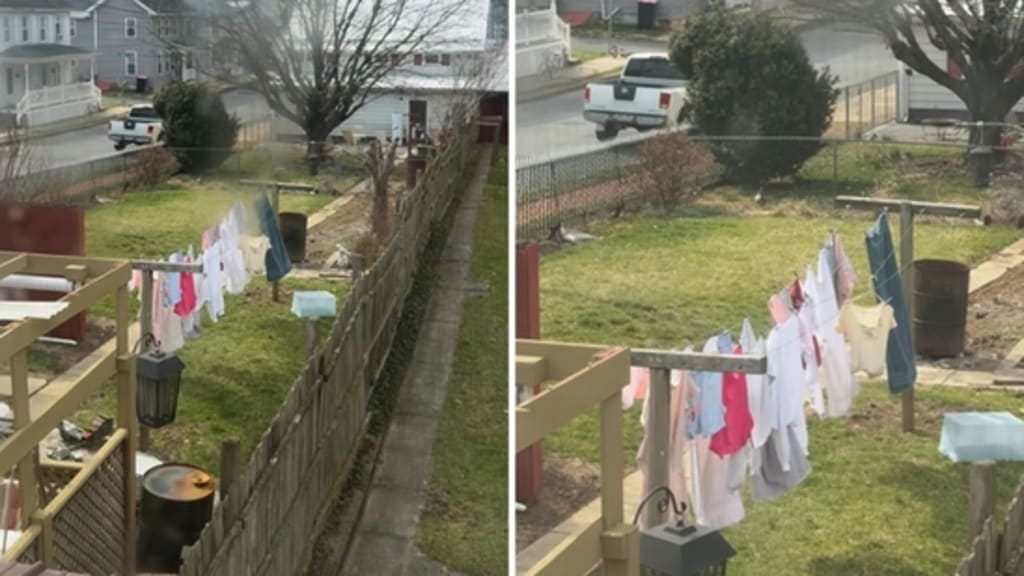
‘Not India, this is USA’: Viral Video of Clothes Drying in Backyard Triggers Heated Discussion, Backlash
In the age of social media, even the most mundane aspects of daily life can spark viral debates — and the latest example is a video that has divided the internet over something as simple as drying clothes in the backyard.
A short clip posted on TikTok and later circulated widely on platforms like X (formerly Twitter) and Instagram shows a South Asian immigrant woman hanging freshly washed clothes on a clothesline in the backyard of a suburban American home. What might seem like a harmless, eco-friendly activity quickly turned into a heated cultural debate when a bystander in the video can be heard saying, “Not India, this is the USA. You don’t do that here.”
The video, captioned “Welcome to the neighborhood,” was apparently recorded without the subject’s consent, and quickly amassed millions of views and thousands of comments, many of them sharply divided. While some users echoed the sentiment of the voice in the video, calling the act “tacky,” “unsightly,” or “against neighborhood aesthetics,” others came to the woman’s defense, celebrating her choice as both environmentally conscious and culturally grounded.
The Cultural Divide
Air-drying clothes is a common practice in many countries, particularly in South Asia, where people rely on sunlight and wind to dry laundry. It's not only economical but also reduces carbon footprint. In contrast, many American suburbs, particularly those governed by strict Homeowners Associations (HOAs), discourage or even ban outdoor clotheslines, citing neighborhood aesthetics and property value concerns.
“It’s amazing how something as natural as drying clothes in the sun becomes a problem only when a person of color does it,” said one commenter. “If a white hippie did it, people would call it eco-friendly and bohemian.”
Many users pointed out that the backlash reveals a deeper issue of cultural intolerance and subtle xenophobia. “This isn’t just about clotheslines. It’s about immigrants being constantly told to assimilate and abandon their cultural practices, no matter how harmless,” tweeted one user.
The Environmental Angle
Environmental activists and advocates also weighed in on the controversy. “Air drying clothes is one of the simplest and most effective ways to save energy,” said an environmental blogger in a viral thread. “Dryers are one of the most energy-intensive appliances in a household. Encouraging people to line dry their laundry should be seen as a win for sustainability.”
Indeed, the U.S. Department of Energy has long recommended line-drying clothes as an energy-saving measure. However, cultural norms and housing regulations in many suburban neighborhoods continue to favor convenience and uniformity over sustainable practices.
Legal and Social Implications
This incident has reignited discussions about the so-called “Right to Dry” movement, which advocates for legislation to protect the ability of individuals to dry clothes outdoors without interference from HOAs or local ordinances. Currently, only about 19 states in the U.S. have laws that protect this right in some form.
“The idea that people can be fined or harassed for trying to save energy and money is absurd,” said Sara B., an attorney and clean energy advocate. “This is more than a cultural issue — it’s a legal and environmental one too.”
Backlash to the Backlash
Interestingly, the person who recorded and posted the video has also faced significant criticism, with many accusing them of racism, harassment, and privacy violations. “It’s ironic that the video intended to shame someone else has completely backfired,” wrote one user. “You recorded a stranger in her own backyard and mocked her for something totally benign. You’re the one in the wrong.”
Some users have even called for the person to be reported to authorities or their HOA for violating privacy and community guidelines.
A Larger Conversation
Ultimately, the video has become a flashpoint for larger conversations around immigration, assimilation, environmentalism, and community standards. For many immigrants, practices like air-drying clothes are not just about tradition — they’re practical, sustainable, and deeply ingrained in everyday life.
“This is not about trying to make America like India,” said one user in a widely liked comment. “It’s about bringing the best of our habits with us and respecting the land we live in — something line-drying clothes actually does.”
As the debate continues to swirl online, it’s clear that what started as a seemingly minor neighborhood complaint has grown into a broader cultural reckoning. In a world grappling with climate change, rising costs, and increasing diversity, perhaps it’s time to rethink what’s truly inappropriate — and what’s just different.
About the Creator
Sultan Khan
best story in worlds
Keep reading
More stories from Sultan Khan and writers in Earth and other communities.
Facebook Vaudeville: Loosely Based on a True Story
Act I: The Digital Stage is Set Once upon a time—not too long ago, in the curious era between "poke" wars and the birth of the metaverse—a social media empire named Facebook ruled over the digital lands. It was once a place of reunion, where long-lost classmates reconnected and moms proudly posted blurry photos of spaghetti dinners.
By Sultan Khan10 months ago in Motivation
Severe Geomagnetic Storm Could Bring Northern Lights Across Much of the U.S.
On Monday evening, skywatchers from the Pacific Northwest to the Midwest got ready for something out of the ordinary: a celestial display that typically occurs at high northern latitudes. Americans who provide forecasts as a powerful cloud of charged particles from the sun accelerates toward the Earth's magnetic field, the National Oceanic and Atmospheric Administration (NOAA) has issued a "G4 (Severe) geomagnetic storm watch."
By Raviha Imranabout 2 hours ago in Earth
Greenland News
Greenland News Greenland has increasingly drawn global attention in recent years due to its political developments, environmental changes, and growing strategic importance. As the world looks more closely at the Arctic region, news from Greenland reflects a unique mix of local priorities and international interest. From climate-related challenges to economic opportunities and governance issues, Greenland continues to shape its own path while remaining closely connected to global affairs.
By America today a day ago in Earth


Comments
There are no comments for this story
Be the first to respond and start the conversation.