
North Korea’s Space Ambitions: A Quest for Cosmic Prestige
From Satellite Launches to Galactic Dreams, Exploring the DPRK’s Stellar Aspirations

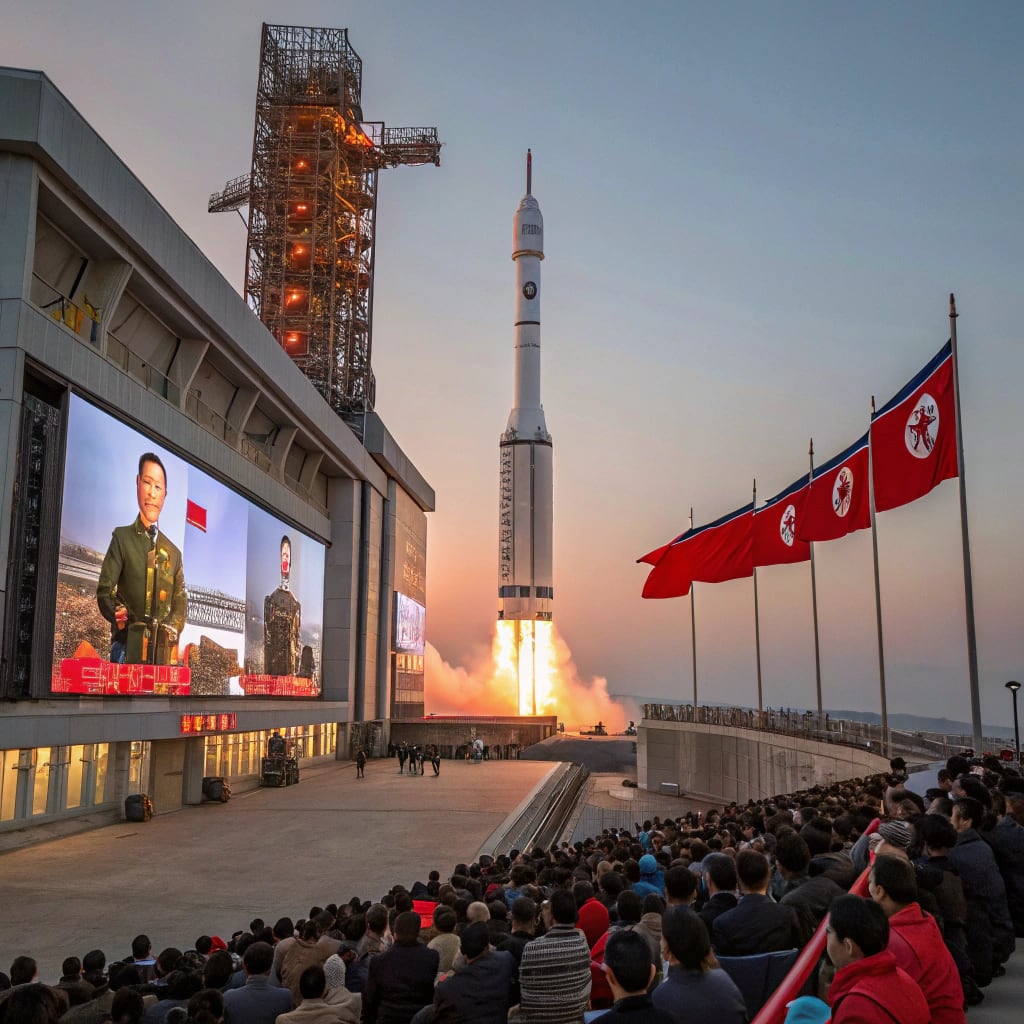
North Korea’s space program, though often overshadowed by its political isolation, is a bold testament to the nation’s pursuit of technological prowess and global recognition. Rooted in the Juche philosophy of self-reliance, the Democratic People’s Republic of Korea (DPRK) has invested heavily in space exploration to assert its sovereignty and scientific capability. Despite international sanctions and skepticism, North Korea’s space efforts, from satellite launches to ambitious rhetoric, reveal a complex interplay of science, propaganda, and national pride. This post examines five key aspects of North Korea’s space program, shedding light on its achievements, challenges, and aspirations. Journey into the DPRK’s cosmic endeavors, where science meets ideology in a quest for the stars.
1. Kwangmyongsong Satellites: Symbols of Self-Reliance
North Korea’s space program centers on its Kwangmyongsong (Bright Star) satellite series, launched to demonstrate technological independence. The first successful satellite, Kwangmyongsong-3 Unit 2, was placed into orbit in 2012 using the Unha-3 rocket, marking a milestone celebrated domestically as proof of Juche’s success. The 2016 launch of Kwangmyongsong-4 further showcased advancements, though Western analysts debated its functionality. State media claimed these satellites monitor weather and resources, but critics suspect dual-use technology tied to missile development. In 2025, North Korea announced plans for another satellite launch, emphasizing scientific progress. These efforts, despite technical limitations, symbolize the DPRK’s determination to join the global space race, captivating citizens with visions of cosmic achievement.
2. Sohae Satellite Launching Station: The Launchpad of Ambition
The Sohae Satellite Launching Station in Cholsan County is North Korea’s primary space facility, a high-tech complex built to support its rocket program. Established in the 1990s and upgraded in the 2010s, Sohae features a launch tower, control center, and tracking systems, rivaling modern spaceports. In 2025, state media highlighted renovations at Sohae, including new observation posts, signaling ongoing investment despite sanctions. The facility’s coastal location optimizes polar orbits, but its launches, like the 2023 Chollima-1 failure, have drawn international condemnation for violating UN resolutions. Sohae’s sleek design and strategic role underscore North Korea’s commitment to space as a stage for both science and propaganda, projecting strength to domestic and global audiences.
3. National Aerospace Development Administration (NADA): The Guiding Force
The National Aerospace Development Administration, established in 2013, oversees North Korea’s space program, embodying its scientific aspirations. NADA’s emblem, featuring a globe and stars, reflects ambitions to rival global space powers. The agency coordinates satellite design, rocket development, and international posturing, with 2025 reports noting its focus on “peaceful space exploration.” Despite claims of civilian goals, NADA’s work often overlaps with military missile programs, raising global tensions. The agency’s secretive operations and limited resources contrast with its bold rhetoric, such as plans for lunar missions by 2030. NADA’s efforts highlight North Korea’s blend of technical ambition and ideological drive, making it a key player in the nation’s cosmic narrative.
4. Space Propaganda: Inspiring National Pride
North Korea’s space program is a cornerstone of its propaganda, portraying the nation as a technological titan. State media, like the Korean Central News Agency, celebrates launches with grandiose claims, such as Kim Jong-un personally guiding satellite projects. In 2025, KCNA reported schoolchildren visiting space exhibitions in Pyongyang, fostering pride in “cosmic victories.” Postage stamps and murals depict rockets soaring into space, reinforcing the narrative of self-reliance. These campaigns counter economic struggles, rallying citizens around shared goals. By framing space exploration as a national triumph, the regime transforms technical feats into tools of unity and loyalty, captivating the populace with dreams of galactic glory.
5. International Implications: Tensions and Aspirations
North Korea’s space program is a geopolitical lightning rod, drawing both admiration and criticism. Its 2025 satellite launch plans, announced amid tensions with South Korea, were condemned by the U.S. and Japan as veiled missile tests, violating UN sanctions. Yet, North Korea’s space ties with Russia, including 2025 technical exchanges, signal growing alliances. The DPRK’s rhetoric of “peaceful exploration” contrasts with its military posturing, such as Kim Yo Jong’s 2025 rejection of South Korean dialogue. These dynamics highlight the program’s dual role: advancing science while asserting sovereignty. North Korea’s cosmic ambitions challenge global norms, sparking debates about security, innovation, and the ethics of space exploration in a divided world.
Conclusion: North Korea’s Cosmic Quest
North Korea’s space program, from Kwangmyongsong satellites to the Sohae launchpad, NADA’s leadership, propaganda campaigns, and international ripple effects, is a powerful blend of science, ideology, and ambition. Despite technical and economic hurdles, the DPRK’s pursuit of space reflects its relentless drive for self-reliance and global prestige. Recent 2025 developments, like planned launches and Russian partnerships, underscore its ongoing commitment. Exploring this program reveals a nation that uses the cosmos to assert its identity, blending innovation with control. Whether viewed as a provocative gamble or a bold dream, North Korea’s space endeavors are a compelling narrative of resilience, offering profound insights into a nation reaching for the stars amidst earthly challenges.
About the Creator
Arjun. S. Gaikwad
Truth Writing unveils reality beyond illusion, power, and propaganda words that awaken conscience and challenge comfort. Fearless, honest, and thought-provoking, it explores politics, humanity, and spirit to inspire awareness and change.
Keep reading
More stories from Arjun. S. Gaikwad and writers in Earth and other communities.
North Korea’s Hidden Treasures: Unveiling the Country’s Natural and Cultural Gems
North Korea, often shrouded in mystery, harbors a wealth of natural and cultural treasures that reflect its deep historical roots and unique identity. Despite its isolation, the Democratic People’s Republic of Korea (DPRK) boasts stunning landscapes, ancient relics, and revered sites that captivate the imagination. These treasures, preserved amidst strict state control, offer a glimpse into the nation’s heritage and its reverence for both nature and history. This post explores five remarkable aspects of North Korea’s hidden gems, showcasing their beauty, significance, and the stories they tell. Journey into the DPRK’s lesser-known wonders, where tradition and mystique create a powerful narrative.
By Arjun. S. Gaikwad6 months ago in Earth
Antibiotic resistance is released into rivers and other essential water supplies by melting glaciers.
Sea level rise and the disappearance of landscapes are not the only effects of glaciers melting quickly. Melt water may also contain buried genetic material that aids in bacterial resistance to drugs, scientists are now cautioning.
By Francis Dami5 days ago in Earth
Miss Persephone's Manual to a Seemingly Ordinary Life
Miss Persephone was found at the dining table, her blue eyes swollen, her tears arriving and retreating like the tides of the ocean. Earlier that day, her family had visited her in the retirement home where she had lived for eight years. It was her eightieth birthday.
By Imola Tóth3 days ago in Fiction




Comments
There are no comments for this story
Be the first to respond and start the conversation.