
'Normal Life Has Disappeared': Russia's Energy Offensive Plunges Ukraine into Dark and Bitter Cold
Introduction: Ukraine Faces an Energy Crisis
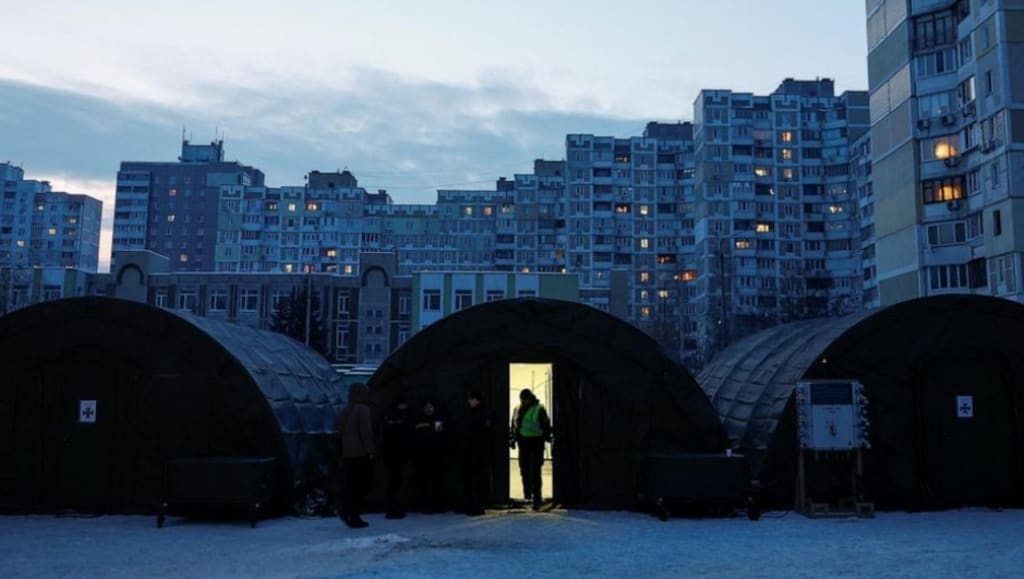
Ukraine is grappling with an unprecedented energy crisis as Russia’s ongoing offensive targets the country’s power infrastructure. Millions of Ukrainians are left in darkness during the bitter winter, with families struggling to stay warm and maintain basic daily routines.
Reports describe the situation as catastrophic, with citizens saying that “normal life has disappeared”. The combination of destroyed energy facilities and severe winter temperatures has plunged the nation into both literal and metaphorical darkness, leaving the population desperate for solutions.
1. The Scope of Russia's Energy Offensive
Since the start of the conflict, Russian forces have increasingly targeted Ukraine’s power plants, electricity grids, and heating systems. The strategy appears designed to:
Disrupt daily life and weaken civilian morale
Complicate humanitarian aid and public services
Force population displacement in affected areas
In multiple cities, electricity cuts are now routine, lasting hours or even days. Residents face freezing temperatures inside homes with little to no heating. In some regions, schools, hospitals, and essential services struggle to function, amplifying the humanitarian crisis.
2. Citizens Struggle with Darkness and Cold
Ukrainian families describe living in extreme conditions, often without electricity or adequate heating. Many rely on wood-burning stoves, candles, and makeshift heaters to survive.
One resident in Kharkiv said:
"It’s impossible to live like this. We go to bed early because there’s no light, and even cooking is a challenge. Normal life has completely disappeared."
For the elderly and those with health issues, the cold poses life-threatening risks. Hospitals report increased cases of hypothermia, and social services are under pressure to provide emergency support, though resources are limited.
3. Impact on Businesses and Public Services
The energy offensive has not only affected homes but also businesses and public infrastructure:
Factories struggle to maintain production, threatening jobs and the economy
Schools and universities face closures or move to online learning where possible
Hospitals and clinics operate under backup generators, with limited capacity
This disruption underscores the far-reaching consequences of targeting energy systems in modern society. Ukraine’s ability to maintain essential functions is increasingly strained, intensifying the humanitarian crisis.
4. Winter Intensifies the Humanitarian Crisis
Ukraine’s harsh winter conditions make the energy shortages even more deadly. Temperatures have plummeted to below-freezing levels in several regions, and homes without heating are cold and unsafe, especially for children and older adults.
Relief organizations report increased demand for:
Blankets and warm clothing
Temporary shelters and heated facilities
Emergency food and water supplies
The combination of war and winter conditions leaves many Ukrainians vulnerable and exposed, highlighting the urgent need for humanitarian intervention.
5. Government and International Response
The Ukrainian government has been working to restore energy services and maintain critical infrastructure despite ongoing attacks. Measures include:
Rotational power cuts to manage limited electricity supply
Emergency heating centers in major cities
Appeals to international organizations for humanitarian aid
Meanwhile, international organizations and neighboring countries have mobilized to provide support, including generators, warm clothing, and temporary shelters. The global community continues to call for the protection of civilians and critical infrastructure under international law.
6. Psychological and Social Impact
Beyond physical survival, the energy offensive has severe psychological effects on Ukrainians. Constant blackouts, cold conditions, and uncertainty create a climate of fear and stress, disrupting daily routines and social cohesion.
Many people report:
Difficulty maintaining work or study schedules
Increased anxiety and depression
A sense of helplessness in the face of prolonged energy cuts
Communities are coming together where possible, sharing warmth and resources, but the strain on mental health remains significant.
7. Long-Term Implications for Ukraine
Experts warn that the consequences of Russia’s energy strategy could have long-lasting effects:
Delays in economic recovery due to disrupted industries
Migration from heavily affected areas, exacerbating demographic challenges
Infrastructure damage that may take months or years to repair
Ukraine’s energy resilience and reconstruction will be crucial to rebuilding normal life in the post-conflict period. Investment in renewable energy and distributed power systems may become a key strategy to prevent future vulnerability.
Conclusion: Life in Darkness and Cold
The energy offensive has plunged Ukraine into a crisis where daily life as citizens knew it has disappeared. Families, businesses, and public institutions all face immense challenges as they navigate the cold and darkness.
While international aid and government efforts provide some relief, the situation underscores the devastating impact of targeting civilian infrastructure during conflict. For Ukrainians, the immediate focus remains on survival, warmth, and hope that the electricity and normalcy will return.
This crisis is a stark reminder of how essential energy is to modern life, and how its disruption can transform everyday existence into a struggle for survival.
About the Creator
The Invisible Grid Build-out
by Futoshi Tachino Why this is under-the-radar progress Everyone talks about how slow it is to build new transmission lines. Less noticed is how much capacity is being freed — right now — on the wires we already have. Three families of “grid-enhancing technologies” (GETs) are scaling fast: (1) advanced reconductoring with modern high-performance conductors that can double capacity within existing rights-of-way; (2) dynamic and ambient-adjusted line ratings (DLR/AAR) that raise safe operating limits based on real weather, not worst-case assumptions; and (3) power-flow control, topology optimization, and other software tools that route power away from bottlenecks to under-used lines. Together, these are connecting more renewables, cutting curtailment and congestion, and buying precious time while big new lines are planned and built [1–3,13–14].
By Futoshi Tachinoabout 17 hours ago in Earth
Europe Is About to Sign a Long-Awaited Free-Trade Deal With India
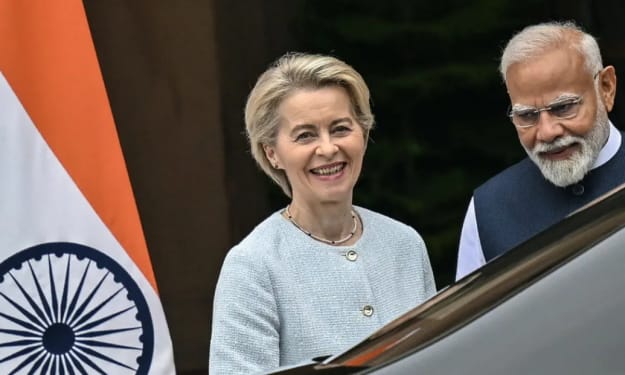
After years of negotiations, pauses, and political recalculations, Europe and India are finally on the brink of signing a long-awaited free-trade agreement. What once seemed like an overly ambitious diplomatic project is now becoming a reality—one that could redefine trade relations between two of the world’s most influential economic regions. This deal is not just about tariffs and exports. It’s about shifting global power, strengthening supply chains, and creating new opportunities for communities on both sides. Why This Deal Took So Long Talks between the European Union and India began well over a decade ago, but progress was slow. Differences over labor standards, environmental rules, market access, and intellectual property rights repeatedly stalled negotiations. Both sides had strong priorities—and neither wanted to compromise too much. However, the global landscape has changed dramatically in recent years. Supply chain disruptions, geopolitical tensions, and a growing desire to reduce over-reliance on single markets have pushed both Europe and India to rethink their strategies. Suddenly, cooperation feels less optional and more necessary. What the Agreement Is Expected to Cover At its core, the free-trade deal aims to reduce tariffs, ease regulations, and open markets between Europe and India. European companies are seeking better access to India’s vast consumer market, while India wants smoother entry into European industries such as technology, pharmaceuticals, and manufacturing. The agreement is also expected to include provisions related to: Digital trade Sustainable development Labor rights Investment protection These elements reflect modern trade priorities, where economic growth is increasingly linked with social and environmental responsibility. Why Europe Needs India Right Now For Europe, the deal is part of a broader strategy to diversify trade relationships. Recent global events have highlighted the risks of economic dependency. India, with its rapidly growing economy and young workforce, represents both stability and potential. European policymakers see India as a long-term partner capable of balancing global trade dynamics. Strengthening ties with India could also help Europe remain competitive in a world where economic influence is constantly shifting. Why India Is Saying Yes India, too, stands to gain significantly. A free-trade agreement with Europe could boost exports, attract investment, and accelerate economic modernization. It also positions India as a major global player willing to engage on equal terms with powerful blocs. For Indian businesses—especially small and medium enterprises—easier access to European markets could mean growth, innovation, and international exposure. For workers, it could translate into job creation and skills development. Impact on Everyday Communities While trade deals often sound abstract, their effects are deeply local. Lower tariffs can reduce prices for consumers. New investments can revitalize industries and create employment. Improved cooperation can strengthen educational, cultural, and technological exchanges. Communities in Europe may see new products, partnerships, and opportunities tied to Indian innovation. Indian communities, meanwhile, could benefit from European expertise in sustainability, infrastructure, and advanced manufacturing. This is why the agreement matters beyond boardrooms and government offices—it touches real lives. Concerns and Criticism Still Exist Despite the optimism, critics on both sides have raised concerns. Some European groups worry about labor standards and environmental protections, while some Indian voices fear that local industries could struggle against European competition. These concerns highlight the importance of transparency and fair implementation. A successful agreement will require ongoing dialogue, monitoring, and cooperation to ensure that economic growth does not come at the expense of workers or the environment. A Strategic Signal to the World Beyond economics, the deal sends a strong political message. It signals that multilateral cooperation is still possible, even in an era of rising protectionism. Europe and India are showing that large, diverse democracies can find common ground through negotiation rather than confrontation. This partnership could also influence future global trade standards, especially in areas like digital regulation and sustainable development. What Happens Next Once signed, the agreement will still need formal approvals and phased implementation. Businesses, governments, and communities will need time to adapt. But the direction is clear: closer ties, deeper cooperation, and a shared economic future. For both Europe and India, this deal represents more than a trade pact—it’s a strategic investment in resilience and mutual growth. Final Thoughts The long-awaited free-trade deal between Europe and India marks a turning point in global economic relations. It reflects changing priorities, evolving partnerships, and a shared recognition that collaboration is essential in an uncertain world. As the agreement moves forward, its true success will be measured not just in trade volumes, but in how effectively it supports communities, protects values, and builds a more balanced global economy.
By Muhammad Hassan6 days ago in Earth


Comments
There are no comments for this story
Be the first to respond and start the conversation.