
Navigating the Complexity of Gender, Sexuality, and Evolution
Unveiling the Intricate Tapestry of Human Identity
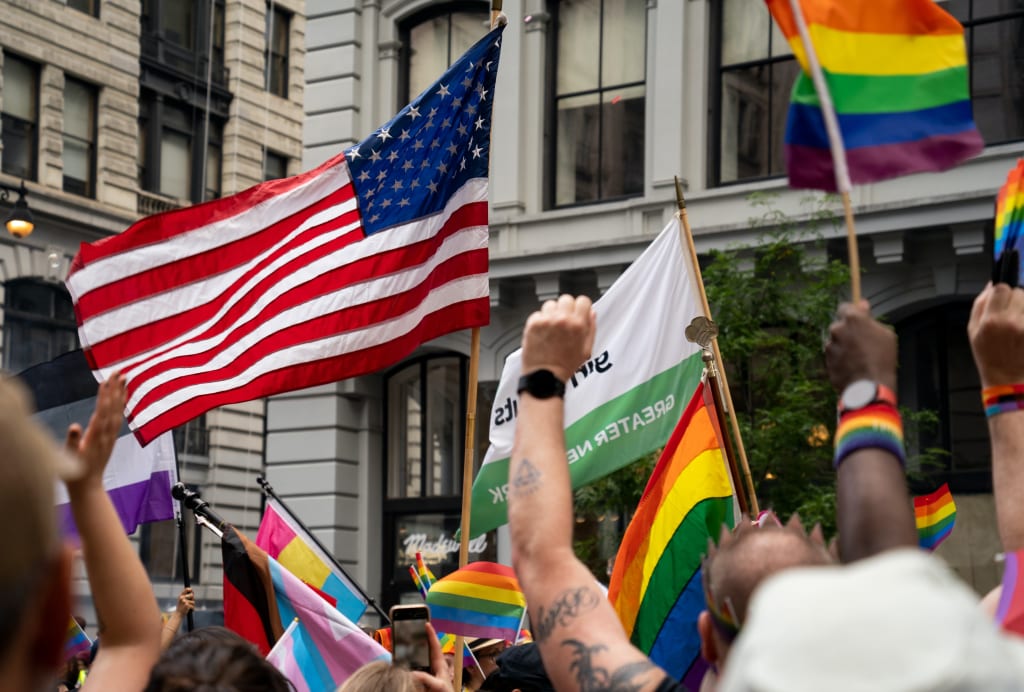
The exploration of gender and its intricate relationship with biology, culture, and sexuality is akin to navigating an intricate tapestry, woven with threads of complexity that resist simple explanations. Unlike controlled experiments where cultural influences can be isolated, understanding the nuanced interplay of gender requires a comprehensive examination of biological factors, cultural dynamics, and universal patterns that hint at an evolved foundation for certain gender norms.
At the heart of this inquiry is the challenge of unraveling the extent to which gender is socially constructed. The impracticality of conducting experiments that remove cultural influences leaves us in a perpetual quest for insights. However, amidst this uncertainty, a compelling narrative emerges—one that acknowledges the interweaving of biological sex, cultural intricacies, and universal patterns.
Across diverse cultures, gender roles exhibit remarkable variability, reflecting unique expectations and societal norms. Yet, beneath this diversity, there exists a fascinating interplay between culture and universality. Certain patterns, seemingly ingrained universally, may find their roots in the biological disparities between males and females. Take, for instance, the allocation of roles during significant meals. While cultural nuances dictate whether a man or woman serves the essential dish, there are universal patterns that persist, suggesting an evolved, sex-based foundation for certain gender norms.
The intricate dance between culture and universality extends to childhood play—a realm where gender differences manifest early on. Observations reveal that girls often engage in more social play and role-play, while boys lean towards competitive play, mimicking aggression and sporting activities. These patterns, while offering a glimpse into the gendered behaviors of children, do not imply a rigid adherence for every individual. The variations within these broad strokes underline the diversity inherent in human experiences.
As the exploration deepens, the connection between gender and sexuality emerges as an additional layer of complexity. Research suggests that boys destined to be gay often display more feminine interests in childhood. This dynamic challenges the conventional dichotomy between gender and sexuality, revealing an intricate relationship that shapes early behaviors and interests.
The evolutionary perspective introduces yet another layer of inquiry, posing questions about the advantages and persistence of certain traits. While evolution appears to favor heterosexuality due to its direct link to reproductive success, the existence of homosexuality across cultures raises intriguing questions. Could homosexuality be a natural variation contributing to the resilience of the species by introducing diversity?
Paul Vasey's studies in Samoa provide a captivating angle to this discourse. The acknowledgment of a specific percentage of boys growing up to be attracted to men results in a unique cultural category—the fa'afafine. Raised as girls but partnering with men, these individuals do not contribute to direct reproduction. However, they invest in their extended families, challenging the conventional narrative of evolutionary success tied solely to direct reproduction. This suggests that a family with a mix of sexual orientations enhances overall resource distribution and, consequently, reproductive fitness.
Moreover, the fraternal birth order effect adds a surprising element to the discourse. Some men who later identify as gay experience this inclination not through genetics but as a result of birth order. The mother's immune response to male hormones during successive pregnancies appears to influence the sexual orientation of later-born males. This discovery challenges preconceived notions, offering a glimpse into the complex interplay of biological factors contributing to sexual orientation.
While the scientific community has delved extensively into the origins of homosexuality, the mystery surrounding heterosexuality remains largely unexplored. The presumption that heterosexuality requires no explanation has perpetuated a gap in our understanding. Unveiling the mysteries of human sexuality, regardless of orientation, requires a holistic approach that acknowledges the intricate dance between biology, culture, and individual variations.
In conclusion, the quest to comprehend the multifaceted nature of gender, sexuality, and their evolutionary underpinnings is an ongoing journey. The tapestry of human identity is woven with threads of complexity that defy simplistic explanations. Navigating this intricate terrain requires an interdisciplinary approach that recognizes the interconnectedness of biology, culture, and individual experiences. As we continue to unravel the mysteries of human identity, the rich tapestry of diversity emerges as a testament to the complex and dynamic nature of the human experience.
About the Creator
Līva
World is interesting place. Scary, but worth living.
Nature is full of surprises and people are... well, people are something else.
Art is the best doctor.
Exploring the Amazing World Beneath the Waves
Beneath the surface of the world’s oceans lies a vast and mysterious universe that few humans have truly experienced. Often described as Earth’s “final frontier,” the underwater world is filled with stunning landscapes, colorful creatures, and ecosystems that are both fragile and vital to life on our planet. From shallow coral reefs to the dark depths of the ocean floor, this hidden realm continues to amaze scientists, explorers, and nature lovers alike.
By Irshad Abbasi about 13 hours ago in Earth




Comments
There are no comments for this story
Be the first to respond and start the conversation.