
Natural Disasters
Natural Disasters and Their Causes
Introduction
Natural disasters are catastrophic events that result from the Earth's complex and dynamic processes. These events can cause significant damage to the environment, infrastructure, and human lives. Understanding the causes of natural disasters is crucial for effective disaster management, prevention, and preparedness. This essay explores various types of natural disasters and delves into their underlying causes.
Types of Natural Disasters
Natural disasters encompass a range of events, each with its own distinct characteristics and impacts. Some of the most common types of natural disasters include earthquakes, tsunamis, hurricanes, tornadoes, floods, volcanic eruptions, and wildfires. While the effects of these disasters vary widely, their origins can often be traced back to the Earth's geological, meteorological, and climatic processes.
Earthquakes
Earthquakes are the result of sudden and violent movements of the Earth's crust along fault lines. The Earth's lithosphere, comprising tectonic plates, is in constant motion due to the heat generated from its interior. Stress builds up along fault lines until it's released in the form of seismic waves, causing the ground to shake. The magnitude of an earthquake is measured on the Richter scale. The impact of earthquakes can range from minor tremors to catastrophic events that cause widespread destruction.
Tsunami
Tsunamis are large ocean waves generated by underwater earthquakes, volcanic eruptions, or landslides. These waves can travel across entire ocean basins at high speeds, making them particularly devastating when they reach coastal areas. Tsunami result from the displacement of a large volume of water, creating a series of powerful waves that inundate coastal regions, causing extensive damage.
Hurricanes and Tornadoes
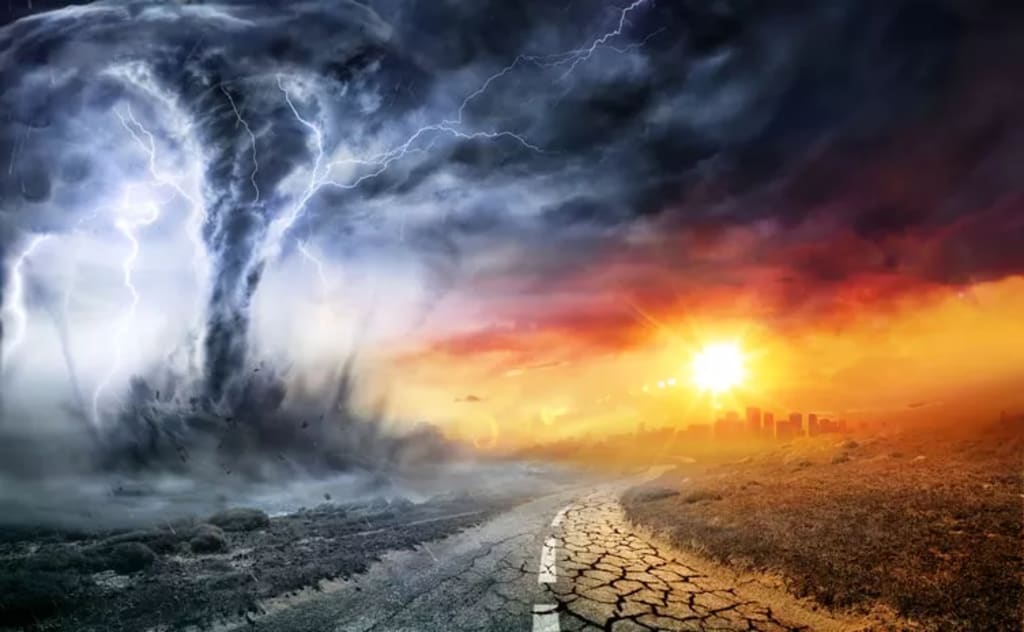
Hurricanes and tornadoes are powerful atmospheric phenomena, both originating from the interaction of warm and cold air masses. Hurricanes, also known as cyclones or typhoons, are large swirling storms that form over warm ocean waters. The Coriolis effect causes these storms to rotate, drawing energy from the warm ocean surface. Tornadoes, on the other hand, are violent windstorms that form from rotating thunderstorms. The convergence of different air masses creates a powerful updraft, resulting in the formation of a tornado.
Floods
Floods occur when water accumulates rapidly, exceeding the capacity of rivers, lakes, or drainage systems to contain it. Heavy rainfall, snowmelt, and the overflow of water bodies can all contribute to flooding. Urbanization and deforestation can exacerbate flooding by reducing the land's ability to absorb water. Flash floods, riverine floods, and coastal floods are some common types of flooding events, each with distinct causes and impacts.
Volcanic Eruptions
Volcanic eruptions result from the release of magma from beneath the Earth's surface. Magma, which is molten rock and gases, rises through the Earth's crust due to pressure and buoyancy. When the pressure becomes too great, it can lead to explosive volcanic eruptions. The type of eruption depends on the composition of the magma, with more viscous magma leading to more explosive events. Volcanic eruptions can cause ash clouds, lava flows, pyroclastic flows, and even trigger tsunamis.
Wildfires
Wildfires are uncontrolled fires that spread rapidly through vegetation, fueled by dry conditions, strong winds, and human activities. Lightning strikes, discarded cigarettes, and even power lines can ignite wildfires. Climate change and deforestation can exacerbate wildfire frequency and intensity by creating conditions conducive to fire spread. Wildfires can have significant ecological and economic impacts, destroying habitats, homes, and infrastructure.
Drought
Drought is a prolonged period of abnormally low precipitation, leading to water scarcity. It can devastate agriculture, ecosystems, and communities, causing crop failures, water shortages, and economic losses. Drought severity varies, ranging from meteorological (rainfall deficits) to hydrological (water supply depletion) and socio-economic impacts.
Conclusion
Natural disasters are a stark reminder of the Earth's powerful and intricate processes. While these events can be devastating, they also serve as a reminder of the need for effective disaster preparedness and management. By understanding the underlying causes of natural disasters, scientists and policymakers can develop strategies to mitigate their impacts and enhance the resilience of communities and ecosystems. From tectonic movements to atmospheric interactions, the causes of natural disasters are deeply rooted in the dynamic systems that shape our planet.
About the Creator
Keep reading
More stories from Manjushree Ramesh and writers in Earth and other communities.
Gardening for Beginners
Marigolds stand as beloved, low-maintenance annuals capable of infusing your garden with the radiant hues of sunlight. They also invite butterflies, bees, ladybugs, and other advantageous insects. Provide ample sunlight and well-draining soil to witness their blossoming journey spanning from late spring to autumn. With speedy germination within days and flowering in about 8 weeks, marigolds offer swift gratification, ideal for budding gardeners and youngsters. Moreover, marigolds prove excellent companions in vegetable gardens, safeguarding crops against predators and pests.
By Manjushree Ramesh2 years ago in Lifehack
Industries Hit Back at Decision to Extend Over Rs15bn to Rice Exporters
The Pakistani government’s recent decision to extend more than Rs15 billion in financial support to rice exporters has sparked a wave of criticism from domestic industries. While the move is intended to boost exports and strengthen the country’s foreign exchange reserves, local manufacturers argue that it favors exporters at the expense of other industrial sectors, raising questions about fairness, economic priorities, and long-term industrial policy. Industry representatives, economists, and policymakers are now debating the potential impact of this substantial financial package, highlighting the challenges of balancing export promotion with support for domestic production and job creation. Background: The Financial Extension The government’s support package includes: Cash incentives and subsidies for rice exporters Assistance for logistics, storage, and shipment costs Measures aimed at enhancing Pakistan’s competitiveness in international rice markets According to officials, the goal is to maintain export momentum in the face of rising global demand for Pakistani rice, especially basmati and long-grain varieties. The rice industry contributes significantly to the country’s economy, providing employment to millions of farmers, millers, and transport workers. However, critics argue that while rice exporters benefit, other industrial sectors are overlooked, leaving them to bear the burden of rising costs and limited support. Industrial Sector Response Local industry associations have expressed strong opposition to the extension, citing several concerns: Unequal treatment: Manufacturers in textiles, ceramics, and other sectors feel that their contributions to the economy are being undervalued. Resource allocation: The diversion of funds to rice exporters could strain public finances and reduce available support for broader industrial development. Inflationary pressures: Critics warn that focusing heavily on exports without balancing domestic production could drive up prices for local consumers, particularly for staple goods. A spokesperson for the Pakistan Industries Association stated: "While supporting exporters is important, allocating such a large sum exclusively to rice exporters sets a dangerous precedent. All industrial sectors contribute to Pakistan’s economy and deserve equitable support." Economic Arguments Economists note that export incentives can help strengthen foreign reserves, especially in a country facing balance-of-payment pressures. Support for rice exporters may lead to: Increased foreign currency inflows Growth in agricultural output and processing industries Enhanced competitiveness in global rice markets However, experts also caution that over-reliance on subsidies for a single sector may distort the industrial landscape. Diversified support policies could help boost overall manufacturing, create jobs, and stabilize domestic prices while still promoting exports. Regional and International Implications Pakistan is a major player in the global rice market, particularly in South Asia and the Middle East. By extending financial support, the government hopes to: Maintain market share against competitors like India, Thailand, and Vietnam Encourage investment in modern milling and processing technologies Strengthen trade relations with import-dependent countries Yet, domestic industries argue that this focus on exports might undermine long-term industrial development, especially if other manufacturing sectors face financial constraints. Balancing international competitiveness with local growth remains a key challenge. Public Perception and Political Debate The decision has also sparked public debate and media scrutiny. Citizens and commentators have questioned: Why rice exporters are receiving such significant financial support while other sectors struggle Whether this approach will benefit ordinary consumers, particularly in rural and urban areas dependent on domestic production The potential for political influence or lobbying shaping economic decisions Political parties and opposition figures have criticized the government for favoring certain industries, calling for more transparent and inclusive industrial policies. Possible Solutions and Recommendations Experts suggest several measures to balance export promotion with domestic industrial growth: Equitable support: Extend incentives to other industrial sectors based on contribution to employment and GDP. Conditional subsidies: Link export incentives to investment in technology, workforce development, and sustainable practices. Transparent allocation: Ensure public funds are distributed fairly across sectors to avoid favoritism and economic imbalance. Monitoring and evaluation: Regularly assess the impact of financial support on both exports and domestic markets. By adopting a holistic approach, the government can maintain export competitiveness while ensuring that industrial growth is inclusive and sustainable. Impact on Farmers and Rural Communities While industrialists express concern, the rice industry emphasizes the benefits for farmers and rural communities: Increased income for smallholder farmers Job creation in processing, storage, and logistics Support for rural development and agricultural investment Proponents argue that supporting rice exports indirectly boosts local economies in agricultural regions, highlighting the complex trade-offs policymakers face. Looking Ahead The debate over the Rs15 billion support package is likely to continue, as industrial sectors, policymakers, and civil society weigh the benefits and drawbacks of prioritizing rice exports. Key factors to watch include: Government response to industrial backlash Adjustments to export incentives or subsidy allocations Long-term impact on domestic manufacturing and consumer prices Balancing the needs of exporters, industrial manufacturers, and domestic consumers will remain a critical challenge for Pakistan’s economic planners in the coming months. Conclusion The extension of over Rs15 billion to rice exporters has highlighted tensions between export promotion and domestic industrial interests. While the policy aims to strengthen Pakistan’s position in the global rice market and support rural economies, domestic industries argue for more equitable treatment and transparent allocation of resources. As the debate unfolds, policymakers must navigate the delicate balance between encouraging exports, supporting local manufacturing, and safeguarding consumer interests, ensuring that Pakistan’s economic growth is both inclusive and sustainable.
By Muhammad Hassan4 days ago in Earth
NASA's Obsession with Gold and the Bling Nobody Shows Off
I've seen photos of rappers wearing gold chains so heavy they look like they could anchor boats. Sometimes as much as 400 grams of gold hanging from a single neck! Gold as status. Gold as style. Gold to be noticed.
By Marcus Briggsabout 16 hours ago in Earth
The Path to Salvation
The late autumn evening air filled the monk's lungs, but it wasn't the season that chilled his bones. The heavy-handed presence of evil he had sensed upon entering the woods surrounding this mountain village had not bothered to conceal itself from him.
By Made in DNA5 days ago in Fiction


Comments
There are no comments for this story
Be the first to respond and start the conversation.