
NASA Spent Billions to Bring Rocks Back from Mars. Trump Wants to Leave Them There
Trump’s 2026 budget proposal threatens to cancel NASA’s multi-billion-dollar Mars Sample Return mission, risking decades of scientific progress and global leadership in space exploration

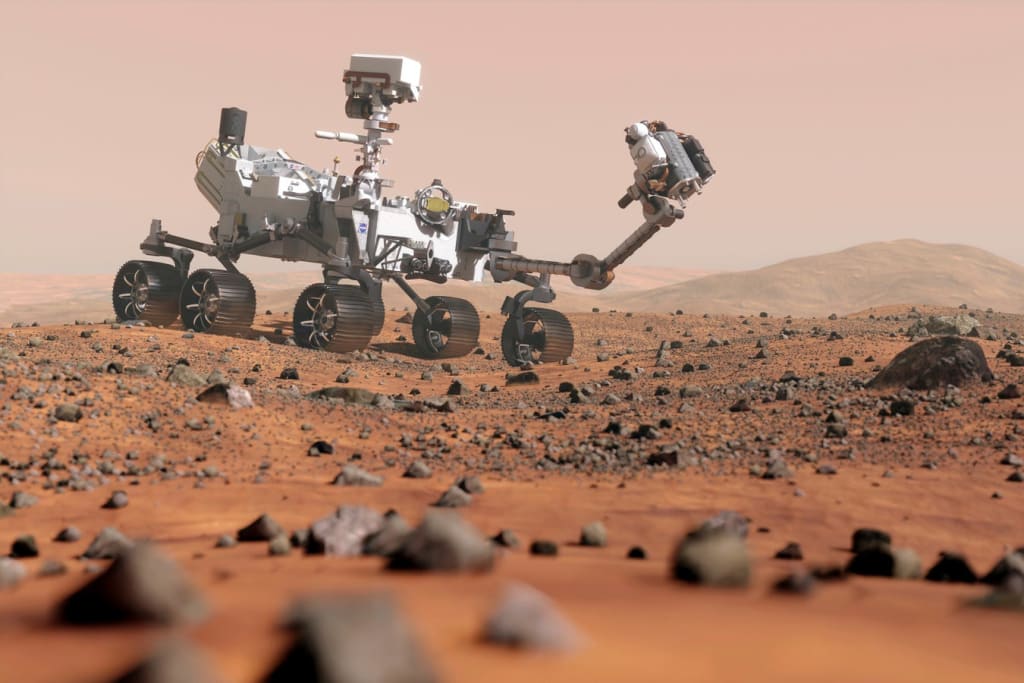
NASA Spent Billions to Bring Rocks Back from Mars. Trump Wants to Leave Them There
In a stunning shift of priorities, former President Donald Trump’s proposed 2026 budget suggests halting one of NASA’s most ambitious scientific missions—returning rock samples from Mars. Despite billions already invested in the Mars Sample Return (MSR) mission, Trump’s new space policy would cancel further development, leaving the carefully collected samples on the Red Planet indefinitely.
A Historic Scientific Endeavor
NASA’s Mars Sample Return mission has been decades in the making. Launched in 2021, the Perseverance rover has already collected multiple core samples from Jezero Crater, a site scientists believe once held a lake. These samples are stored in sealed titanium tubes, designed to preserve potential signs of ancient microbial life. The plan was to retrieve them via a joint effort between NASA and the European Space Agency (ESA) by launching a retrieval system in the 2030s.
The MSR mission involves complex operations: a lander with a rocket (Mars Ascent Vehicle) would collect the cached samples, blast them into Martian orbit, and then rendezvous with an orbiter to return them to Earth. Once here, the rocks would be analyzed in high-security labs, potentially revealing clues about the history of Mars and the possibility of life beyond Earth.
Ballooning Costs and Delays
What began as a $4–5 billion estimate has now ballooned into an $11 billion endeavor, with a projected return date of 2040 instead of the original target of 2033. A scathing internal review cited poor management, budget overruns, and unrealistic timelines, leading NASA to reevaluate the entire architecture of the mission.
Trump’s proposed budget uses these overruns as justification to terminate the mission. His 2026 spending plan slashes NASA’s overall budget by 24%, cutting it down to $18.8 billion. Human exploration initiatives—such as returning Americans to the Moon under the Artemis program—are being prioritized instead, alongside increased reliance on private space companies like SpaceX.
A Political and Scientific Backlash
The proposed cancellation has sparked outrage among scientists and bipartisan members of Congress. The Mars Sample Return mission is widely considered one of the most important planetary science efforts of the 21st century. Returning Martian material for study on Earth would enable more advanced analyses than could ever be done by rovers or landers, allowing scientists to investigate the planet’s geology, climate history, and potential habitability in unprecedented detail.
The U.S. Planetary Science Caucus issued a statement expressing deep concern, arguing that scrapping MSR undermines U.S. leadership in space exploration. Robert Zubrin, aerospace engineer and Mars Society president, called the move “devastating,” warning that it would “cripple the nation’s planetary science capabilities for a generation.”
International Implications
The Trump administration's withdrawal from MSR also has geopolitical consequences. China has announced its own Mars sample return mission, targeting a return by 2031. If the U.S. abandons its plans, China could become the first nation to successfully return Martian samples to Earth—a milestone with enormous scientific and symbolic value.
NASA has spent more than $1.5 billion on MSR so far. Backing out now would waste not only money but years of international cooperation and planning. The ESA has already developed components for the orbiter, and European scientists have heavily invested in the mission’s scientific goals.
NASA’s Alternatives and Future Options
NASA isn’t giving up entirely. In response to the budget threat, the agency is exploring scaled-down alternatives that could cut costs and accelerate the timeline. These proposals include using proven technologies and commercial partnerships to streamline the sample return process, potentially bringing it under $7 billion with a target return date in the 2030s.
Still, these revised plans would need funding commitments that the current Trump budget simply doesn’t support. NASA Administrator Bill Nelson has publicly opposed the cuts, vowing to work with Congress to secure continued support for the mission.
What’s Next?
Ultimately, the future of the Mars Sample Return mission rests with Congress. While the President can propose budgets, it is up to lawmakers to pass final appropriations. Given bipartisan support for planetary science and exploration, there’s still a chance MSR could be saved, perhaps in a modified or phased approach.
For now, the question remains: will humanity retrieve the rocks that might reveal life on Mars—or will political shifts strand them on the dusty surface of a distant world?
About the Creator
Adnan Rasheed
Author & Creator | Writing News , Science Fiction, and Worldwide Update| Digital Product Designer | Sharing life-changing strategies for success.
Keep reading
More stories from Adnan Rasheed and writers in Earth and other communities.
NASA’s Nighthawk: This Mars Helicopter Is Set to Find Proof of Life on Mars
NASA’s Nighthawk: This Mars Helicopter Is Set to Find Proof of Life on Mars NASA is preparing to revolutionize planetary exploration once again with its newest proposed Mars mission: the Nighthawk, an advanced Mars helicopter specifically designed to search for signs of life and investigate the planet’s most intriguing and inaccessible terrain.
By Adnan Rasheed9 months ago in Earth
Microbiota, microbiome or microflora: how to speak correctly and why it is for health.
You've probably heard the phrase, "We are what we eat." But modern science says more precisely: we are also those who live in us. Until 2016, it was believed that there are many times more bacteria in our body than our own cells. The latest calculations by mathematicians show that we divide the body with our microorganisms by about 50/50: about 30 trillion of our cells versus 38 trillion bacterial ones.
By Yaroslav Gorohov4 days ago in Earth
Chinese EVs Closing In on America After Canadian Tariffs Deal
The electric vehicle race is no longer just about climate goals or consumer choice — it has become a geopolitical contest. And in early 2026, a subtle but powerful move by Canada may have tilted the board. By agreeing to sharply reduce tariffs on Chinese electric vehicles, Canada has opened a door that the United States has worked hard to keep shut. While Chinese EVs are still largely barred from the American market, they are now edging closer than ever — not by crossing the border directly, but by entering through Canada. This development raises a pressing question: Are Chinese EVs closing in on America, and what does that mean for the future of North American auto markets? The Deal That Changed the Game Canada’s new agreement with China allows up to 49,000 Chinese-made electric vehicles per year to enter the Canadian market at a tariff rate of just over 6%, a dramatic drop from the previous 100% tariff that effectively blocked them. On paper, the quota seems small. In reality, it carries enormous symbolic and strategic weight. For years, both Canada and the United States aligned closely on keeping Chinese EVs out, citing concerns over unfair subsidies, national security, and the protection of domestic auto industries. This new deal marks a clear shift — and a divergence from U.S. policy. Canada didn’t make the decision in isolation. The EV tariff reduction was part of a broader trade reset with China, tied to agricultural exports such as canola and efforts to stabilize a strained economic relationship. Why Chinese EVs Matter So Much China is the undisputed leader of the global electric vehicle industry. Its manufacturers produce EVs at scale, often at prices Western automakers struggle to match. Brands like BYD, Nio, and Xpeng have already expanded aggressively into Europe, Southeast Asia, and parts of the Middle East. North America has remained one of the final fortified markets — until now. Chinese EVs are appealing not just because they’re cheaper, but because they’ve rapidly improved in quality, range, and technology. For consumers priced out of North American and European EV models, Chinese vehicles offer something rare: affordability without sacrificing features. Canada’s decision gives Chinese automakers their first legitimate foothold in North America — and footholds tend to grow. Why the U.S. Is Nervous The United States still enforces a 100% tariff on Chinese EV imports, making them effectively unsellable in the American market. But Canada’s move has triggered concern in Washington. U.S. officials argue that Chinese EVs entering Canada could indirectly pressure American markets, influence supply chains, and weaken Washington’s leverage in future trade negotiations. There’s also a political dimension. Both major U.S. parties have framed Chinese dominance in EVs as a strategic threat — not just to auto jobs, but to technological leadership. Modern EVs collect vast amounts of data, and lawmakers have raised concerns about cybersecurity and foreign data access. While Chinese EVs aren’t rolling onto American roads yet, their presence just across the border changes the conversation. Canada’s Risk — and Opportunity Inside Canada, the reaction has been mixed. Automotive hubs like Ontario worry that opening the market could undermine domestic manufacturing and strain relations with the U.S., Canada’s largest trading partner. Some leaders have called the deal “lopsided,” warning it could cost jobs if American retaliation follows. Others see opportunity. A more competitive EV market could lower prices for Canadian consumers and accelerate EV adoption. It may also attract Chinese investment into Canada itself — including factories, battery plants, and supply chain partnerships. If Chinese automakers choose to build in Canada rather than simply export to it, the country could position itself as a bridge between Chinese EV innovation and North American demand. That balancing act — between economic opportunity and political risk — defines Canada’s strategy. Are Chinese EVs Really ‘Closing In’ on America? For now, the answer is: not directly — but strategically, yes. Chinese EVs sold in Canada won’t automatically flood the U.S. market. Regulations, trade rules, and tariffs still stand in the way. But proximity matters. Supply chains overlap. Consumer awareness spreads. Manufacturing footprints expand. There’s also the possibility of a workaround: Chinese companies could eventually build EVs in North America to bypass tariffs altogether. This idea has already been floated — but it faces fierce resistance from U.S. lawmakers and unions. Still, history shows that once a global industry leader gains regional access, momentum often follows. What This Means for Consumers For Canadian buyers, the impact could be immediate: more choice and lower prices in an EV market that has long been criticized for being expensive and limited. For American consumers, the effect will be indirect — at least at first. But increased competition could eventually pressure U.S. automakers to reduce prices, improve features, and accelerate innovation. The larger question is whether North America wants competition or insulation — and how long insulation can realistically last in a globalized EV economy. The Bigger Picture: A Global EV Power Shift Canada’s tariff deal reflects a broader reality: China’s dominance in electric vehicles is reshaping global trade, whether governments like it or not. Europe is already grappling with an influx of Chinese EVs. Emerging markets are embracing them. And now, North America has its first real crack in the wall. This isn’t just about cars. It’s about who controls the future of clean transportation, supply chains, and industrial policy. Final Thoughts Chinese EVs aren’t driving down American highways yet — but after Canada’s tariff deal, they’re closer than ever. This move doesn’t spell immediate disruption, but it does signal a shift. One country has decided that economic pragmatism outweighs political alignment. And in doing so, Canada may have opened the door to a new phase of EV competition in North America. Whether that door swings wider — or slams shut — will depend on how the U.S., automakers, and consumers respond. One thing is certain: the EV race just entered a new chapter.
By Muhammad Hassan2 days ago in Earth




Comments
There are no comments for this story
Be the first to respond and start the conversation.