
NASA Finds "Skull Hill" Rock On Mars Believes It "Originated From Elsewhere"
Mysterious Rock Formation on Mars Resembles a Skull Sparks Scientific Debate Over Its Unusual Composition and Origins

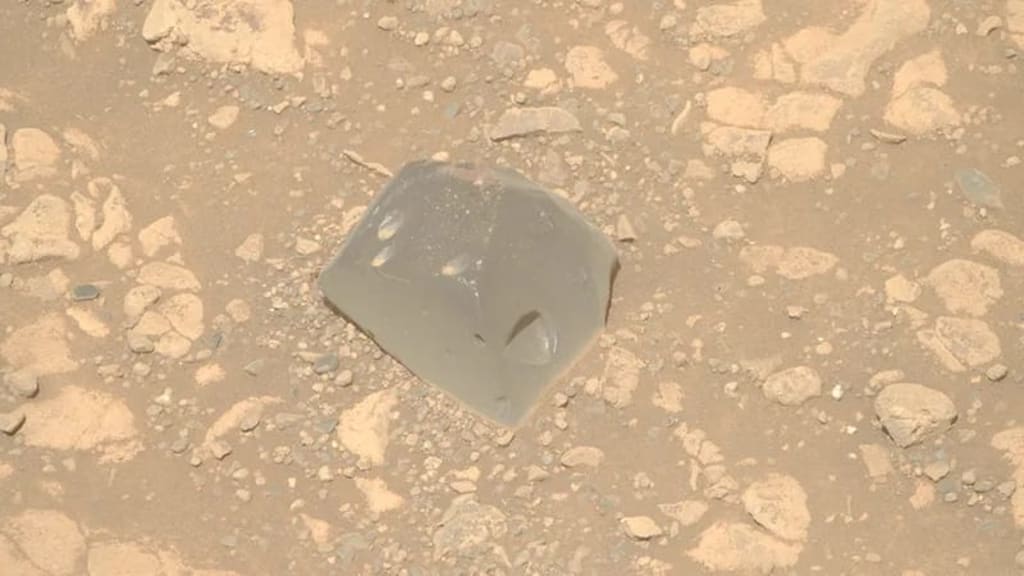
NASA Finds "Skull Hill" Rock On Mars Believes It "Originated From Elsewhere"
Mysterious Rock Formation on Mars Resembles a Skull Sparks Scientific Debate Over Its Unusual Composition and Origins
In a remarkable turn of events NASA’s Curiosity rover has made a discovery that has intrigued scientists around the world. The rover recently captured images of a strange rock formation on Mars that strongly resembles a human skull leading researchers to nickname it Skull Hill. What’s even more fascinating is that scientists believe the rock did not originate in the area where it was found suggesting a long and mysterious journey across the Martian surface.
The Discovery of Skull Hill
The discovery was made during Curiosity’s ongoing exploration of the lower regions of Mount Sharp a central peak within the massive Gale Crater. The bizarre skull-shaped rock formation was found in the Gediz Vallis region an area already known for unusual geology and past signs of water flow. Scientists were initially drawn to its unusual shape but what truly caught their attention was its composition and location. Upon closer analysis using Curiosity’s onboard instruments NASA scientists determined that the rock's materials didn’t match the surrounding terrain. This mismatch led them to conclude that the rock may have originated from a completely different region of the planet and was later transported to its current location by natural forces such as landslides flooding or even ancient Martian winds.
Anomalous Composition
What sets Skull Hill apart is its mineral content. Scientists detected an abundance of elemental sulfur inside the formation a rare find on Mars. Elemental sulfur is usually associated with volcanic activity or hydrothermal systems and its presence in the middle of Gediz Vallis is highly unexpected. The composition doesn’t match any of the known local formations adding weight to the theory that it traveled from a different geological region.Finding a field of stones made of pure sulfur is like discovering an oasis in the middle of a desert said Ashwin Vasavada Curiosity’s project scientist at NASA’s Jet Propulsion Laboratory. It shouldn’t be there so now we have to explain it.
How Did It Get There?
The prevailing theory is that Skull Hill may have been part of a larger rock formation from a distant Martian region dislodged during a catastrophic event such as a landslide or flash flood. Over time natural Martian processes could have transported it to Gediz Vallis. Evidence of ancient water flows and dry avalanches in the area supports this idea. Some of the rocks in the same region show rounded edges suggesting they were shaped by long distance travel through flowing water. Others have sharp angular edges hinting at sudden displacements from landslides or seismic activity. The varied terrain surrounding Skull Hill makes it a geological hotspot for scientists trying to decode Mars’ mysterious history.
Implications for Martian History
The discovery of Skull Hill contributes to a growing body of evidence that Mars was once a dynamic planet with active geological processes. The presence of sulfur also raises questions about the planet’s ability to support life at least in its ancient past. On Earth sulfur is often linked to microbial life in extreme environments such as deep sea vents. While there’s no direct evidence of life on Mars yet discoveries like this make the planet an even more compelling target for future exploration. The presence of sulfur rich rocks hints at the possibility of past hydrothermal activity which is one of the environments where life is known to thrive on Earth. Curiosity’s mission is far from over. The rover continues to climb Mount Sharp analyzing sedimentary layers that act like a timeline of Martian history. Each new discovery adds another piece to the puzzle of Mars’ past and NASA scientists hope that future samples will offer even more clues about the planet's evolution and whether it ever supported life.
In the case of Skull Hill further analysis is already underway. NASA plans to use additional instruments and imaging technologies to learn more about its internal structure and exact origin. Understanding how it got to its current location will not only reveal more about Mars’ geological history but may also inform future missions including potential human exploration. The Skull Hill discovery is a reminder of how much we still have to learn about Mars. What started as a curious rock that looked like a skull has evolved into a scientific mystery offering a glimpse into a planet that may be more complex and active than previously imagined.
Whether it was formed in a violent eruption carried by ancient rivers or shaped by Martian winds over millions of years one thing is certain Skull Hill is now part of the unfolding story of Mars and NASA’s journey to understand it has only just begun.
About the Creator
Adnan Rasheed
Author & Creator | Writing News , Science Fiction, and Worldwide Update| Digital Product Designer | Sharing life-changing strategies for success.
Keep reading
More stories from Adnan Rasheed and writers in Earth and other communities.
Did Earth Swallow Another Planet? The Shocking Truth Behind Theia and the Moon's Origin
Did Earth Swallow Another Planet? The Shocking Truth Behind Theia and the Moon's Origin 4.5 billion years ago Earth collided with a mysterious planet an impact that created the Moon and left traces of the lost world deep within our planet. Discover the fate of Theia!
By Adnan Rasheed11 months ago in Earth
Heavy Snow Warning: When Winter Turns Dangerous Overnight
A quiet winter evening can quickly turn into something far more serious. The sky grows darker, the wind sharpens, and snow begins falling faster than anyone expected. What starts as a peaceful snowfall can suddenly lead to closed roads, power outages, and difficult travel conditions. This is when a heavy snow warning becomes more than just a weather alert. It becomes a signal that daily life may soon slow down or even stop. For many communities, these warnings bring both beauty and concern. Snow can cover the world in silence, but it can also create dangerous conditions if people are not prepared. Understanding what a heavy snow warning means and how it affects daily life can help individuals and families stay safe when winter becomes unpredictable.
By Muqadas khan6 days ago in Earth
Why Didn't Anyone Tell Us
Men, move along. This is not for you. This is for the women. I was forty-five when I began menopause. It is pretty young for that to be going on in a woman’s life, but I had undiagnosed PCOS, my entire life. Thank you to all the gynecologists I had seen my entire life. That in itself should encourage women to keep seeking second opinions, especially when you are not getting correct answers or any at all.
By Alexandra Grant5 days ago in Humans



Comments
There are no comments for this story
Be the first to respond and start the conversation.