
NASA Analysis Shows Unexpected Amount of Sea Level Rise in 2024
Sea level Rise in 2024

NASA Analysis Shows Unexpected Amount of Sea Level Rise in 2024
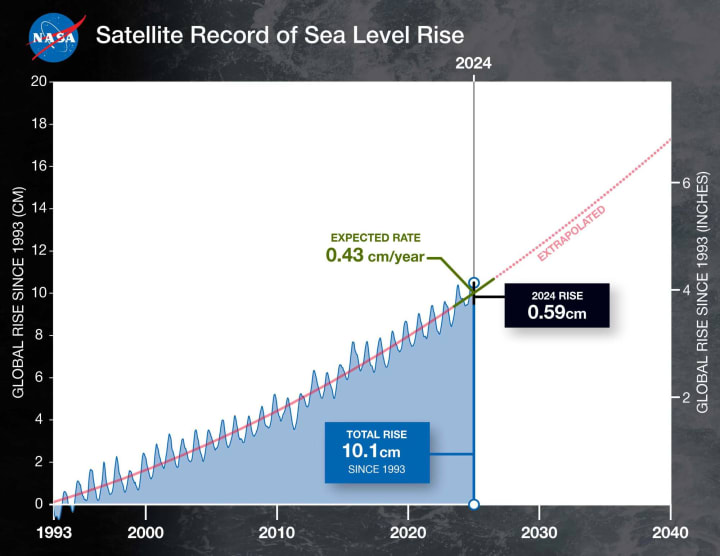
The alarming acceleration of sea level rise in 2024 has sparked concerns among scientists and policymakers alike. A recent NASA led analysis has revealed that global sea levels rose by 0.23 inches (0.59 centimeters) last year significantly higher than the expected 0.17 inches (0.43 centimeters) per year. This unexpected increase was primarily due to a combination of factors including an unusual amount of ocean warming and the influx of meltwater from land based ice such as glaciers. Josh Willis a sea level researcher at NASA’s Jet Propulsion Laboratory emphasized the significance of these findings. He noted that while variations in sea level rise occur from year to year the overall trend is unmistakable the ocean is rising and the pace of this rise is accelerating. This trend is a stark reminder of the growing impact of climate change on our planet. One of the primary contributors to the recent spike in sea levels is thermal expansion. As ocean temperatures increase water expands taking up more space and pushing sea levels higher. This phenomenon is well understood and has been a major driver of rising oceans in recent decades. However the degree of warming in 2024 was unexpectedly high leading to a greater than anticipated expansion of seawater. Scientists believe that a combination of natural climate variability and human induced global warming played a role in this anomaly.
Another critical factor in the 2024 sea level rise was the melting of land based ice particularly from glaciers and ice sheets. In recent years ice loss from Greenland and Antarctica has accelerated contributing vast amounts of meltwater to the oceans. The increased influx of freshwater disrupts ocean currents and contributes to long term changes in global sea levels. NASA’s analysis indicates that while this process is on going the rate of ice melt in 2024 was notably higher than in previous years. The implications of rising sea levels are profound. Coastal communities around the world face an increasing risk of flooding erosion and infrastructure damage. Low lying regions particularly in developing countries are especially vulnerable as they often lack the resources to adapt to rising waters. Cities such as Miami New York and Jakarta have already experienced the effects of sea level rise with frequent flooding becoming a growing concern. Beyond immediate flooding risks rising sea levels pose long term threats to ecosystems and biodiversity. Saltwater intrusion into freshwater sources can disrupt agriculture and drinking water supplies while changes in ocean currents and temperatures affect marine life. Coral reefs which support a vast array of marine species are particularly vulnerable to warming waters and the acidification that accompanies increased carbon dioxide levels in the atmosphere.
The scientific community has been sounding the alarm on sea level rise for decades but the recent findings from NASA underscore the urgency of addressing this crisis. Efforts to mitigate climate change such as reducing greenhouse gas emissions and transitioning to renewable energy sources are more critical than ever. Additionally adaptation strategies such as improved coastal defenses and sustainable urban planning must be prioritized to protect vulnerable populations from the impacts of rising seas. One of the biggest challenges in addressing sea level rise is the lag time associated with climate action. Even if global carbon emissions were to drop dramatically today the effects of past emissions will continue to influence sea levels for decades to come. This makes it essential for governments and communities to not only work toward reducing future emissions but also invest in adaptation measures to prepare for the changes already underway.
Scientists continue to refine their models to better predict future sea level rise but the unpredictability of climate related factors makes precise forecasting challenging. Factors such as ocean circulation patterns atmospheric conditions and regional climate variations all influence the rate of sea level rise in complex ways. The unexpected increase in 2024 serves as a reminder that while models provide valuable insights real world observations remain crucial in understanding and responding to climate change. International cooperation will be key in tackling the issue of rising seas. Climate agreements such as the Paris Accord aim to limit global warming and reduce emissions but stronger commitments and immediate action are needed. Wealthier nations which have historically contributed the most to climate change have a responsibility to support vulnerable countries in adapting to rising sea levels. Public awareness and education also play an essential role in addressing this crisis. Understanding the science behind sea level rise and its consequences can drive public demand for policy changes and sustainable practices. Individuals can contribute by reducing their carbon footprint supporting climate friendly policies and advocating for stronger climate action at local and national levels.
The findings from NASA’s latest analysis serve as a wake up call. The unexpected acceleration of sea level rise in 2024 is not an isolated event but part of a broader trend driven by human activity and natural variability. As the world grapples with the impacts of climate change decisive action is needed to mitigate future risks and protect communities from the inevitable consequences of rising seas. In the coming years, continued research and monitoring will be essential to track the progression of sea level rise and its associated impacts. Space agencies like NASA along with climate scientists worldwide will play a crucial role in providing the data needed to inform policy decisions and adaptation strategies. The challenge ahead is immense but with coordinated efforts and a commitment to sustainability it is still possible to curb the worst effects of sea level rise and build a more resilient future.
About the Creator
Adnan Rasheed
Author & Creator | Writing News , Science Fiction, and Worldwide Update| Digital Product Designer | Sharing life-changing strategies for success.
Keep reading
More stories from Adnan Rasheed and writers in Earth and other communities.
Quartz crystals on Mars could preserve signs of ancient life
Quartz Crystals on Mars A Potential Key to Unlocking Ancient Life The discovery of pure quartz crystals on Mars marks a groundbreaking moment in planetary science offering new insights into the planet’s geological past and the potential for ancient extraterrestrial life. Alongside quartz NASA’s Perseverance rover has also identified opal and other minerals that indicate significant hydrothermal activity. This discovery could be pivotal, as hydrothermal environments on Earth are known to harbor microbial life. If similar conditions once existed on Mars, these crystals might contain well preserved biosignatures offering crucial evidence of past Martian life.
By Adnan Rasheed10 months ago in Earth
Without Democracy, Donald Trump’s Venezuelan Oil Quest Will Fail
Donald Trump’s renewed interest in Venezuelan oil may seem, on the surface, like a hard-nosed geopolitical calculation. Venezuela holds the world’s largest proven oil reserves, and amid global energy uncertainty, access to those resources is undeniably tempting. But history, economics, and politics all point to the same conclusion: without democratic reform in Venezuela, any attempt by a Trump-led US administration to secure reliable Venezuelan oil will ultimately fail.
By Aarif Lashari5 days ago in Earth



Comments
There are no comments for this story
Be the first to respond and start the conversation.