
Mysteries of the Deep Sea: Life in the Hidden Depths
"Exploring the Hidden World of Earth's Most Mysterious and Extreme Creatures"

The ocean covers more than 70% of our planet, yet more than 80% of it remains unexplored. Among the most mysterious regions lies the deep sea — a world of complete darkness, crushing pressures, and bone-chilling temperatures. Despite these extreme conditions, life thrives there in extraordinary forms, unlike anything found on land or in shallower waters.
The deep sea begins roughly 200 meters below the surface and extends down to the ocean floor, which can be over 11,000 meters deep in places like the Mariana Trench. At these depths, sunlight cannot penetrate. Without light, plants cannot photosynthesize, meaning the base of the food chain must be completely different from the one we know on land. Here, life adapts in ways that seem almost alien.
One of the most fascinating aspects of deep-sea life is bioluminescence — the ability of organisms to produce their own light. Creatures like the anglerfish, lanternfish, and certain species of squid use bioluminescence for various purposes: attracting prey, communicating with mates, or camouflaging themselves in the dark. The anglerfish, for example, has a bioluminescent lure that dangles from its head to attract unsuspecting prey directly into its terrifying jaws.
Another marvel of the deep is the giant squid, a creature so elusive that it was considered almost mythical until it was first filmed alive in 2004. These squids can grow up to 12 meters long and have massive eyes — some as big as dinner plates — to capture the faintest glimmers of light. Their primary predator is the equally mysterious sperm whale, leading to epic battles in the pitch-black waters of the deep.
In addition to fierce predators, the deep sea is home to some truly bizarre creatures. Take the gulper eel, whose mouth can open wide enough to swallow prey much larger than itself. Or the blobfish, often labeled the "world's ugliest animal," whose gelatinous appearance is perfectly suited for surviving the immense pressure of the deep.
Then there are the creatures living around hydrothermal vents, areas on the ocean floor where superheated, mineral-rich water gushes out. These vents create entire ecosystems completely independent of sunlight. Giant tube worms, some over 2 meters long, thrive here, relying on symbiotic bacteria to convert vent chemicals into energy through a process called chemosynthesis. This discovery challenged the long-standing belief that all life on Earth depended ultimately on the sun.

Despite the remarkable adaptations, life in the deep sea faces threats from human activity. Deep-sea mining, oil drilling, and climate change are beginning to impact these fragile ecosystems. Because deep-sea creatures often have slow growth rates and long lifespans, even minor disruptions can have long-lasting effects. Sadly, many species could disappear before we even discover them.
The deep sea remains one of Earth's final frontiers. Technological advances like remotely operated vehicles (ROVs) and deep-sea submersibles have allowed scientists to glimpse this hidden world, but we have barely scratched the surface. Each expedition reveals new species, new mysteries, and new questions about how life can adapt to the harshest environments imaginable.
In a world where the unknown grows smaller each day, the deep sea continues to remind us of nature’s boundless creativity. It challenges our understanding of biology, survival, and evolution. It teases us with glimpses of creatures more fantastical than any fiction. And perhaps most importantly, it teaches us humility — a humbling reminder that there is still so much left to explore and learn about our own planet.
As we look to the stars in search of alien life, we should also remember: some of the strangest and most incredible beings are already here, swimming silently in the abyss beneath our feet.
About the Creator
Md Asif al hadi
A Lot is To Khow about this world,existance,humans,the unkhown is also yet to explore and am just here to give the least bit of khowledge to everyone
Keep reading
More stories from Md Asif al hadi and writers in Earth and other communities.
Ichigo Ichie: Embracing the Once-in-a-Lifetime Moment
In a world driven by schedules, distractions, and an obsession with productivity, it’s easy to overlook the simple magic of the present moment. Ichigo Ichie: The Art of Making the Most of Every Moment, the Japanese Way by Héctor García and Francesc Miralles offers a gentle but powerful message: every encounter, every moment is unique and will never happen the same way again.
By Md Asif al hadi9 months ago in BookClub
When Weather Decides for You: Life Under a Franklin County Snow Emergency
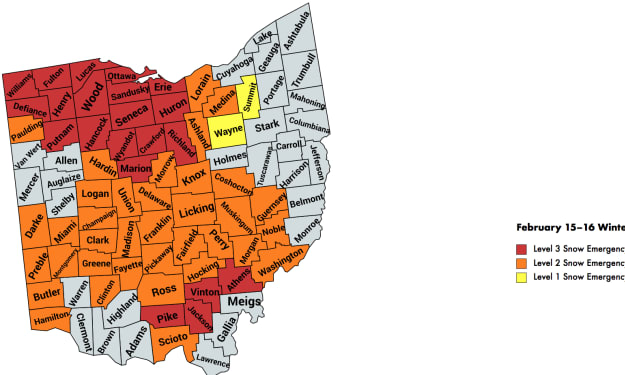
I’ve lived in central Ohio long enough to know that “snow emergency level” isn’t just dull government jargon—it’s a phrase that shapes entire days. When the snow starts its quiet takeover of Franklin County, that three-tiered announcement system becomes as commanding as a parent’s voice. Level 1 means caution. Level 2 means think twice. Level 3—Well, level 3 means everything stops. Or at least, it’s supposed to.
By Trend Vantageabout 8 hours ago in Earth
Europe Is About to Sign a Long-Awaited Free-Trade Deal With India
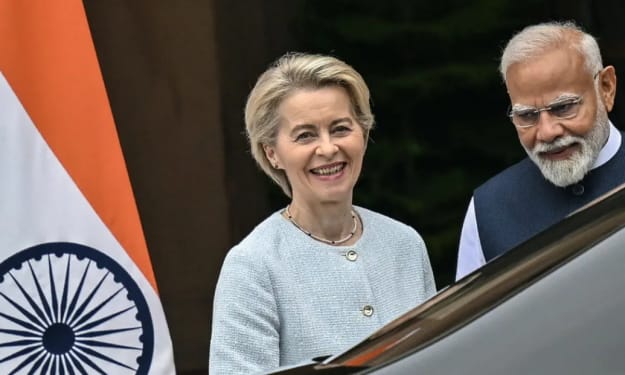
After years of negotiations, pauses, and political recalculations, Europe and India are finally on the brink of signing a long-awaited free-trade agreement. What once seemed like an overly ambitious diplomatic project is now becoming a reality—one that could redefine trade relations between two of the world’s most influential economic regions. This deal is not just about tariffs and exports. It’s about shifting global power, strengthening supply chains, and creating new opportunities for communities on both sides. Why This Deal Took So Long Talks between the European Union and India began well over a decade ago, but progress was slow. Differences over labor standards, environmental rules, market access, and intellectual property rights repeatedly stalled negotiations. Both sides had strong priorities—and neither wanted to compromise too much. However, the global landscape has changed dramatically in recent years. Supply chain disruptions, geopolitical tensions, and a growing desire to reduce over-reliance on single markets have pushed both Europe and India to rethink their strategies. Suddenly, cooperation feels less optional and more necessary. What the Agreement Is Expected to Cover At its core, the free-trade deal aims to reduce tariffs, ease regulations, and open markets between Europe and India. European companies are seeking better access to India’s vast consumer market, while India wants smoother entry into European industries such as technology, pharmaceuticals, and manufacturing. The agreement is also expected to include provisions related to: Digital trade Sustainable development Labor rights Investment protection These elements reflect modern trade priorities, where economic growth is increasingly linked with social and environmental responsibility. Why Europe Needs India Right Now For Europe, the deal is part of a broader strategy to diversify trade relationships. Recent global events have highlighted the risks of economic dependency. India, with its rapidly growing economy and young workforce, represents both stability and potential. European policymakers see India as a long-term partner capable of balancing global trade dynamics. Strengthening ties with India could also help Europe remain competitive in a world where economic influence is constantly shifting. Why India Is Saying Yes India, too, stands to gain significantly. A free-trade agreement with Europe could boost exports, attract investment, and accelerate economic modernization. It also positions India as a major global player willing to engage on equal terms with powerful blocs. For Indian businesses—especially small and medium enterprises—easier access to European markets could mean growth, innovation, and international exposure. For workers, it could translate into job creation and skills development. Impact on Everyday Communities While trade deals often sound abstract, their effects are deeply local. Lower tariffs can reduce prices for consumers. New investments can revitalize industries and create employment. Improved cooperation can strengthen educational, cultural, and technological exchanges. Communities in Europe may see new products, partnerships, and opportunities tied to Indian innovation. Indian communities, meanwhile, could benefit from European expertise in sustainability, infrastructure, and advanced manufacturing. This is why the agreement matters beyond boardrooms and government offices—it touches real lives. Concerns and Criticism Still Exist Despite the optimism, critics on both sides have raised concerns. Some European groups worry about labor standards and environmental protections, while some Indian voices fear that local industries could struggle against European competition. These concerns highlight the importance of transparency and fair implementation. A successful agreement will require ongoing dialogue, monitoring, and cooperation to ensure that economic growth does not come at the expense of workers or the environment. A Strategic Signal to the World Beyond economics, the deal sends a strong political message. It signals that multilateral cooperation is still possible, even in an era of rising protectionism. Europe and India are showing that large, diverse democracies can find common ground through negotiation rather than confrontation. This partnership could also influence future global trade standards, especially in areas like digital regulation and sustainable development. What Happens Next Once signed, the agreement will still need formal approvals and phased implementation. Businesses, governments, and communities will need time to adapt. But the direction is clear: closer ties, deeper cooperation, and a shared economic future. For both Europe and India, this deal represents more than a trade pact—it’s a strategic investment in resilience and mutual growth. Final Thoughts The long-awaited free-trade deal between Europe and India marks a turning point in global economic relations. It reflects changing priorities, evolving partnerships, and a shared recognition that collaboration is essential in an uncertain world. As the agreement moves forward, its true success will be measured not just in trade volumes, but in how effectively it supports communities, protects values, and builds a more balanced global economy.
By Muhammad Hassanabout 10 hours ago in Earth


Comments
There are no comments for this story
Be the first to respond and start the conversation.