
When Weather Decides for You: Life Under a Franklin County Snow Emergency
A reflection on how a color-coded system meant for safety quietly dictates our choices, routines, and sense of control in winter’s harshest hours.

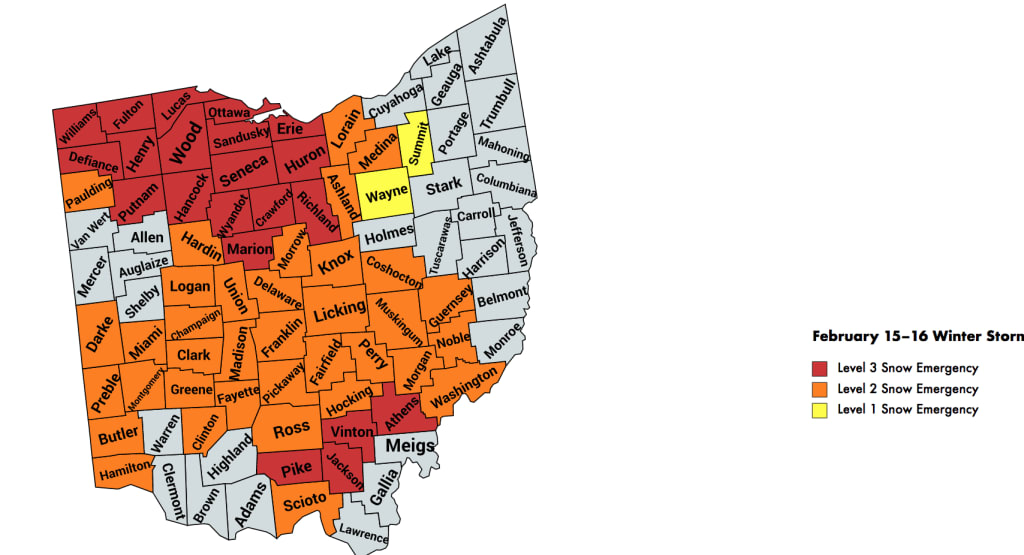
I’ve lived in central Ohio long enough to know that “snow emergency level” isn’t just dull government jargon—it’s a phrase that shapes entire days. When the snow starts its quiet takeover of Franklin County, that three-tiered announcement system becomes as commanding as a parent’s voice. Level 1 means caution. Level 2 means think twice. Level 3—Well, level 3 means everything stops. Or at least, it’s supposed to.
When I first moved here, I remember laughing at the official notice from the county sheriff’s office that spelled out who could drive and who couldn’t. “Only emergency personnel,” it said for Level 3, stern but vague. But it didn’t take long to learn—this is no symbolic warning. It’s the law. Step outside anyway, and you’re subject to fines, if not worse. Still, I’ve never known a single Ohioan who didn’t at least glance out the window and wrestle with the thought: do I really need to stay in?
The irony of a snow emergency is that it’s both community-wide and deeply personal. The county might make the call, but how we each respond depends on something softer—our individual tolerance for disruption. Some see a Level 2 alert and stock up like it’s the apocalypse. Others shrug, scrape off their windshields, and head to work like they’re starring in their own rugged survival drama. I used to belong firmly to the second group.
There was one storm in particular, years ago, that changed that. Level 3 hit overnight, and I ignored it. My job at the time wasn’t essential, but it felt urgent to me—somehow unfair to let the weather dictate my plans. Within a mile of home, I found myself stuck on Morse Road, tires spinning, cell signal faltering, visibility gone. It wasn’t a dramatic near-death story, just a slow, humiliating realization that nature couldn’t care less about my deadlines or my pride. A county sheriff’s deputy stopped behind me, rolled down his window, and said something perfectly simple: “It’s not about you. It’s about everyone else who has to dig you out.” I remember the sting of that line even more than the cold wind.
Since then, I’ve treated snow emergency levels with a kind of reverence. They’re imperfect, of course. Franklin County’s terrain varies; a stretch of downtown pavement may stay clear while suburbs near Dublin or Grove City turn treacherous. The sheriff’s office has to make broad calls with incomplete information, which means the warnings don’t always match what your eyes see. But I’ve come to value that blunt, communal restraint—a reminder that safety decisions sometimes have to be made at the scale of neighborhoods, not individuals.
I also think there’s something psychologically revealing buried in our local relationship with those alerts. The idea of “emergency levels” abstracts something deeply human into color and number. It comforts us to assign structure to chaos, to turn blizzards into systems we can rank, measure, and anticipate. But the truth is, no code can capture what it feels like when an entire city slows to silence—the sound of tires crunching snow in otherwise empty streets, the ghostly orange of streetlights reflecting off drifts so high the sidewalks disappear.
The county’s snow alerts are rational, bureaucratic, and necessary, but they carry emotional consequences no spreadsheet accounts for. They remind us that we aren’t fully in charge. We pride ourselves in this part of Ohio on productivity, on moving despite obstacles—on “making it in.” But every Level 3 declaration quietly urges the opposite: stay home, stop, wait. There’s humility in that, and maybe even grace.
What’s strange is that over the years, our collective reaction has digitalized. Instead of huddling around radios like generations past, we now watch for tweets from the Franklin County Sheriff’s Office, half-hoping for Level 3 just to justify a break. Schools and employers announce closures by automated text. The first message comes from the county, and then the entire rhythm of the region adjusts—from office policies to grocery hours to delivery routes—like a massive, invisible chain reaction.
Yet, even with all that enforcement infrastructure, the snow emergency system feels almost intimate. It’s an invitation to pause and participate in a shared experience—a kind of fellowship built around stillness. That might sound romanticized, but think about it: when everything goes still at once, you can suddenly sense how connected you are to a place.
The modern Franklin County snow emergency exists at the intersection of civic safety and cultural temperament. It depends on trust more than force. The sheriff’s office can draw the line, but residents choose obedience not from fear of fines, but from an implicit social contract—a sense that individual bravado comes second to public welfare. It’s one of the rare cases where government guidance truly aligns with community rhythm.
Today, when I hear the term “Level 2,” my first thought isn’t about fear or inconvenience. It’s about responsibility—to my neighbors, the first responders, the plow drivers working twelve-hour shifts. I don’t see the guidance as paternalistic anymore, but as a practical form of collective care.
Oddly enough, I’ve found that those days, the Level 3 ones especially, are my favorite of winter. Not for the danger, but for the forced recalibration. When you’re boxed in by weather, stripped of errands and commutes and social expectations, the world narrows to something manageable. I sit by the window, watch the snow swallow the horizon, and listen to that rarest of sounds in modern life: quiet authority. The kind that doesn’t come from power, but from acceptance.
About the Creator
Trend Vantage
Covering the latest trends across business, tech, and culture. From finance to futuristic innovations, delivering insights that keep you ahead of the curve. Stay tuned for what’s next!
Keep reading
More stories from Trend Vantage and writers in Earth and other communities.
The Human Side of the Storm: How Weather Radar Changed the Way I See the Sky
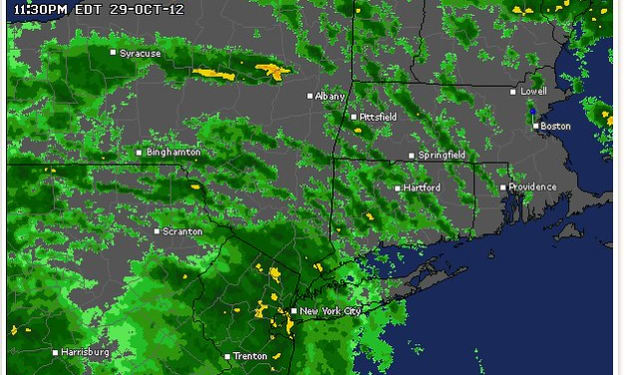
When I was a kid, watching the local meteorologist felt like watching a magician. The radar behind them—a swirl of greens, yellows, and reds—was an enchantment. They’d point, circle, and predict where the storm would move, and somehow, they were always close enough to right. I didn’t know it then, but I was watching the visible language of data before I ever knew what data was. The radar was our oracle, and every flash of color meant something invisible but immediate: wind, rain, and risk.
By Trend Vantage3 days ago in Earth
Man Shot Dead Was 37-Year-Old US Citizen, Minneapolis Police Chief Says
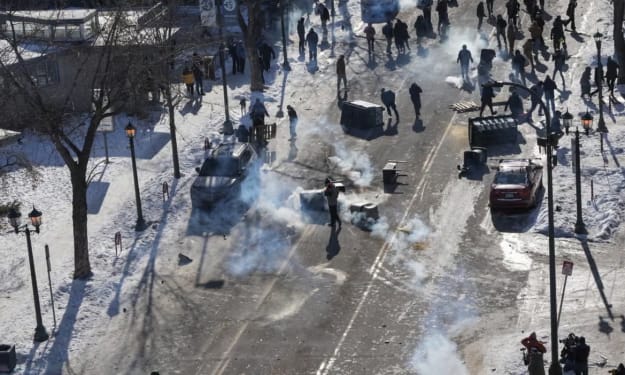
For many residents of Minneapolis, the news landed like a heavy blow. Authorities confirmed that a man shot dead during a law enforcement operation was a 37-year-old U.S. citizen, a detail that immediately intensified public reaction. What began as a breaking news alert quickly became a broader conversation about policing, federal authority, and community trust.
By Muhammad Hassan2 days ago in Earth
The Sad Nightingale
The Sad Nightingale Writing No. 2402 Saturday, November 26, 2022 By Iman Javed The sun had just set, leaving a soft orange glow lingering on the horizon. The air was calm, carrying a faint chill of the approaching night. Away from the village, frogs croaked in the drying pond, their sounds echoing across the still waters. Crickets intermittently played their tunes, pausing now and then as if checking their tiny instruments for the night ahead. On a branch of a nearby withered tree sat a nightingale, utterly sad. It neither moved nor chirped; it seemed as though it had forgotten the very art of singing. Its eyes reflected deep sorrow, and its feathers drooped in silence.
By Sudais Zakwan3 days ago in Earth


Comments
There are no comments for this story
Be the first to respond and start the conversation.