
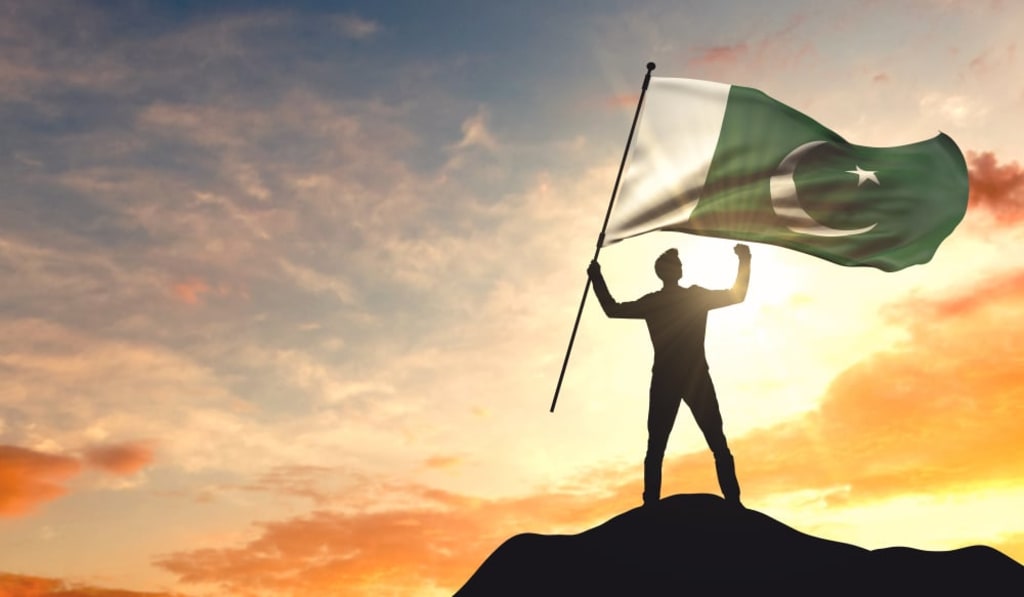
Pakistan is a country located in South Asia, bordered by India to the east, Afghanistan to the northwest, Iran to the southwest, and China to the northeast. It is the fifth-most populous country in the world and has a diverse population of over 220 million people.
Pakistan gained independence from British colonial rule in 1947 and was initially comprised of two regions on either side of India - East Pakistan (now Bangladesh) and West Pakistan (present-day Pakistan). The country is known for its rich cultural heritage, including the ancient Indus Valley Civilization, which dates back to over 5,000 years.
The capital city of Pakistan is Islamabad, while Karachi is the largest city and economic hub of the country. The official language of Pakistan is Urdu, but English is widely spoken and serves as the language of government, education, and business.
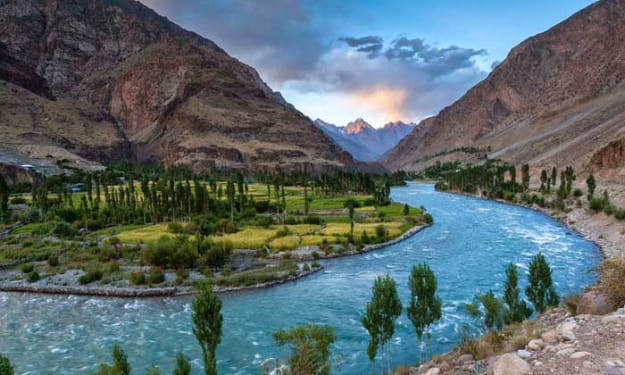
Pakistan has a mixed economy with agriculture, manufacturing, and services sectors contributing to its GDP. The country is also known for its beautiful landscapes, including the Karakoram mountain range, the Thar Desert, and the coastline along the Arabian Sea. However, Pakistan faces several challenges, including poverty, terrorism, political instability, and environmental issues.
Pakistan gained independence from British colonial rule on August 14, 1947, when the country was partitioned from India. The idea of a separate Muslim state in the Indian subcontinent was first proposed by the All India Muslim League in 1940, and after several years of negotiations with the British government, Pakistan was established as a sovereign nation.
The partition of India was accompanied by large-scale violence and migration, with millions of people forced to flee their homes on both sides of the border. The newly formed country of Pakistan initially consisted of two non-contiguous regions, East Pakistan (present-day Bangladesh) and West Pakistan (present-day Pakistan).
Muhammad Ali Jinnah, a prominent Muslim leader, became the first Governor-General of Pakistan, while Liaquat Ali Khan became the country's first Prime Minister. Pakistan's independence was a momentous event in the country's history, and it marked the end of over 200 years of British colonial rule in the region.
The Pakistan Army is the land-based branch of the Pakistan Armed Forces and is responsible for defending the territorial integrity and sovereignty of Pakistan. It was established shortly after Pakistan gained independence in 1947 and has since played a crucial role in the country's defense and security.
The Pakistan Army has over 650,000 active-duty personnel and is one of the largest standing armies in the world. It is also one of the most battle-hardened, having fought in several conflicts, including the Indo-Pakistani Wars of 1947, 1965, and 1971, as well as numerous border skirmishes with India.
The army is headed by the Chief of Army Staff, who is appointed by the President of Pakistan on the advice of the Prime Minister. The current Chief of Army Staff is General Qamar Javed Bajwa.
In addition to its primary role of defending the country, the Pakistan Army is also involved in a wide range of activities, including disaster relief, peacekeeping operations, and infrastructure development projects. However, the army has also faced criticism for its involvement in politics and governance, particularly during periods of military rule in Pakistan's history.
As of my knowledge cutoff in 2021, the estimated population of Pakistan is around 225 million people, making it the fifth-most populous country in the world. Pakistan has a diverse population with various ethnic and linguistic groups, including Punjabis, Sindhis, Pashtuns, Balochis, and others.
The population of Pakistan has been increasing steadily over the years, with a growth rate of around 2% per year. The country has a relatively young population, with over 60% of the population below the age of 30.
Pakistan faces several challenges in managing its population, including poverty, unemployment, and limited access to healthcare and education. The government has implemented various programs to address these issues, including poverty alleviation initiatives, family planning campaigns, and efforts to improve access to education and healthcare.
About the Creator
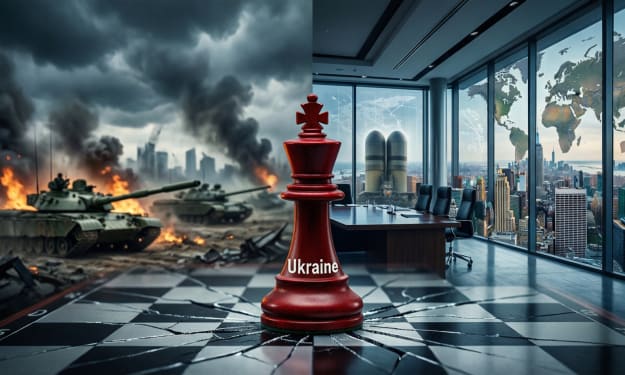
Is the Ukraine–Russia War Pushing the World Toward World War III?
Is the Ukraine–Russia War Pushing the World Toward World War III? The war between Ukraine and Russia began as a regional conflict, but over time it has grown into something much larger. While it is not officially World War III, many experts, analysts, and ordinary citizens are asking the same question: is the world moving dangerously close to a global war?
By Wings of Time 6 days ago in Earth
Trump, 79, Revives Greenland Fantasy With Absurd AI Post
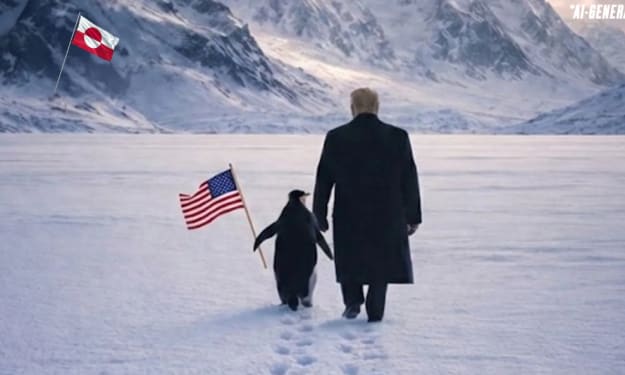
In early 2026, a seemingly strange social media post reignited a discussion that many had hoped was behind us: Donald Trump, now 79, posted an AI-generated image referencing Greenland. The image went viral, sparking laughter, criticism, and a flurry of international commentary. While the post appeared absurd on the surface, it also highlighted deeper issues about political messaging, digital media, and the ongoing fascination some U.S. leaders have with Greenland. The AI-generated post showed Trump marching toward Greenland, holding an American flag, accompanied by a penguin — an animal that, scientifically speaking, has no connection to Greenland. The bizarre imagery immediately caught the public’s attention. Many observers viewed the penguin as a humorous metaphor for the mismatch between the symbolic post and geopolitical reality. Critics questioned whether the post was a serious attempt at commentary, an intentional meme, or a sign of how AI is being used in modern political communication. The Social Media Storm The post, captioned “Embrace the penguin”, appeared on the official White House X account. Within hours, it became the subject of viral memes, news reports, and expert analyses. Internet users were quick to point out the geographic error — penguins live in the Southern Hemisphere, nowhere near Greenland. While the comedic aspect dominated social media, analysts noted that the post reflected a long-standing pattern of Trump using bold or unconventional messaging to capture public attention. The use of AI-generated imagery represents a new layer in this strategy, blending political content with internet culture. Many critics argued that this approach, while attention-grabbing, risks confusing the public and undermining the credibility of official communication. Trump and Greenland: A Longstanding Obsession Trump’s fascination with Greenland is not new. In 2019, he proposed that the United States could purchase Greenland from Denmark, an idea that was widely ridiculed and rejected by Danish leaders. Despite the public backlash, the notion persisted in Trump’s rhetoric and continued to appear in informal discussions about U.S. strategic priorities. Greenland holds significant geopolitical value: it is rich in minerals, occupies a strategic Arctic location, and is home to vast natural resources. For Trump, the island has long symbolized a geopolitical prize — a potential point of influence for the U.S. in the Arctic region. The AI post, absurd as it was, reignited global attention to these strategic questions, reminding the world that some leaders still see Greenland as a focal point of American ambition. AI and Politics: A Strange Combination The viral AI image is part of a broader trend of using artificial intelligence to create content for political messaging. AI allows leaders and communicators to produce highly visual, shareable content at scale. However, it also introduces challenges: Accuracy: AI can generate visually striking content that may be factually incorrect, as with the penguin in Greenland. Interpretation: Viewers may misinterpret AI-generated imagery, assuming it represents reality or policy intent. Credibility: Official use of memes and AI art can blur the line between serious communication and entertainment, potentially undermining authority. In Trump’s case, the AI post highlighted both the power and pitfalls of digital media in politics. It reached millions of people worldwide, but the absurdity of the imagery also drew ridicule and raised questions about the seriousness of the message. The International Response European leaders and diplomats responded cautiously, recognizing the post as part humorous, part symbolic. Danish officials, who oversee Greenland’s defense and foreign policy, reiterated that the island is not for sale. Some analysts suggested that while Trump’s AI post is unlikely to affect formal negotiations, it does shape public perception and keeps Greenland in the spotlight as a topic of U.S. interest. The global reaction underscores the influence of social media on diplomacy. In an era where viral content spreads instantly, even symbolic or absurd posts can have real-world implications, influencing discussions, media coverage, and public opinion. Why the Penguins Matter While the image of Trump marching alongside a penguin seems nonsensical, many commentators see it as a metaphor for the disconnect between digital imagery and practical geopolitics. Penguins, being out of place in Greenland, symbolize the absurdity of claiming influence over a sovereign region through symbolic gestures. The penguin also illustrates how modern politics blends serious issues with entertainment and internet culture. Leaders are increasingly aware of the viral potential of online content, and AI-generated visuals provide a new way to capture attention — for better or worse. The Role of AI in Political Communication Trump’s AI post demonstrates both the potential and limits of artificial intelligence in politics: Engagement: AI-generated visuals can capture attention and create shareable moments. Creativity: AI allows for imaginative ways to communicate ideas, blending humor and symbolism. Risk: Misrepresentation or absurdity can undermine credibility and invite international criticism. As AI tools become more common in politics, officials will need to carefully weigh creativity against clarity, ensuring that symbolic content does not overshadow substantive policy discussions. What This Means for the Future The Greenland AI post is more than a viral meme; it reflects trends in modern political messaging: Leaders increasingly use AI and digital media to communicate directly with the public. Absurd or humorous content can attract attention, but may blur the line between entertainment and diplomacy. Symbolic posts can reignite interest in longstanding geopolitical debates, even when they seem playful. For observers, the post offers a lens into how social media, AI, and politics intersect — a mix of strategy, humor, and unintended consequences that will likely shape political communication for years to come. Final Thoughts Donald Trump’s AI-generated Greenland post is absurd, humorous, and viral — but it also underscores the enduring fascination some political figures have with strategic regions like Greenland. Beyond the comedy, it illustrates the power of AI in shaping political narratives, the challenges of modern digital diplomacy, and the importance of understanding how viral content influences public perception. Whether one laughs at the penguin or ponders the implications, the post reminds the world that politics today is as much about perception and digital storytelling as it is about policy. In Trump’s case, a single AI-generated image can revive decades-old geopolitical fantasies, spark global discussion, and turn a playful meme into a moment of serious reflection.
By Muhammad Hassan4 days ago in Earth

Comments
There are no comments for this story
Be the first to respond and start the conversation.