
Most recent earthquake.
Trending Earthquake stories and consequences

http
htternat
Recent Earthquake in Myanmar: A Catastrophic Event
Myanmar experienced a disastrous earthquake of 7.7 to 7.9 on March 28, 2025. The epicenter was near Mandalay in Sagaing Region, making it the strongest earthquake that hit Myanmar since 1912. The effects of the quake were felt in neighboring countries like Thailand, China, and Vietnam.
Reuters
Wikipedia
Reuters
Magnitude and Effect
The magnitude of the earthquake was 7.7 to 7.9, and the depth was 10 km. The shock had a maximum Modified Mercalli intensity of X (Extreme). It was the most powerful earthquake to strike Myanmar since 1912, and the second most fatal in Myanmar's recent history, being exceeded only by upper estimates of the 1930 Bago earthquake. The earthquake caused extensive damage in Myanmar and significant damage in the neighboring Thailand. It also destroyed hundreds of homes in Yunnan, China, and damaged more than 400 apartments in Ho Chi Minh City, Vietnam.
Wikipedia
Casualties and Damage
The earthquake caused significant loss of lives and widespread destruction. In Myanmar, casualties vary in sources. Mizzima News reported 5,352 deaths, 7,108 injuries, and 538 missing persons. According to figures compiled by the Democratic Voice of Burma, 4,410 were killed and 11,366 others were injured. The junta's State Administration Council declared more than 3,640 were killed, 148 missing, and 5,017 others injured. Deaths occurred in the administrative divisions of Mandalay, Naypyidaw, Sagaing, Shan, Bago, Magway, and Kayin. The United Nations High Commissioner for Refugees estimated that more than 17 million Burmese in 57 of the 330 townships in Myanmar were affected. By 10 April, rescue workers estimated that there were thousands of unclaimed bodies still trapped beneath fallen buildings, with concerns about potential outbreaks of cholera and dengue.
Reuters
s
Thtarian
Wikipedia
Wikipedia
Infrastructural and Cultural Losses
There was extensive damage to infrastructure and cultural heritage sites due to the earthquake. More than 120,000 homes were destroyed across the country, 48,834 of which collapsed, and more than 1,000 government buildings. Four of the five mosques in Sagaing collapsed due to the earthquake. The Min Street Mosque is thought to have collapsed with over 100 people inside. A number of monastic schools and a nunnery within the city were also affected, potentially killing individuals in the hundreds and trapping more than 900 monks in four schools. Ancient temples in resistance-controlled Chaung-U Township, southwest Sagaing Region, were destroyed by the quake. In Mingun, 20 individuals were killed when a military bunker collapsed, and the nearby Hsinbyume Pagoda was also devastated. There were also numerous deaths reported in Shwebo, Wetlet, Yinmabin, Kani, and Pale townships; four were killed in Shwebo. In Naypyidaw Union Territory, 665 deaths were officially tallied, although there were thousands more that were estimated dead. In Zabuthiri Township, there were 204 dead; those killed included civil servants who were killed when apartments collapsed in various complexes. In most of these apartment complexes, the ground floor collapsed, trapping their residents.
Wikipedia
Reuters
Aftershocks and Ongoing Challenges
Following the initial earthquake, Myanmar was struck by over 468 aftershocks as of April 12, according to the Thai Meteorological Department. The aftershocks have compounded the challenge of rescue and relief efforts. The nation's infrastructure, already strained from decades of conflict, has been severely impacted, and it is challenging to get aid and relief to the affected areas.
Wikipedia
Reuters
Reuters
Inernational Response and Humanitarian Aid
The international community has come forward to help Myanmar. The neighboring countries and international organizations have provided help in terms of food, water, medicines, and personnel. However, the civil war and political instability in Myanmar have posed hurdles to the smooth distribution of relief. Relief efforts have been challenging to coordinate due to the lack of a centralized government and the existence of different factions with differing agendas.
Conclusion
The Myanmar earthquake of March 28, 2025, is a sad reminder of the vulnerability of populations to natural disasters, especially in regions already plagued by sociopolitical conflicts. The scale of the disaster and the continuity of aftershocks highlight the necessity of sustained international support and cooperation in addressing not just short-term humanitarian needs but also long-term rehabilitation efforts. As the crisis continues to develop, the resilience of the affected populations and the effectiveness of the international response will be critical in mitigating the impact of this disaster.
About the Creator
Keep reading
More stories from writers in Earth and other communities.
Polar Vortex Collapse Forecast: What It Means and Why It Matters
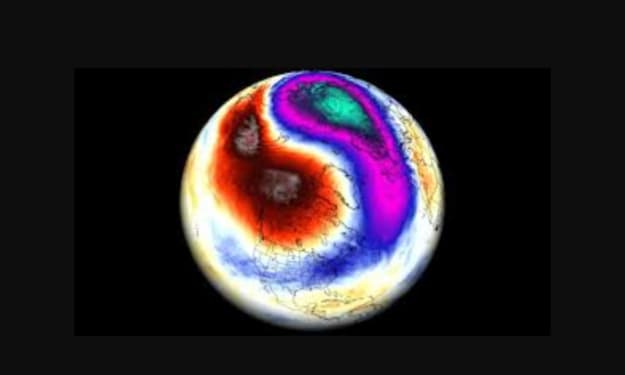
As winter progresses in the Northern Hemisphere, scientists are closely monitoring forecasts suggesting a potential polar vortex collapse. The term “polar vortex” has entered mainstream conversations in recent years, often associated with extreme cold snaps in North America, Europe, and parts of Asia. But what exactly is a polar vortex collapse, why does it happen, and why should people care? Understanding this phenomenon is crucial, not just for weather enthusiasts, but for anyone concerned about climate change, energy infrastructure, and global weather patterns. What Is the Polar Vortex? The polar vortex is a large area of low pressure and extremely cold air surrounding both of Earth’s poles, contained by a fast-moving band of winds known as the polar jet stream. In the Northern Hemisphere, it sits over the Arctic, spinning in a counterclockwise direction. Under normal conditions, the vortex keeps the Arctic air largely contained. However, fluctuations in atmospheric pressure and temperature can cause the vortex to weaken, shift, or even split, allowing frigid air to escape southward into populated regions. This is often what leads to extreme winter weather events in the United States, Canada, Europe, and Asia. What Does a Polar Vortex Collapse Mean? A “polar vortex collapse” refers to a significant weakening or breakdown of the vortex, often caused by sudden stratospheric warming events high in the atmosphere. When the polar vortex collapses: Arctic air can spill into mid-latitudes, leading to extreme cold in regions unaccustomed to such temperatures. Weather patterns become more erratic, causing longer-lasting cold spells or shifts in precipitation. Jet streams weaken or meander, which can contribute to storms, heavy snowfall, or unusual weather events across continents. The term “collapse” doesn’t mean the vortex disappears entirely — it is still present — but its structural integrity is compromised, allowing Arctic air to move into areas that typically enjoy milder winter conditions. Why Scientists Are Concerned Meteorologists and climate scientists pay close attention to the polar vortex because its behavior has far-reaching implications: Energy Demand: Sudden cold snaps increase heating demand, which can strain power grids and fuel supply chains. Agriculture: Extreme cold can damage crops, delay planting, and reduce yields for sensitive crops like winter wheat. Transportation: Snowstorms and icy conditions disrupt travel, affecting both local commuting and international logistics. Global Weather Links: A collapsed polar vortex can influence weather far beyond North America, including unusual rainfall patterns, storms, and temperature anomalies in Europe and Asia. Recent studies suggest that climate change may be making the polar vortex more unpredictable, with warmer Arctic temperatures affecting the jet stream’s stability. This could lead to more frequent or intense cold waves in regions far from the pole. Historical Examples of Polar Vortex Events The polar vortex has been linked to some of the most memorable winter events in recent decades: January 2014 (United States): Millions faced record-breaking cold as Arctic air plunged southward, with temperatures in the Midwest dropping to -30°F (-34°C) in some areas. February 2021 (North America): A weakened polar vortex contributed to extreme cold across Texas and the central U.S., causing widespread power outages and water supply disruptions. Europe 2018–2019: Fluctuations in the Arctic vortex led to extended cold spells across parts of northern and eastern Europe. Each of these events illustrates how disruptions in the Arctic atmosphere can quickly translate into severe conditions thousands of miles away. Why a Polar Vortex Collapse Matters Globally Although the polar vortex is centered over the Arctic, its collapse affects global weather in multiple ways: Economic Impacts: Cold snaps can halt industrial activity, increase heating costs, and strain insurance systems due to property damage. Climate Feedback Loops: Extreme Arctic events can accelerate ice melt, altering sea levels and global weather patterns. Human Health: Extended periods of extreme cold increase risks of hypothermia, frostbite, and other health emergencies, particularly for vulnerable populations. Ecosystem Effects: Wildlife adapted to stable seasonal patterns may struggle to survive sudden temperature fluctuations, affecting biodiversity in affected regions. The interconnectedness of global systems means that an Arctic event can ripple across continents, affecting agriculture, energy, and even food security. What Can People Do to Prepare? While individuals cannot control atmospheric phenomena, there are practical steps to prepare for polar vortex-related extreme cold: Home Safety: Insulate homes, check heating systems, and prepare emergency kits with blankets, food, and water. Travel Caution: Monitor forecasts before traveling and have contingency plans for snow or ice-related disruptions. Community Awareness: Check on neighbors, especially the elderly or vulnerable, during prolonged cold events. Government Preparedness: Authorities often increase readiness of power grids, emergency services, and transportation systems ahead of forecasted events. Being informed and proactive can reduce the human and economic impact of a polar vortex collapse. Looking Ahead: Climate Change and the Polar Vortex Scientists warn that the Arctic is warming faster than the rest of the planet, which may make the polar vortex more unstable. As the vortex weakens, the frequency of extreme cold events in mid-latitudes may rise, even while the planet as a whole becomes warmer. This paradox — colder extremes amid global warming — can be confusing but is consistent with climate models. It emphasizes the need for global cooperation in climate mitigation, adaptation, and disaster preparedness. Final Thoughts The forecast of a potential polar vortex collapse is a reminder that Earth’s climate system is complex and interconnected. What happens in the Arctic does not stay in the Arctic; it has tangible consequences for energy, health, ecosystems, and economies across the Northern Hemisphere. Understanding these dynamics, staying informed, and taking proactive steps can help societies mitigate risks and adapt to a changing climate. Whether you’re a casual weather watcher or a climate enthusiast, the polar vortex collapse is a phenomenon worth following — because its reach extends far beyond the Arctic Circle.
By Muhammad Hassan6 days ago in Earth
Sea Levels Are Rising Across the World. But in Greenland, Scientists Say They’re About to Fall
When it comes to climate change, one of the clearest signs has been rising sea levels worldwide. From the melting ice sheets of Antarctica to flooding in coastal cities, the narrative has been straightforward: global temperatures rise, ice melts, and oceans expand.
By Aarif Lashari2 days ago in Earth



Comments
There are no comments for this story
Be the first to respond and start the conversation.