
"Migration of Birds and the Perils of Overhunting"
"The Perilous Journey of Migratory Birds and the Threat of Overhunting"

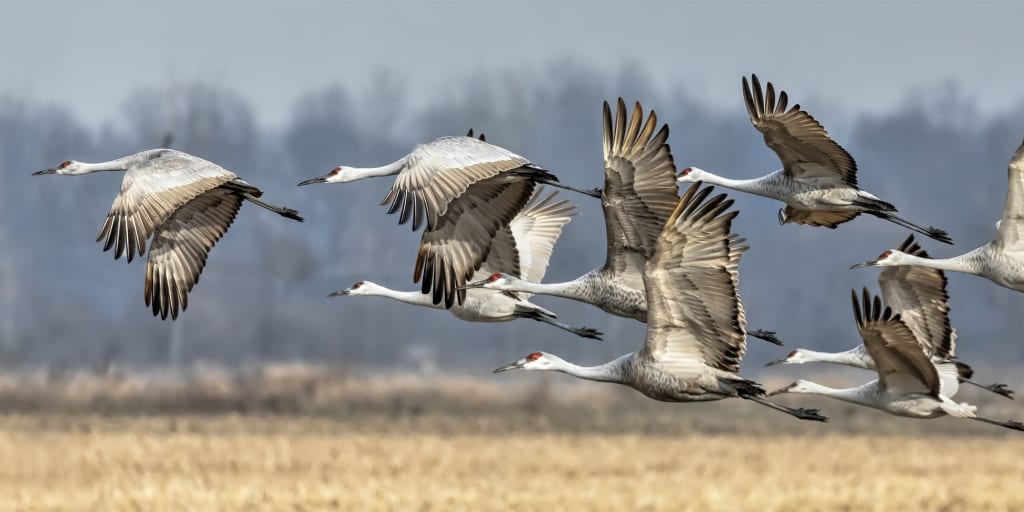
The skies are a canvas painted by the graceful flight of migratory birds—nature’s travelers crossing vast continents and oceans. For many species, migration is essential for survival. They journey thousands of miles to find food, escape harsh climates, and seek suitable breeding grounds. However, this awe-inspiring phenomenon faces a grave threat: overhunting. The once-protected passage from one land to another has become a perilous route marked by human greed and disregard for nature’s delicate balance.
The Journey of Migratory Birds
Bird migration is one of the most remarkable natural behaviors in the animal kingdom. Every year, species like the Arctic Tern, Swallows, and Gray Cranes travel thousands of kilometers between breeding and non-breeding grounds. Some species, like the Bar-Tailed Godwit, hold the record for non-stop flight, covering vast distances without a break. These birds are guided by instinct, celestial navigation, and environmental cues like temperature and food availability.
Migratory routes are typically known as flyways. These paths are critical for birds to travel safely and rest during their long journeys. Some of the world’s major flyways, such as the East Asian-Australasian Flyway and the East Atlantic Flyway, stretch across continents and provide vital resources for birds in transit.
However, the natural beauty of these migrations is marred by the increasing threats that birds face during their travels. The primary danger? Overhunting.
Overhunting: The Silent Killer
While migration is driven by survival, it is increasingly threatened by human activities, particularly hunting. In many regions, migratory birds are hunted for food, sport, and even trade. Hunting has become a serious issue for birds, especially in areas where traditional hunting practices have become unsustainable.
Every year, millions of migratory birds are killed, often illegally or without regard for the ecological consequences. Countries situated along migratory routes are hotspots for poaching and unregulated hunting. Migrants are shot at stopover sites, netted in traps, or killed for meat. Birds like the Amur Falcon, European Turtle Dove, and Common Quail are among the species most affected by overhunting.
Ecological Impact of Overhunting
The consequences of overhunting extend far beyond the individual bird. Migratory birds are crucial to ecosystems, and their absence disrupts natural processes. They play essential roles in pollination, seed dispersal, and pest control. For example, many bird species help control insect populations, preventing the spread of pests that can damage crops.
The decline of migratory birds can also have long-term consequences for biodiversity. Without these birds, ecosystems lose important links in their food webs. Additionally, the loss of species can reduce the resilience of ecosystems, making them more vulnerable to changes in climate and human exploitation.
Points to Ponder
“Freedom flies, but rarely safe.”
“From migration to merciless traps.”
“Miles flown, yet nowhere safe.”
These points capture the essence of the migratory bird’s plight—caught between the natural instinct to migrate and the dangers posed by human interference.
Conservation Efforts and Solutions
There is still hope for migratory birds, and several efforts are underway to protect them. International treaties such as the Convention on Migratory Species (CMS) and the African-Eurasian Waterbird Agreement (AEWA) aim to provide safe passage for migratory birds across borders. These agreements promote the establishment of protected areas, enforce hunting regulations, and encourage cooperation between nations.
In regions where hunting is rampant, local communities are becoming more engaged in bird conservation. In some parts of India, the Amur Falcon, once a target of mass hunting, is now a symbol of conservation success. Through education and awareness campaigns, people have begun to view the birds as valuable assets for eco-tourism and biodiversity rather than just as a source of food.
Eco-tourism is another viable solution. By creating wildlife sanctuaries and encouraging birdwatching, local economies can benefit from migratory birds while providing an incentive to protect rather than hunt them. Birdwatching generates millions of dollars annually and offers a sustainable alternative to hunting.
Conclusion
Migration is a natural marvel that connects birds to ecosystems across the globe, but overhunting threatens to unravel this intricate web. By supporting international treaties, enforcing hunting laws, and promoting sustainable eco-tourism, we can help ensure that migratory birds continue to soar freely across our skies.
As we gaze at the soaring birds during migration seasons, it is a reminder to us all that the sky should remain their sanctuary, not their final resting place.
About the Creator
Wow Genius
🕊️ Asalam-o-Alikum!
I'm Wow Genius — welcome to a space of peace, love, and inspiration. 🌿✨
Read stories that touch hearts, calm minds, and light souls. 📖💖
Thank you for joining this beautiful journey. 🌸🌙
Keep reading
More stories from Wow Genius and writers in Earth and other communities.
"The Quiet Heart of the Forest"
There was a forest so wide and so ancient that no one had ever named it. It existed beyond the farthest paths, beyond the reach of towns and maps, and so people called it only The Green Beyond. Travelers stayed close to its edge, animals disappeared into it, and parents warned their children never to chase birds too far past the tree line.
By Wow Genius9 months ago in Earth
Without Democracy, Donald Trump’s Venezuelan Oil Quest Will Fail
Donald Trump’s renewed interest in Venezuelan oil may seem, on the surface, like a hard-nosed geopolitical calculation. Venezuela holds the world’s largest proven oil reserves, and amid global energy uncertainty, access to those resources is undeniably tempting. But history, economics, and politics all point to the same conclusion: without democratic reform in Venezuela, any attempt by a Trump-led US administration to secure reliable Venezuelan oil will ultimately fail.
By Aarif Lashari4 days ago in Earth
So You Decided To Become a Nurse Practitioner:
So you decided to become an "Advanced Practice" nurse. Congratulations!... is what I would say if this was a good idea. Grad school? In this economy? What were you thinking? Likely it was something along the lines of either 1) “I've seen these other chucklefucks do it— Why can't I?” or even 2) “I've got a nice career, I should shake it up. I miss feeling like I have no clue what I'm doing.”
By Sandor Szaboa day ago in Fiction




Comments (4)
wonderful!!!
Interesting!!!
Read the story & Mention your idea about Migration & Overhunting of Birds in comment box.
Welcome to a new story Migration of Birds & Overhunting.